
 By NewsMatrix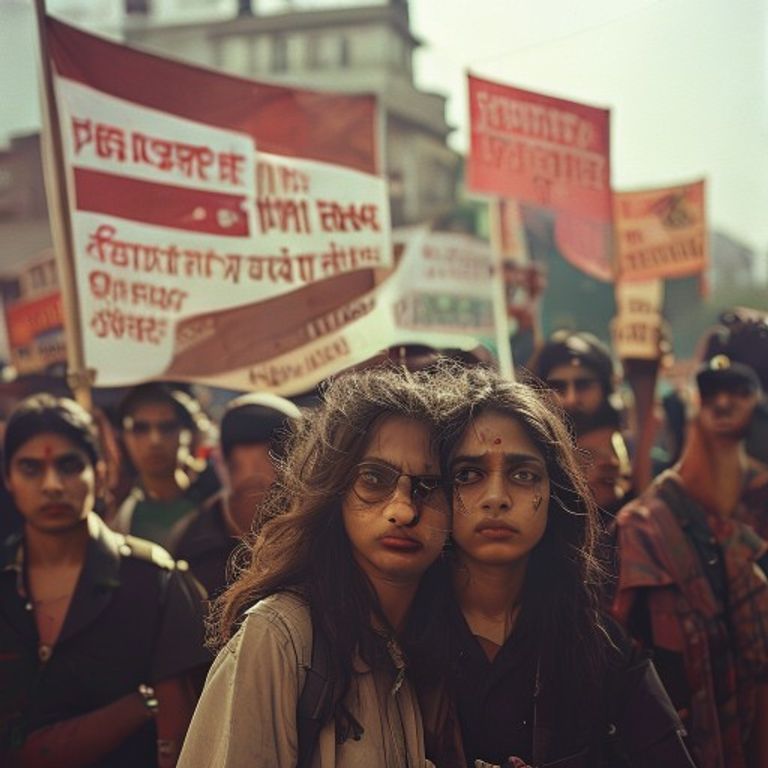
India is currently grappling with widespread student protests India, ignited by profound discontent over perceived failures within the nation’s education and testing systems. The unrest, which has seen students take to the streets in significant numbers, has escalated into a major political flashpoint, drawing sharp criticism from opposition leaders. At the forefront of this political offensive is Congress leader Rahul Gandhi, who has vehemently condemned Prime Minister Narendra Modi’s conspicuous silence on the police action taken against protesting students. This evolving crisis highlights not only the deep-seated frustrations of India’s youth but also the growing chasm between the government and its critics, with both sides trading accusations of violence amidst the demonstrations. As the clamor for accountability and reform grows louder, the opposition has formally approached the Lok Sabha Speaker, demanding an urgent parliamentary discussion to ensure that the voices of the aggrieved students resonate within the highest echelons of Indian democracy, underscoring the critical need for dialogue and resolution in this escalating national issue.
The Roots of Discontent: A Crisis in Education and Testing Systems
The current wave of student activism is not a sudden outburst but rather the culmination of years of simmering frustrations among India’s youth regarding the integrity and equity of the country’s education and examination infrastructure. Millions of students annually participate in highly competitive entrance examinations that determine their future academic and professional trajectories. However, persistent reports of question paper leaks, alleged malpractices, and opaque grading systems have severely eroded public trust. These systemic vulnerabilities undermine the meritocratic principles that form the bedrock of the education system, leaving students feeling cheated and disenfranchised. The perceived lack of transparency and accountability in conducting these crucial tests has been a recurring grievance, creating an environment of profound uncertainty and anxiety for an entire generation whose future hinges on these outcomes. This crisis of confidence extends beyond individual examination results, pointing to deeper structural issues within the administrative mechanisms designed to uphold educational standards and fairness.
Systemic Flaws and Erosion of Trust
Beyond the immediate triggers, students and educational experts point to broader systemic flaws contributing to the widespread disillusionment. The sheer volume of aspirants, coupled with limited high-quality educational and employment opportunities, intensifies the pressure on the testing system. Outdated curricula, varying standards of instruction across different institutions, and a lack of adequate investment in public education infrastructure further exacerbate the challenges. When the very processes designed to identify talent and allocate opportunities are called into question, it creates a crisis of trust that reverberates across society. The recent incidents have thus become a symbol of a larger struggle for a fair chance, adequate preparation, and a reliable pathway to a secure future, prompting students to mobilize and demand urgent reforms from the highest levels of governance.
Police Response and Opposition’s Strong Denunciation
The widespread protests have unfortunately led to confrontations between student demonstrators and law enforcement agencies, with both sides presenting conflicting accounts of the events. Police have reportedly used measures such as lathicharge (baton charges), water cannons, and mass detentions to disperse crowds, citing the need to maintain public order and prevent damage to property. Conversely, students and their supporters accuse the police of using excessive and unwarranted force, leading to injuries and further escalating tensions. Media coverage and social media platforms are replete with images and videos that fuel both narratives, making it challenging to ascertain an objective truth amidst the chaos. This cycle of accusation and counter-accusation has deepened the divide and amplified the emotional intensity of the situation, drawing widespread public attention and political scrutiny.
Rahul Gandhi Challenges Prime Minister’s Silence
In a powerful intervention, Congress leader Rahul Gandhi launched a direct and sharp criticism of Prime Minister Narendra Modi, questioning his silence on the unfolding crisis and particularly on the police actions against students. Gandhi’s remarks underscored a perceived lack of empathy and leadership from the nation’s top executive during a moment of significant youth distress. He articulated that the Prime Minister’s silence was not merely an absence of comment but an implicit endorsement of the police’s approach and a failure to address the core grievances of the protesting students. This criticism has effectively transformed the student protests into a major political battleground, with the opposition aiming to hold the government accountable for its handling of a crisis that directly impacts a crucial demographic of the Indian electorate – its youth. Gandhi’s stance positions the opposition as the voice of the aggrieved, pushing for a more responsive and compassionate governmental approach.
- Rahul Gandhi’s critique highlights a perceived leadership vacuum during a national crisis.
- The opposition leverages the issue to draw attention to broader governance concerns.
- The focus shifts from student grievances to the government’s accountability.
Opposition Demands Parliamentary Debate: Amplifying Student Voices
Demonstrating a united front, a delegation of opposition leaders recently met with the Lok Sabha Speaker, explicitly demanding an immediate and thorough parliamentary discussion on the ongoing student protests and the contentious police actions. This strategic move aims to elevate the issue beyond street demonstrations and into the formal legislative discourse, compelling the government to engage directly with the concerns. The opposition leaders emphasized that Parliament, as the supreme representative body, must serve as the forum where the grievances of the students are not only heard but also debated comprehensively, ensuring transparency and accountability in governance. They stressed the fundamental democratic right of citizens to peaceful protest and the government’s obligation to address legitimate public concerns rather than suppress them through force.
A Pledge to Uphold Democratic Principles
The opposition’s resolve extends to ensuring that the voices and demands of the protesting students are vigorously amplified within the parliamentary chambers. They assert that the future of the nation rests on the well-being and confidence of its youth, and therefore, their concerns cannot be dismissed or ignored. By advocating for a parliamentary debate, the opposition seeks to force the ruling dispensation to acknowledge the gravity of the situation and provide concrete assurances regarding reform and justice. This commitment to bringing student issues into the national political dialogue reflects a broader strategy to challenge the government on matters of social justice, youth empowerment, and democratic accountability, framing the current crisis as a test of India’s democratic values and its capacity to respond to the aspirations of its young population.
- Opposition’s move to Parliament underscores the severity and national importance of the issue.
- It aims to exert legislative pressure for a substantive government response.
- The action reaffirms the role of Parliament as a platform for public accountability.
The Blame Game: Accusations of Violence from Both Sides
The escalating confrontations have been characterized by a troubling exchange of accusations of violence between the protesting students and the police. Students, backed by human rights activists and some political observers, allege that law enforcement has resorted to disproportionate and brutal force, violating their right to peaceful assembly. They cite injuries, property damage, and arbitrary detentions as evidence of police overreach. Conversely, police authorities maintain that their interventions have been calibrated responses to maintain law and order, accusing sections of the protesters of engaging in stone-pelting, vandalism, and aggressive behavior that necessitated their actions. This conflicting narrative complicates any objective assessment of the ground reality and fuels further animosity, making it harder to establish a basis for de-escalation or reconciliation. The challenge lies in distinguishing between legitimate protest and unlawful conduct, a task made difficult by the highly polarized nature of the public discourse.
Seeking Transparency and Accountability
In such a contentious environment, the imperative for transparency and independent inquiry becomes paramount. Without a credible and impartial investigation into the allegations of violence from both sides, the cycle of blame and distrust is likely to continue, further eroding public faith in institutions. It is crucial for the government to facilitate a process that can objectively ascertain the facts, identify any instances of unlawful conduct by either police or protesters, and ensure that those responsible are held accountable. This would not only help to calm tensions but also lay the groundwork for a more constructive approach to addressing the underlying causes of the protests. Restoring confidence requires a commitment to justice and a willingness to acknowledge and rectify mistakes, fostering an environment where dialogue can replace confrontation.
Broader Implications for India’s Democratic Future
The ongoing student protests India are more than just a localized educational dispute; they carry profound implications for the nation’s democratic health and future trajectory. India possesses one of the world’s largest youth populations, and their collective voice, especially when expressing discontent with foundational systems like education, cannot be overlooked. A generation disillusioned by perceived systemic failures and unresponsive governance can lead to widespread alienation, impacting social cohesion, political participation, and economic productivity. The manner in which this crisis is handled will send a powerful message about the government’s commitment to democratic principles, freedom of expression, and the welfare of its future workforce. Unresolved youth grievances can simmer and erupt in unpredictable ways, potentially undermining long-term stability and hindering India’s aspirations on the global stage. Ensuring that the youth feel heard, valued, and empowered is crucial for sustainable development and the vibrant functioning of any democracy.
Charting a Path Towards Resolution and Trust
Ultimately, addressing the present crisis necessitates a multi-faceted approach that moves beyond immediate containment. It requires the government to demonstrate genuine willingness to engage with student representatives, hear their concerns, and initiate tangible reforms in the education and testing systems. A reactive, law-and-order centric approach, devoid of sincere dialogue, risks deepening the chasm between the youth and the state. Fostering an environment of trust through transparent communication, commitment to accountability for any misconduct, and a proactive stance on systemic improvements will be critical. The long-term stability and prosperity of India are inextricably linked to the aspirations and satisfaction of its young population. Therefore, this moment presents an opportunity not just to resolve a crisis, but to strengthen the democratic foundations by reaffirming the state’s responsibility towards its citizens, especially those who represent the nation’s future.
Conclusion: A Call for Dialogue, Accountability, and Systemic Reform
The widespread student protests India, fueled by deep-seated grievances concerning the education and testing systems and further complicated by police actions, represent a significant national challenge. Rahul Gandhi’s pointed criticism of Prime Minister Modi’s silence, coupled with the opposition’s firm demand for a parliamentary debate, underscores the political gravity of the situation. Amidst conflicting accusations of violence from both protesters and law enforcement, the undeniable core remains the urgent plea from India’s youth for justice, transparency, and meaningful reform. It is paramount that all stakeholders—the government, opposition parties, educational institutions, and civil society—transcend partisan divides to engage in constructive dialogue. A transparent and impartial investigation into the recent events, alongside a committed effort to address the fundamental systemic flaws within the educational framework, is not merely advisable but essential. The true resilience of India’s democratic institutions will be tested by their capacity to genuinely listen to their citizens, particularly the youth who are the architects of tomorrow, and to respond with integrity and decisive action, ensuring a more equitable and promising future for the nation.