
 By NewsMatrix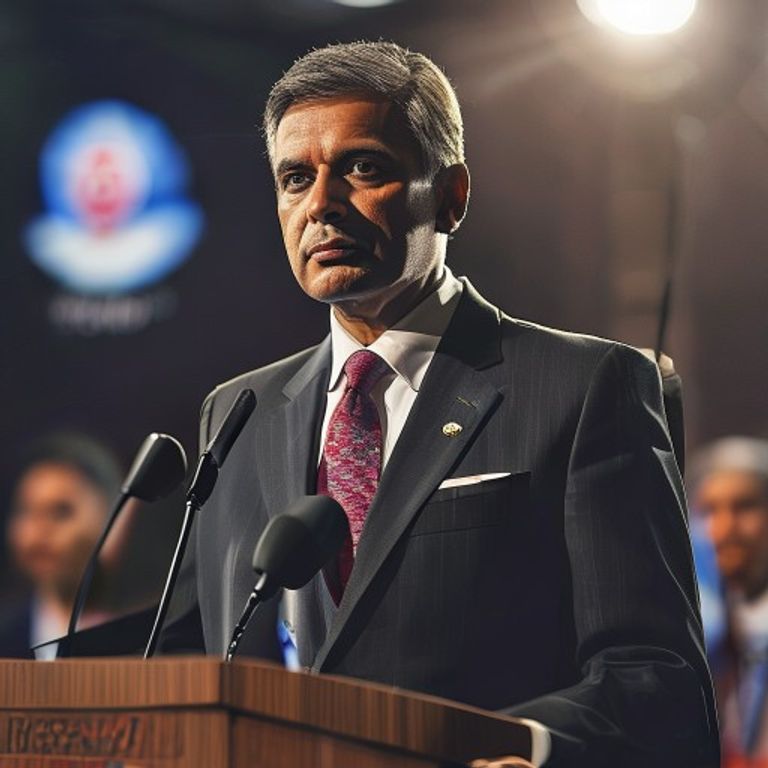
BJP Dispels Rumours: Sambit Patra Clarifies on Dharmendra Pradhan Portfolio Speculation Amidst NEET Fallout
New Delhi, India – In a significant development addressing swirling political speculation, Bharatiya Janata Party (BJP) MP Sambit Patra has categorically denied recent reports concerning the ministerial portfolio of former Union Education Minister Dharmendra Pradhan. Patra, a prominent voice within the ruling party, asserted that these claims were entirely fictional, fabricated, and disseminated solely with the intent to sensationalize political narratives. The clarification comes amidst a tumultuous period for the government, marked by widespread public outrage and protests following the highly contentious NEET paper leak scandal, which ultimately led to Pradhan’s resignation. The ongoing scrutiny over Dharmendra Pradhan portfolio and his political future highlights the intense pressure on the administration to restore public trust in critical sectors.
The political landscape in India has been particularly charged in recent weeks, with the National Eligibility cum Entrance Test (NEET) paper leak casting a long shadow over the education sector and the integrity of national examinations. Dharmendra Pradhan, who held the crucial portfolio of Union Education Minister, tendered his resignation in the wake of the extensive protests that erupted across the nation. His departure from the cabinet has naturally fuelled intense speculation regarding his future role within the party and government, making Patra’s intervention both timely and critical in managing the narrative.
The Fictional Narrative: Sambit Patra’s Firm Denial
Addressing the media in New Delhi, Sambit Patra unequivocally dismissed the reports linking Dharmendra Pradhan to a specific new ministerial portfolio. “These reports are absolutely baseless, utterly fictional, and clearly designed to create unwarranted sensationalism,” Patra stated, emphasizing the party’s stance against such unsubstantiated claims. He urged media outlets and the public to exercise caution and verify information before succumbing to speculative narratives that often distort facts and create unnecessary confusion within the political discourse.
Patra’s comments underscore a broader concern within the BJP regarding the spread of misinformation, particularly in an era of heightened political sensitivity. The party leadership appears keen to project an image of stability and coherence, even as it navigates challenging circumstances. The swiftness of Patra’s denial also suggests a strategic move to quash any internal or external perception of disarray or uncertainty regarding cabinet appointments and the roles of key leaders like Pradhan.
Dharmendra Pradhan’s Resignation: A Consequence of Widespread Outrage
The backdrop to this political clarification is the seismic event of the NEET paper leak. The National Eligibility cum Entrance Test (NEET) is a crucial examination for aspiring medical students in India, and the revelation of a paper leak triggered an unprecedented wave of protests. Students, parents, and educational activists took to the streets, demanding accountability, re-examination, and comprehensive reforms to prevent future occurrences of such malpractices. The sheer scale of the protests, coupled with the emotional intensity of the affected students, put immense pressure on the Ministry of Education and, by extension, on Minister Dharmendra Pradhan.
Pradhan, who had been a prominent figure in the Modi government, ultimately resigned from his post. While the exact reasons cited for his resignation are often framed as taking moral responsibility, it was widely understood as a direct consequence of the public’s anger and the government’s need to address the crisis decisively. His resignation marked a significant moment, signalling the government’s acknowledgement of the severity of the situation and its commitment to addressing the systemic issues that led to the leak. The incident has not only brought the education system under intense scrutiny but also sparked broader debates about governance, transparency, and accountability in India’s competitive examination landscape.
The Cockroach Janta Party: Protests and Political Engagement
Amidst the national outcry, the “Cockroach Janta Party” emerged as a vocal proponent of the protests, organizing demonstrations and raising demands for justice for the affected students. While details about the party’s size and national footprint might vary, their active participation in the protests underscored the broad-based anger against the NEET irregularities. Their delegation’s engagement with the government highlights the democratic process of grievance redressal and negotiation.
The Cockroach Janta Party’s decision to call off their protest came after a series of constructive talks with senior Union Ministers. This development is crucial as it demonstrates a pathway for resolution through dialogue, even amidst high-stakes political agitation. The willingness of both sides to engage in discussion, rather than prolonged confrontation, is a testament to the dynamic nature of Indian politics, where protest and negotiation often go hand-in-hand.
High-Level Interventions: Nadda and Singh Engage Delegation
The resolution of the Cockroach Janta Party’s protest was facilitated by direct engagement with high-ranking Union ministers, Jagat Prakash Nadda and Jitendra Singh. Nadda, a senior figure within the BJP and often involved in strategic party matters, along with Singh, known for his administrative acumen, met with the protesting delegation. The details of their discussions have not been fully disclosed, but the outcome – the cessation of the protests – suggests that the government addressed at least some of the concerns raised by the delegation to their satisfaction.
Such high-level interventions are often necessary to de-escalate volatile situations and establish a credible channel for communication between protesting groups and the government. The involvement of Nadda and Singh indicates the government’s seriousness in addressing the underlying issues and preventing further escalation of the crisis. Their diplomatic engagement helped to bridge the gap, bringing the protesting faction to the negotiation table and ultimately leading to a peaceful resolution.
The Broader Political Context: Navigating Challenges
The entire episode, from the NEET paper leak to Pradhan’s resignation, Patra’s denial of portfolio rumours, and the resolution of protests, unfolds against a complex political backdrop in India. The government is currently navigating a period of significant public expectation and scrutiny, particularly concerning issues of governance, economic stability, and social welfare. Incidents like the NEET paper leak test the government’s ability to maintain public trust and deliver on its promises of good governance.
The quick dismissal of rumours by a senior spokesperson like Sambit Patra also reflects the BJP’s ongoing efforts to control narratives and present a unified front. In the age of rapid information dissemination, managing political messaging effectively is paramount. Any perceived instability or uncertainty regarding ministerial roles can be exploited by political adversaries and contribute to a sense of disquiet among the populace.
Furthermore, the engagement with the Cockroach Janta Party demonstrates the government’s strategy of addressing opposition and protest through dialogue rather than confrontation when feasible. This approach can help in diffusing tensions and fostering a more constructive political environment, even when dealing with contentious issues.
Conclusion
Sambit Patra’s definitive denial regarding Dharmendra Pradhan’s alleged new ministerial portfolio serves to quell rampant speculation and reassert the BJP’s control over its internal communications. Coming on the heels of Pradhan’s resignation as Union Education Minister due to the widespread NEET paper leak protests, these clarifications are vital for maintaining political stability and public confidence. The successful de-escalation of the “Cockroach Janta Party’s” protests through dialogue with Union Ministers Jagat Prakash Nadda and Jitendra Singh further underscores the government’s active approach to crisis management.
As the government moves forward, addressing the root causes of the NEET paper leak and restoring faith in the examination system will be paramount. Patra’s strong refutation of “fictional” reports emphasizes the need for responsible journalism and political commentary, especially in sensitive times. The events surrounding Dharmendra Pradhan’s portfolio and the NEET controversy highlight the intricate dance of accountability, political maneuvering, and public discourse in India’s vibrant democracy.