
 By NewsMatrix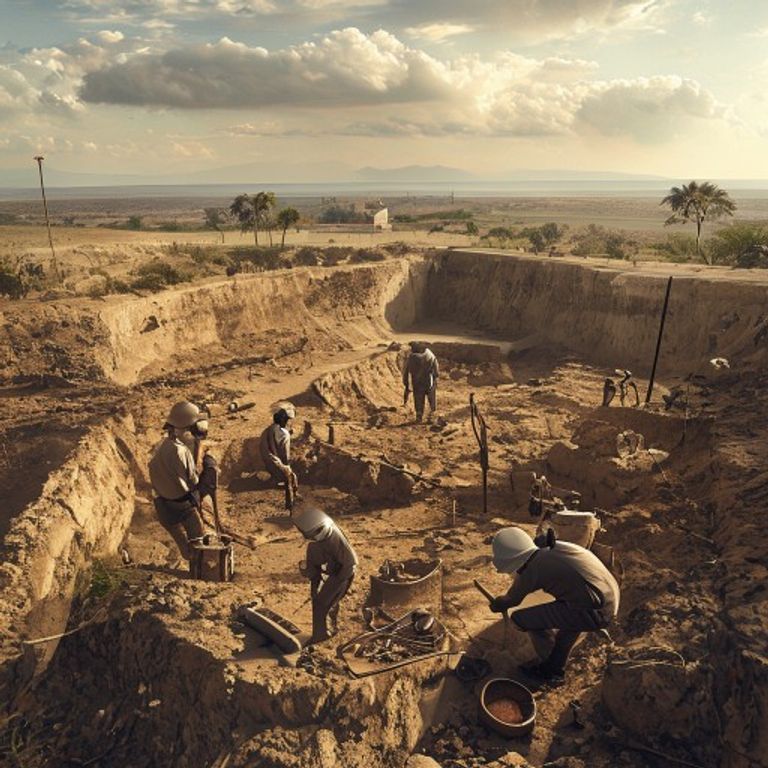
Angola Archaeology: Ancient Discoveries Unearth Pre-Colonial History
A race against time is underway in central Angola, where a team of dedicated archaeologists is meticulously uncovering relics of a forgotten era. Before the rising waters of a new hydroelectric dam irrevocably submerge the site, these researchers have brought to light the most significant archaeological discoveries in the nation’s history. These findings, crucial to Angola archaeology, include the country’s oldest radiocarbon-dated burials, its earliest known stone structures, and a singular ancient urn cremation. Dating back to the early 1400s, these revelations are poised to dramatically reshape our understanding of sophisticated, organized communities and intricate burial traditions that flourished in Angola centuries before the arrival of European explorers. The urgency of this salvage operation underscores the delicate balance between progress and the preservation of invaluable cultural heritage, offering a poignant glimpse into a vibrant past on the brink of being lost forever.
The Race Against the Waters: A Site Under Threat and the Urgency of Discovery
The excavation site, nestled in the heart of Angola’s central highlands, represents a critical juncture for historical research. The impending construction of a major hydroelectric dam, a vital infrastructure project intended to boost the nation’s energy supply and economic development, has inadvertently placed an unparalleled cultural treasure in jeopardy. Archaeologists, working under immense pressure and often challenging logistical conditions, have launched an urgent salvage mission. They are acutely aware that once the dam’s reservoir fills, these invaluable historical markers—the tangible evidence of ancient lives—will be forever submerged and inaccessible. This race against the clock, though somber in its premise, has only intensified the resolve of the international research teams involved, leading to breakthroughs that far exceed initial expectations and promise to fill crucial gaps in Angolan and broader African history. The meticulous scientific approach employed in documenting and understanding these sites before their inundation highlights a recurring global challenge: how to balance essential modern development with the imperative of preserving humanity’s shared cultural heritage.
Echoes from the Grave: Revealing Angola’s Oldest Dated Burials
Among the most profound discoveries are several radiocarbon-dated burials, meticulously excavated and analyzed. These graves, securely dated through advanced scientific methods to the early 15th century (around the 1400s), provide the earliest direct and precisely dated evidence of formal burial practices in what is now Angola. While earlier archaeological work had suggested ancient occupation in the region, the precise dating of human interments offers an unprecedented and intimate window into the funerary rites, spiritual beliefs, and social structures of communities living over six centuries ago. The careful observation of the arrangement of the bodies—whether individual or communal, flexed or extended—along with the presence or absence of grave goods, and the strategic location of the burial sites within the broader settlement, offer invaluable clues. These details speak volumes about social stratification, family organization, and the cosmological views that shaped their world. The burials distinctly suggest a society that honored its dead through established and possibly elaborate rituals, indicating a level of cultural complexity and community cohesion often underestimated for the period before sustained European contact. The painstaking recovery of skeletal remains also opens doors for future bioarchaeological studies, including potential ancient DNA analysis, which could reveal genetic lineages, dietary habits, health profiles, and migration patterns that would further enrich our understanding of early Angolan populations.
Foundations of the Past: Early Stone Structures Illuminate Ancient Settlements
Equally significant are the unearthed remnants of early stone structures. Prior to this excavation, definitive evidence of organized, pre-colonial stone architecture in central Angola was remarkably scarce. These newly discovered foundations, walls, and other structural elements, also dated to the early 1400s, suggest a degree of permanence, sophisticated architectural knowledge, and communal effort in settlement planning that had not been previously documented in such detail. The deliberate use of stone, a durable and labor-intensive material, indicates not only advanced building techniques but also points towards a settled, rather than purely nomadic, lifestyle. It implies a desire for long-term habitation or the construction of significant communal spaces, potentially for governance, ritual, or storage. Such robust structures are often strong indicators of well-established agricultural practices, clearly defined territorial claims, and the presence of social hierarchies capable of mobilizing and organizing significant labor for construction projects. Understanding the spatial layout and potential purpose of these buildings can shed light on daily life, economic activities, and the intricate social organization of these ancient Angolan communities, suggesting a stable and evolving society capable of considerable collective endeavors and resource management.
The Solemnity of Ash: A Unique Ancient Urn Cremation
Perhaps the most unique and intriguing discovery unearthed at the site is the ancient urn cremation—the only known instance of such a practice found to date in Angola from this specific period. Cremation, a funerary practice distinct from inhumation (burial), often carries profound cultural and spiritual significance, differing widely across human societies. The finding of cremated human remains carefully interred within a ceramic urn opens a completely new avenue for understanding the diversity and evolution of death rituals in pre-colonial Angola. This singular occurrence raises numerous compelling questions for archaeologists and anthropologists: Was this a rare practice, perhaps reserved for specific individuals of high status, or those who met particular circumstances of death? Did it represent a localized belief system or a tradition specific to a particular lineage? Or was it an imported tradition that found limited adoption within the wider cultural landscape? The vessel itself, its design, artistic motifs, and composition, can offer invaluable insights into the ceramic traditions, technological capabilities, and artistic expressions of the people who created it. This unique discovery fundamentally challenges any monolithic view of ancient Angolan burial customs, revealing a more nuanced, varied, and potentially complex spiritual and ritual landscape than previously imagined.
Redefining Pre-Colonial Angola: A Legacy of Advanced Societies Unveiled
Collectively, these archaeological revelations fundamentally rewrite significant chapters of Angolan history. They present compelling, quantifiable evidence of well-established, organized, and culturally rich communities thriving in central Angola during the early 15th century—a period predating the arrival of Portuguese explorers on the Angolan coast in the late 1400s by several decades. The presence of formal, dated burials, durable stone architecture, and distinct funerary practices like urn cremation indicates societies with sophisticated social structures, developed belief systems, and effective community governance. This contrasts sharply with earlier, often Eurocentric narratives that sometimes oversimplified pre-colonial African societies, inaccurately portraying them as less developed, nomadic, or lacking in formal organization and complex societal frameworks. These findings powerfully demonstrate that Angola possessed a rich tapestry of indigenous cultures and civilizations, each with their own unique trajectories of development, innovation, and social complexity, evolving independently of external European influences. They underscore the critical importance of local narratives, meticulously gathered archaeological evidence, and indigenous knowledge systems in constructing a more accurate, comprehensive, and respectful global history.
The Future of the Past: Preservation, Interpretation, and National Identity
While the immediate future of the physical archaeological site remains uncertain due with its impending inundation by the dam project, the intellectual and cultural legacy of these discoveries is unequivocally secured. The meticulous documentation, careful artifact recovery, and rigorous scientific analysis undertaken by the dedicated archaeological team will provide scholars and the public with an invaluable resource for generations to come. The wealth of data gleaned from these unprecedented excavations will undoubtedly fuel further academic research, inspire new educational programs, and contribute significantly to a deeper appreciation of Angola’s profound historical depth and the resilience of its ancient inhabitants. Efforts are now intently focused on the thorough conservation of the recovered artifacts, the comprehensive publication of all research findings in academic journals and public reports, and the development of museum exhibitions. These steps are crucial to ensuring that the stories of these ancient Angolan communities resonate far beyond the central highlands, becoming an integral part of national identity and pride. This monumental effort serves as a powerful reminder of the ongoing importance of archaeological investigation in understanding the full spectrum of human experience and preserving the memory of those who forged the paths before us.
Conclusion
The archaeological expedition in central Angola, conducted with urgent diligence amidst the impending flooding of the site by a major hydroelectric dam, has yielded discoveries of immense historical and cultural significance. The radiocarbon-dated burials—the oldest of their kind in Angola—the earliest known stone structures, and the singular ancient urn cremation, all precisely dated to the early 1400s, offer an unprecedented and detailed look into the sophisticated pre-colonial societies that inhabited this region. These groundbreaking findings affirm the existence of organized communities with rich burial traditions, architectural prowess, and complex social structures long before substantial European arrival, directly challenging and enriching established historical perspectives. As the waters of the dam’s reservoir inevitably rise, covering these ancient grounds, the invaluable narratives unearthed by the archaeologists will remain a timeless testament to Angola’s deep and vibrant past. They ensure that the legacy of its early inhabitants ensures not only as a cornerstone of national identity but also as a vital contribution to the broader understanding of global human history. The commitment to rescue these fragments of the past against such daunting odds underscores humanity’s innate drive to connect with its roots and understand the long, intricate journey that has led us to the present.