
 By NewsMatrix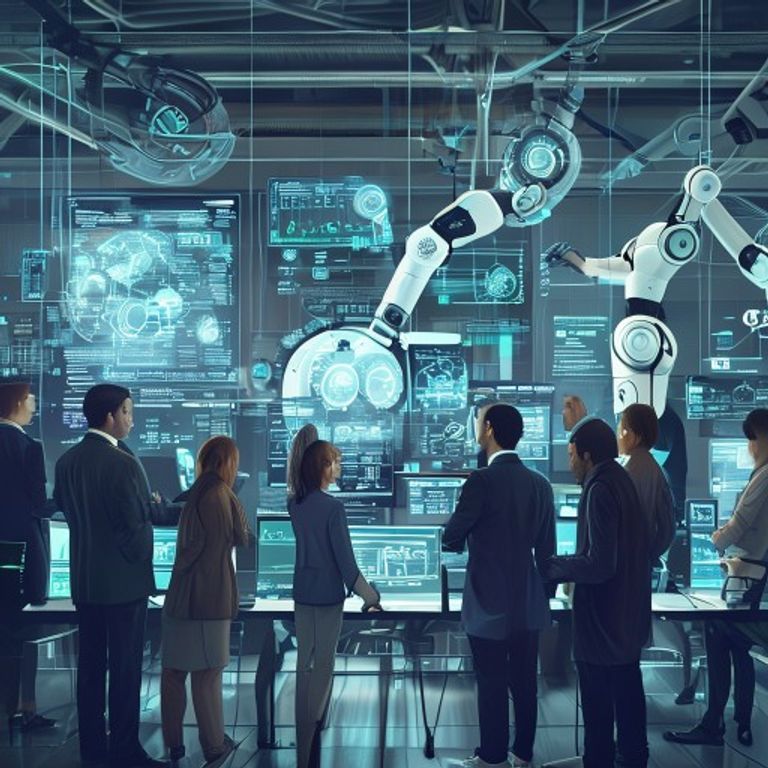
The rapid advancements in Artificial Intelligence (AI) are reshaping industries worldwide, presenting both unprecedented opportunities and significant challenges for the global workforce. As AI technologies become more sophisticated, their integration into various sectors is inevitable, leading to a profound AI Job Market Impact. This transformation necessitates a critical examination of how jobs will evolve, which roles might become obsolete, and what new career paths will emerge. Understanding these dynamics is crucial for policymakers, educators, businesses, and individuals alike to prepare for a future where humans and machines increasingly collaborate. This article delves into the multifaceted effects of AI on employment, exploring historical precedents, current trends, future projections, and the strategies needed to navigate this technological revolution successfully. Far from being a niche topic, the interaction between AI and employment is becoming a central theme in economic and social discourse across continents. The conversation is not just about automation, but about augmentation, where AI tools empower human workers to achieve greater efficiency and innovation, thus redefining the very nature of work itself. We stand at the precipice of a new era, one that promises both disruption and immense potential, provided we approach it with thoughtful planning and strategic investment in human capital.
Historical Precedents: Lessons from Past Industrial Revolutions
To fully grasp the magnitude of the current AI-driven transformation, it is beneficial to look back at history. The world has undergone several industrial revolutions, each characterized by a paradigm shift in technology that profoundly altered the economic and social fabric. The First Industrial Revolution, fueled by steam power and mechanization, moved production from homes to factories, creating new manufacturing jobs while displacing agricultural workers. The Second Industrial Revolution introduced electricity, mass production, and the assembly line, leading to the rise of large corporations and new urban centers. The Third Industrial Revolution, the digital revolution, saw the advent of computers, the internet, and automation, transforming information processing and communication. Each of these periods was met with anxieties about job losses, yet ultimately, new industries emerged, productivity soared, and overall living standards improved.
However, the AI revolution presents a unique set of challenges and opportunities. Unlike previous technologies that primarily automated physical or highly structured cognitive tasks, AI possesses the ability to perform complex cognitive functions, learn, adapt, and even make decisions. This capability extends to areas previously considered exclusively human domains, such as creative tasks, strategic planning, and sophisticated problem-solving. This distinction makes the current wave of technological change potentially more disruptive to a wider range of professions, from blue-collar to white-collar jobs. The pace of change is also significantly faster, demanding quicker adaptation from individuals and institutions. While historical precedents offer comfort in the long-term perspective of job creation following displacement, the short-to-medium term challenges of transition and adaptation are substantial and require immediate attention.
Current Trends: AI’s Multifaceted Impact Across Industries
Automation and Augmentation: Two Sides of the Same Coin
Currently, AI’s influence on the job market can be broadly categorized into two main phenomena: automation and augmentation. Automation refers to AI systems taking over tasks or entire jobs that were previously performed by humans. This is most evident in repetitive, data-intensive, or physically demanding roles. For instance, advanced robotics are transforming manufacturing floors, autonomous vehicles are poised to revolutionize logistics, and chatbots are handling a significant volume of customer service inquiries. While this often leads to concerns about job displacement, it also frees human workers from monotonous tasks, allowing them to focus on more complex, creative, and interpersonal aspects of their roles.
Augmentation, on the other hand, describes how AI tools enhance human capabilities, making workers more productive, efficient, and innovative. In healthcare, AI assists doctors in diagnostics, analyzes medical images, and helps in drug discovery. Financial analysts use AI to process vast amounts of market data, identify trends, and detect fraud. Architects and designers leverage AI to generate multiple design options and optimize structures. Even in creative fields, AI can be a powerful co-creator, assisting musicians with compositions or writers with content generation. The concept here is not about replacing humans, but empowering them with advanced tools that extend their reach and capacity, leading to a synergistic human-AI partnership.
Emerging Job Roles and Shifting Skill Requirements
As AI reshapes existing jobs, it simultaneously creates entirely new ones. The demand for professionals skilled in AI development, deployment, and maintenance is skyrocketing. Roles such as AI engineers, machine learning specialists, data scientists, robotics engineers, and prompt engineers are at the forefront of this new wave. Beyond technical roles, there’s a growing need for ethicists who can ensure AI systems are developed and used responsibly, policy experts to regulate AI, and educators to prepare the workforce for the future. This shift necessitates a re-evaluation of educational curricula and professional training programs to equip individuals with the skills most relevant to an AI-driven economy.
The skills in demand are evolving. While technical proficiency in areas like coding, data analysis, and AI model building is critical, “soft skills” are becoming increasingly valuable. These include critical thinking, creativity, complex problem-solving, emotional intelligence, communication, and adaptability. These are precisely the skills that AI struggles to replicate and that remain uniquely human. The ability to collaborate effectively with AI systems, interpret their outputs, and exercise human judgment will be paramount. Therefore, future education and training must strike a balance between developing robust technical competencies and honing these essential human-centric attributes.
Sector-Specific Transformations: A Closer Look
The impact of AI is not uniform across all sectors; some industries are experiencing more rapid and profound changes than others. Understanding these sector-specific transformations is key to anticipating broader economic shifts.
-
Manufacturing and Logistics: The Rise of Smart Automation
This sector has long been a pioneer in automation, and AI is taking it to the next level. Smart factories, powered by AI, use predictive maintenance to minimize downtime, optimize production lines, and ensure quality control. Autonomous robots and drones are revolutionizing warehousing and last-mile delivery. While some manual labor jobs may decrease, there’s an increased demand for skilled technicians to operate, program, and maintain these sophisticated AI-driven systems, as well as for data analysts to interpret the vast amounts of operational data generated.
-
Healthcare: Precision, Efficiency, and Personalized Care
AI is transforming healthcare from diagnostics to drug discovery and personalized treatment plans. AI algorithms can analyze medical images (X-rays, MRIs) with greater speed and accuracy than humans, assisting radiologists. They can also predict disease outbreaks, personalize drug dosages, and manage patient records more efficiently. This frees up medical professionals to focus more on patient interaction, complex case management, and compassionate care. New roles like AI-powered medical device specialists and clinical AI integrators are emerging.
-
Finance: From Algorithmic Trading to Enhanced Security
The financial sector is heavily reliant on data, making it fertile ground for AI applications. Algorithmic trading, fraud detection, credit scoring, and personalized financial advice are already being significantly enhanced by AI. AI can process vast amounts of market data in real-time, identifying patterns and making decisions at speeds impossible for humans. While some back-office processing roles may be automated, there’s a growing need for financial professionals with strong analytical skills to develop, manage, and interpret AI-driven financial models, and to provide high-level strategic advice.
-
Retail and Customer Service: A Personalized Experience
AI is personalizing the retail experience through recommendation engines, virtual assistants, and chatbots. Inventory management, supply chain optimization, and demand forecasting are also being revolutionized by AI. In customer service, AI-powered chatbots handle routine inquiries, allowing human agents to focus on complex or emotionally nuanced issues. This leads to more efficient operations and a more tailored customer journey, while also creating new roles in AI deployment, content creation for bots, and customer experience design.
-
Education: Tailored Learning and Administrative Efficiencies
AI offers the potential for highly personalized education, adapting learning paths to individual student needs and paces. AI tutors can provide supplementary support, and AI tools can automate administrative tasks for educators, freeing up their time for direct instruction and mentorship. While AI will not replace teachers, it will transform the tools and methods used in classrooms, requiring educators to become adept at integrating these technologies effectively.
Addressing the Skills Gap and Embracing Lifelong Learning
The rapid evolution of the job market due to AI highlights a critical challenge: the growing skills gap. Many existing educational systems are not adequately preparing individuals for the demands of an AI-driven economy. There is an urgent need for concerted efforts from governments, educational institutions, and businesses to address this gap.
Rethinking Education and Training
Education systems must adapt by emphasizing STEM (Science, Technology, Engineering, and Mathematics) fields, coding literacy, and data science from an early age. Universities and vocational schools need to continuously update their curricula to include AI-specific knowledge, machine learning principles, and robotics. Furthermore, fostering critical thinking, creativity, and interdisciplinary problem-solving skills will be crucial. The focus should shift from rote memorization to equipping students with the ability to learn, unlearn, and relearn throughout their careers.
For the existing workforce, reskilling and upskilling initiatives are paramount. Governments and businesses must invest in accessible, flexible, and affordable training programs that enable workers to acquire new skills or enhance existing ones relevant to AI-augmented roles. This could involve online courses, apprenticeships, corporate training programs, and micro-credentials. The concept of “lifelong learning” is no longer an aspiration but a necessity for career resilience in the age of AI. Companies that invest in their employees’ continuous learning will not only retain talent but also build a more adaptive and innovative workforce.
Ethical Considerations and Societal Implications
Beyond economic shifts, the widespread adoption of AI raises profound ethical and societal questions that need careful consideration and proactive policy-making.
-
Job Displacement and Economic Inequality
While AI is expected to create new jobs, the transition period could lead to significant job displacement, particularly for those in routine or easily automatable roles. This could exacerbate existing economic inequalities if not managed effectively. Governments may need to explore social safety nets, such as universal basic income (UBI) or robust retraining programs, to support displaced workers and ensure a just transition.
-
Bias in AI Systems
AI systems are trained on data, and if that data reflects existing societal biases, the AI will perpetuate and even amplify them. This has critical implications for hiring, credit scoring, criminal justice, and other sensitive areas. Developing ethical AI requires diverse development teams, transparent algorithms, and rigorous testing to identify and mitigate biases, ensuring fairness and equity in AI applications.
-
Data Privacy and Security
AI’s power often comes from its ability to process vast amounts of data. This raises concerns about individual privacy, data security, and the potential for misuse. Robust regulatory frameworks, data governance policies, and strong cybersecurity measures are essential to protect personal information and build public trust in AI technologies.
-
The Nature of Work and Human Dignity
As AI takes over more tasks, it prompts deeper questions about the meaning of work, human purpose, and dignity. Societies must engage in conversations about how to ensure that individuals find meaning and value in their lives, irrespective of traditional employment structures. This could involve fostering creative pursuits, community engagement, or other forms of meaningful contribution.
Conclusion: Navigating the Future of Work with AI
The AI Job Market Impact is a complex and evolving phenomenon that demands proactive engagement from all stakeholders. While concerns about job displacement are valid, history suggests that technological revolutions ultimately lead to new forms of employment and increased productivity. The key lies in strategic adaptation: investing in education and lifelong learning, fostering human-AI collaboration, and developing ethical frameworks for AI deployment. Societies that embrace these challenges with foresight and flexibility will be better positioned to harness AI’s transformative power for inclusive growth and prosperity.
The future of work will not be merely about machines replacing humans, but about humans and AI achieving unprecedented levels of innovation and efficiency together. This requires a collective effort: governments must formulate forward-looking policies, businesses must invest in their workforces and ethical AI development, and individuals must commit to continuous learning and adaptation. By working collaboratively, we can ensure that the AI revolution serves humanity, creating a future where technology enhances human potential and contributes to a more equitable and prosperous world for all.