
 By NewsMatrix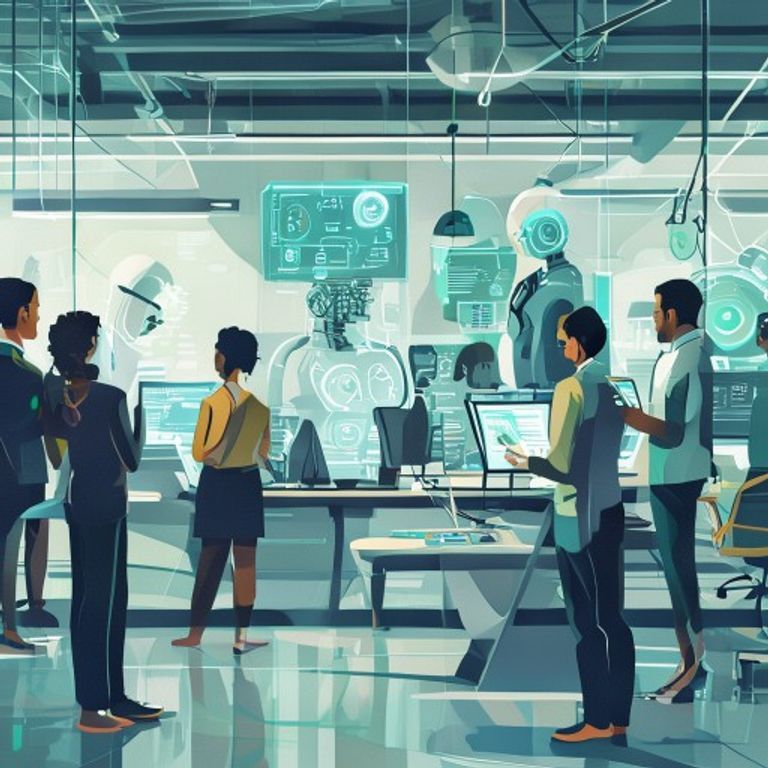
The Shifting Landscape: Understanding AI’s Profound Impact on Global Employment
In an era defined by rapid technological advancement, few innovations have captured the global imagination and spurred as much debate as Artificial Intelligence (AI). From powering our smartphones to optimizing complex industrial processes, AI is no longer a futuristic concept but a ubiquitous reality. Yet, beneath the veneer of convenience and efficiency lies a profound question that resonates across boardrooms, policy forums, and dinner tables worldwide: What is the true AI employment impact? This article delves into the multifaceted ways AI is reshaping the global employment landscape, examining both the challenges of job displacement and the opportunities for job creation, and exploring the imperative for adaptation and strategic foresight in navigating this new era.
The discourse surrounding AI and its influence on the workforce is often polarized, swinging between utopian visions of enhanced productivity and dystopian fears of widespread unemployment. However, a nuanced understanding reveals that the reality is far more complex. AI is not merely automating tasks; it is redefining the nature of work, demanding new skills, and necessitating a fundamental re-evaluation of educational systems, social safety nets, and corporate strategies. As societies grapple with these transformations, understanding the dynamics of AI’s integration into our economic fabric becomes paramount for governments, businesses, and individuals alike.
Historical Precedents: Echoes of Industrial Revolutions
To truly grasp the magnitude of the current AI-driven transformation, it is beneficial to look back at history. Humanity has experienced several industrial revolutions, each marked by groundbreaking technological shifts that fundamentally altered work and society. The First Industrial Revolution, powered by steam and mechanization, moved labor from farms to factories. The Second introduced electricity, mass production, and the assembly line, creating new categories of industrial workers. The Third, characterized by computers and the internet, ushered in the information age, automating routine tasks and creating the digital economy.
Each of these revolutions sparked anxieties about job losses, yet each ultimately led to the creation of entirely new industries, professions, and forms of employment that were previously unimaginable. While the immediate impact often involved the obsolescence of certain skills and roles, the long-term effect was a net increase in productivity, wealth, and often, the quality of life. The crucial difference with AI, however, lies in its capacity to learn, adapt, and perform cognitive tasks, leading some to argue that its impact could be more pervasive and rapid than any preceding technological wave.
The Dual Nature of AI: Displacement and Creation
Job Displacement: The Automation Frontier
The most immediate and frequently discussed aspect of AI’s influence is its potential to displace human labor. AI excels at automating routine, repetitive, and rule-based tasks across a spectrum of industries. Jobs involving data entry, administrative support, basic customer service, and even certain aspects of manufacturing and logistics are particularly vulnerable. Self-driving vehicles threaten the livelihoods of professional drivers, while sophisticated chatbots handle increasing volumes of customer inquiries, reducing the need for human agents in call centers.
This displacement is not uniform. Low-skill, manual labor is at risk, but so are some white-collar roles. For instance, AI algorithms can now perform detailed legal discovery, analyze financial data, or even generate basic news reports faster and with greater accuracy than humans. The challenge lies in managing this transition, ensuring that displaced workers have pathways to new opportunities, and addressing the potential for increased economic inequality if these shifts are not proactively managed.
Job Creation: Emerging Roles and Industries
While AI undoubtedly automates existing jobs, it simultaneously acts as a powerful engine for new job creation. The development, deployment, maintenance, and ethical governance of AI systems themselves require a vast new workforce. Roles such as AI trainers, prompt engineers, data scientists, machine learning engineers, AI ethicists, and robotics technicians are in high demand and represent entirely new professions that did not exist a decade or two ago.
Beyond direct AI-related roles, AI also fuels the growth of complementary industries and augments human capabilities, leading to more complex and creative forms of work. For example, in healthcare, AI assists doctors in diagnostics, allowing them to focus on personalized patient care. In creative fields, AI tools can help artists generate initial concepts or automate mundane aspects of design, freeing them to pursue higher-level creative endeavors. The focus shifts from performing routine tasks to supervising AI, interpreting its outputs, and applying uniquely human skills like critical thinking, empathy, and innovation.
Sectoral Deep Dive: Where AI is Making Waves
Manufacturing and Logistics
In manufacturing, advanced robotics and AI-powered automation are leading to “lights-out” factories where production lines operate with minimal human intervention. This increases efficiency, reduces errors, and allows for customization at scale. The impact on employment shifts the demand from manual assembly workers to engineers, data analysts, and technicians who design, program, and maintain these sophisticated systems. In logistics, AI optimizes supply chains, manages warehouse robotics, and enhances delivery routes, transforming traditional roles in warehousing and transportation.
Services and Customer Interaction
AI-driven chatbots and virtual assistants are increasingly handling routine customer service inquiries, freeing human agents to focus on complex problem-solving, emotionally sensitive situations, and building deeper customer relationships. This changes the nature of customer service work, demanding higher-level communication, problem-solving, and emotional intelligence skills from human employees.
Healthcare and Medicine
AI is revolutionizing healthcare, from accelerating drug discovery and developing personalized treatment plans to improving diagnostic accuracy in radiology and pathology. While AI systems can analyze vast amounts of medical data to identify patterns and predict disease risks, they augment, rather than replace, medical professionals. Doctors and researchers leverage AI insights to make more informed decisions, enhancing patient care and operational efficiency.
Finance and Business Operations
The financial sector is a significant adopter of AI, utilizing it for algorithmic trading, fraud detection, risk assessment, and personalized financial advice. AI automates many back-office functions, reducing manual errors and increasing processing speed. Similarly, in broader business operations, AI powers predictive analytics for marketing, optimizes resource allocation, and streamlines administrative tasks, allowing human employees to focus on strategic planning and innovation.
Creative Industries
Even traditionally human-centric creative fields are experiencing AI’s influence. AI can generate text, images, music, and even video content, assisting artists, writers, and designers in their creative processes. While this raises ethical questions about originality and intellectual property, it also presents new tools for creativity, allowing artists to experiment with new forms and expedite production. The role of the human shifts to curation, direction, and infusing the AI-generated content with unique artistic vision.
The Evolving Skill Set: Adapting to the AI Era
Demand for Digital and AI Literacy
As AI becomes more integrated into every facet of work, a fundamental shift in required skills is emerging. Basic digital literacy is no longer sufficient; a foundational understanding of AI concepts, how AI systems work, their capabilities, and their limitations is becoming essential for nearly every profession. Workers need to be able to interact with AI tools, interpret their outputs, and understand the data feeding these systems. Data interpretation, critical thinking about AI-generated insights, and problem-solving within AI-driven environments are paramount.
Emphasis on Human-Centric Skills
Paradoxically, as technology advances, “soft skills” or “human-centric skills” become even more critical. These are the attributes that AI currently struggles to replicate and that remain uniquely human. This includes creativity, critical thinking, complex problem-solving, emotional intelligence, empathy, collaboration, ethical reasoning, and adaptability. Education and training systems must pivot to nurture these skills, preparing individuals for roles where human judgment, interpersonal interaction, and innovative thought are irreplaceable.
Reskilling and Upskilling Imperatives
The rapid pace of AI adoption necessitates a commitment to lifelong learning. Governments, educational institutions, and corporations all have a crucial role to play in facilitating widespread reskilling and upskilling initiatives. This includes developing accessible online courses, vocational training programs, corporate learning platforms, and apprenticeships focused on AI-related competencies and human-centric skills. Investing in continuous learning is not just a matter of career advancement but a societal imperative to ensure a resilient and adaptable workforce.
Global Perspectives and Policy Responses
Developed vs. Developing Economies
The AI employment impact will manifest differently across developed and developing economies. Developed nations, with higher wages and greater capital investment capacity, may see faster AI adoption and a quicker transition to AI-augmented roles. Developing economies, with larger workforces in routine tasks and less access to advanced infrastructure, could face greater immediate challenges in job displacement. However, AI also offers opportunities for leapfrogging traditional development stages, such as using AI in agriculture or for remote education and healthcare, if accompanied by strategic investments and inclusive policies.
Governmental Strategies
Governments worldwide are grappling with how to respond to the AI revolution. Strategies include significant investment in AI research and development, fostering innovation ecosystems, and reforming educational curricula. Discussions also revolve around strengthening social safety nets, exploring concepts like Universal Basic Income (UBI) to mitigate the impact of widespread automation, and developing robust regulatory frameworks for ethical AI development and deployment. International cooperation is also vital to establish global standards and ensure equitable access to AI’s benefits.
Corporate Responsibilities
Corporations bear a significant responsibility in shaping the future of work with AI. Ethical deployment, transparency about AI’s capabilities and limitations, and a commitment to employee training and transition support are crucial. Companies that invest in their workforce’s adaptability and view AI as a tool for augmentation rather than pure replacement are more likely to thrive and contribute positively to society. Furthermore, corporate involvement in contributing to public education and community development initiatives related to AI literacy is becoming increasingly important.
Navigating the Future: Challenges and Opportunities
The journey into an AI-powered future is fraught with both formidable challenges and unprecedented opportunities. The challenges include the potential for increased income inequality, the erosion of job quality in certain sectors, and ethical dilemmas concerning bias, privacy, and accountability in AI systems. The digital divide could widen if access to AI tools and education is not equitable, exacerbating existing societal disparities.
However, the opportunities are equally vast. AI can drive unprecedented levels of productivity, foster entirely new industries, and provide solutions to some of the world’s most pressing problems, from climate change and disease eradication to personalized education and sustainable resource management. The key lies in our collective ability to proactively manage the transition, ensuring that AI serves as a tool for human flourishing rather than a source of societal disruption.
Conclusion
The AI employment impact is a complex, evolving narrative that demands continuous attention and adaptive strategies. It is clear that AI will profoundly reshape the global workforce, making certain jobs obsolete while creating others we can barely imagine. The future is not one of either widespread unemployment or unbridled prosperity, but rather a dynamic interplay between human ingenuity and artificial intelligence.
Ultimately, the trajectory of AI’s impact on employment will be determined not solely by the technology itself, but by the choices we make today—as individuals, educators, businesses, and policymakers. By prioritizing lifelong learning, fostering human-centric skills, implementing ethical guidelines, and ensuring inclusive access to AI’s benefits, we can navigate this transformative era, harness the immense potential of AI, and build a future where technology truly serves humanity.