
 By NewsMatrix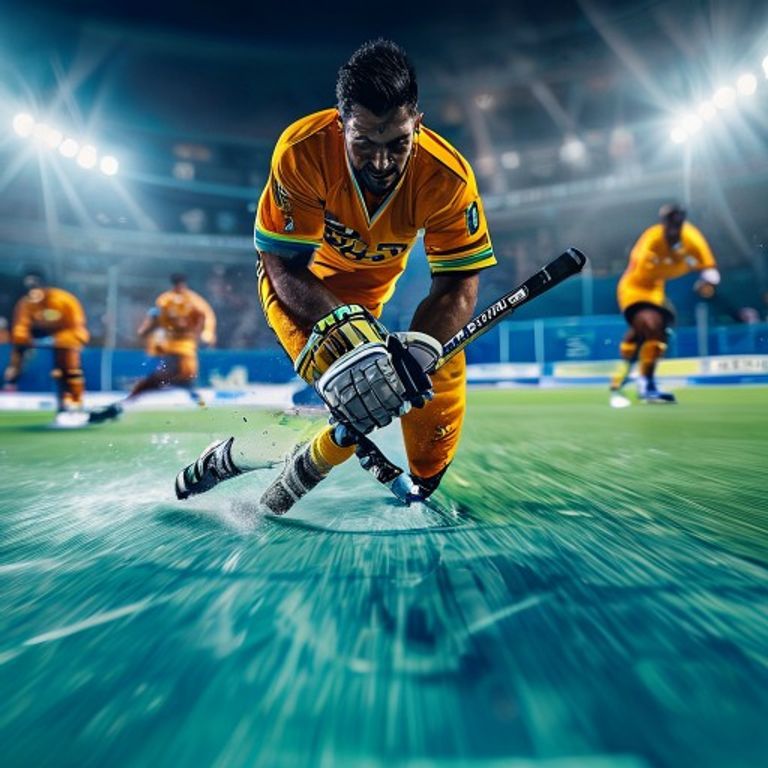
Hockey India Adopts Saffron Jerseys for 2026 World Cup: A Strategic Shift
In a significant strategic move set to redefine its visual identity on the international stage, Hockey India has officially announced its decision to adopt saffron-coloured jerseys for the highly anticipated 2026 World Cup. This bold change, departing from the traditional blue, stems from a pragmatic evaluation of on-field visibility issues encountered by players. According to the national federation, the conventional blue kit has frequently blended with the ubiquitous blue artificial turf used in modern international hockey tournaments, creating a distinct disadvantage for players in rapidly identifying teammates during critical moments of play. The decision to introduce Hockey India Saffron Jerseys marks a forward-thinking approach aimed squarely at enhancing competitive performance and player efficacy.
The Rationale: Overcoming the Blue-on-Blue Conundrum
The genesis of this uniform overhaul lies in a fundamental challenge posed by the standardisation of playing surfaces in elite field hockey. For years, international hockey federations have largely favoured blue artificial turfs for their visual appeal for broadcast, consistent playing characteristics, and durability. While aesthetically pleasing, this choice inadvertently created a tactical impediment for teams traditionally sporting blue kits. Hockey India’s extensive internal consultations, involving both seasoned players and expert coaching staff, consistently highlighted that the lack of sufficient contrast between the team’s blue jerseys and the blue playing surface significantly hampered peripheral vision and instantaneous recognition of fellow players.
In the high-octane environment of international hockey, where decisions are made in fractions of a second, even a slight delay in spotting a teammate can be the difference between a successful pass and a turnover, a scoring opportunity and a lost possession. This visual ambiguity, though seemingly minor, can accumulate over a match, impacting team cohesion, tactical execution, and ultimately, match outcomes. The federation’s commitment to addressing this deeply rooted performance concern underscores a broader dedication to leaving no stone unturned in the pursuit of sporting excellence.
The Selection Process: Why Saffron?
The decision to embrace saffron was not impulsive but the culmination of a thorough and data-driven selection process. Hockey India confirmed that various alternative colours were rigorously tested and evaluated by players and coaches alike. The criteria for selection were stringent: the new colour needed to offer maximum contrast against the blue turf, be visually distinct, and ideally, carry a degree of national significance. After extensive trials and feedback sessions, saffron emerged as the overwhelming choice.
Saffron, a colour deeply embedded in India’s cultural and historical tapestry, offers a stark and unmistakable contrast against the blue playing surface. Its vibrancy ensures that players wearing the jersey will stand out prominently, making them easily identifiable to teammates across the field. This enhanced visibility is expected to significantly improve quick decision-making, facilitate more fluid passing, and reduce errors stemming from misidentification. Beyond its practical benefits, the colour saffron also resonates powerfully with national identity and pride, potentially instilling an added sense of spirit and determination among the players, while also presenting a distinctive look for the Indian team globally.
A Historical Perspective: India’s Sporting Attire
For decades, the blue jersey has been synonymous with Indian hockey, a colour that has witnessed both glorious triumphs and challenging periods. From the golden era of Olympic dominance to more contemporary successes, the blue kit has been an iconic representation of the nation’s prowess in the sport. While steeped in tradition, sports, by their very nature, are dynamic and ever-evolving. Equipment, training methodologies, and even visual presentation are constantly refined to gain a competitive edge. This shift to saffron, therefore, represents not a rejection of history but an evolution, a pragmatic adaptation aimed at future success.
Throughout the history of sports, national teams have periodically updated or even dramatically altered their kits for various reasons, including technological advancements in fabric, aesthetic redesigns, or, as in this case, strategic performance enhancements. This move by Hockey India places it among global sporting federations that prioritise empirical evidence and player welfare in their decision-making process, even if it means departing from long-held traditions. The embrace of saffron thus becomes a landmark moment in the visual narrative of Indian hockey, signifying a modern outlook driven by performance optimisation.
Impact on Player Performance and Strategic Advantage
The immediate and most direct impact of the new saffron jerseys is anticipated to be on player performance and tactical execution. In a sport where spatial awareness and rapid ball movement are paramount, clearer visibility translates directly into enhanced operational efficiency on the field. Coaches believe that improved visual distinction will allow players to:
- Make quicker and more accurate passes, reducing the risk of misdirected balls.
- Enhance peripheral vision, enabling better anticipation of defensive and offensive plays.
- Improve communication, as non-verbal cues and positioning become more apparent.
- Reduce mental fatigue by lessening the cognitive load required to distinguish teammates.
- Facilitate faster transitions from defence to attack and and vice-versa.
Furthermore, from a strategic standpoint, a team that can reliably identify its players instantly gains a marginal but crucial advantage. This is especially true in modern hockey, which is characterized by high-pressing, intricate passing patterns, and fluid positional play. Any factor that streamlines the cognitive process for players, allowing them to focus more on strategy and less on basic identification, is considered a significant asset. The uniform change is thus not merely aesthetic but a calculated tactical enhancement designed to provide India with every conceivable edge at the 2026 World Cup.
Fan Reaction and National Symbolism
The introduction of a new national jersey colour, especially one with such profound cultural resonance as saffron, is bound to elicit a wide range of reactions from the passionate Indian hockey fanbase. Saffron holds deep symbolic meaning in India, often associated with courage, sacrifice, and the country’s spiritual heritage. While some traditionalists might initially express surprise at the departure from blue, the underlying rationale – improved player performance – is likely to garner widespread support.
The visual impact of the Indian team in vibrant saffron on the global stage could also amplify national pride and create a new, powerful identity for the squad. It offers a fresh aesthetic that stands out not only against the turf but also potentially among other national teams. The federation will likely engage in public awareness campaigns to explain the strategic benefits, ensuring that fans understand this is a performance-driven decision rather than a superficial change. Ultimately, if the new jerseys contribute to successful outcomes, the saffron kit will quickly become a cherished symbol of a new era for Indian hockey.
Technical Considerations: Turf and Kit Design
Modern artificial hockey turfs, predominantly blue, are engineered for optimal ball roll, player traction, and durability. These surfaces, often made from synthetic fibres, are designed to withstand intense play and varying weather conditions. The specific hue of blue, while standardised, presents a particular challenge for visually similar kit colours. Consequently, the choice of saffron was also influenced by technical considerations of colour theory and how it interacts with ambient light, stadium lighting, and broadcast cameras.
Beyond just the colour, the design of the new saffron jerseys will likely incorporate advanced fabric technology. Contemporary sports apparel is designed to be lightweight, breathable, moisture-wicking, and flexible, all contributing to peak athletic performance. The combination of a highly visible colour with cutting-edge material science aims to create a uniform that not only looks distinct but also empowers players physically. Manufacturers and designers will have worked closely with Hockey India to ensure the saffron kit meets all international standards for comfort, performance, and player safety, reinforcing the professional commitment to every aspect of the team’s readiness.
Global Precedents and the Pursuit of Advantage
While a prominent colour change for a major national team can seem unusual, the pursuit of competitive advantage through nuanced adjustments is a common theme across elite sports globally. Teams in various disciplines constantly analyse factors like uniform design, material science, and even psychological impact of colours. For instance, some football clubs or national teams might opt for away kits that significantly contrast with their home kits and potential opponent kits to avoid clashes and ensure maximum visibility for officials and players alike.
This proactive step by Hockey India aligns with a global trend where federations are increasingly leveraging every available tool—from sports science to psychological strategies—to eke out marginal gains. The decision serves as a testament to the meticulous planning and analytical approach adopted by the federation, signifying their determination to leave no stone unturned in preparing for the challenges of top-tier international competition. It demonstrates an understanding that success at the highest levels of sport is often determined by attention to detail and a willingness to innovate.
Gearing Up for the 2026 World Cup
The introduction of the new saffron jerseys is an integral part of Hockey India’s overarching preparations for the 2026 World Cup. Beyond the uniform change, the federation is undoubtedly implementing comprehensive training programmes, strategic player development initiatives, and engaging in high-level international fixtures to fine-tune the squad. The World Cup represents the pinnacle of field hockey, and every participating nation strives to arrive with its absolute best. By addressing a fundamental visual challenge, Hockey India is demonstrating its commitment to equipping its players with every possible advantage.
The 2026 tournament will be a critical juncture for Indian hockey, building upon recent successes and aiming for further glory. The new saffron attire will not just be a new look but a symbol of renewed strategic intent and a tangible expression of the federation’s dedication to supporting its athletes. As the countdown to the World Cup continues, all eyes will be on the Indian team, both for their performance and their distinctive new identity.
Conclusion
Hockey India’s bold decision to adopt saffron jerseys for the 2026 World Cup is a well-considered strategic manoeuvre, born from a critical analysis of on-field challenges. By directly addressing the visibility issues posed by blue jerseys on blue artificial turf, the federation aims to provide its players with a clear competitive advantage, fostering enhanced communication, quicker decision-making, and ultimately, superior performance. This move underscores a modern, performance-driven approach to national sports management, demonstrating a willingness to innovate and adapt for success. As India prepares to contend for hockey’s most coveted prize, the vibrant saffron jerseys will not only offer a fresh visual identity but also serve as a powerful emblem of the nation’s strategic ambition and unwavering commitment to excellence on the global hockey stage.