
 By NewsMatrix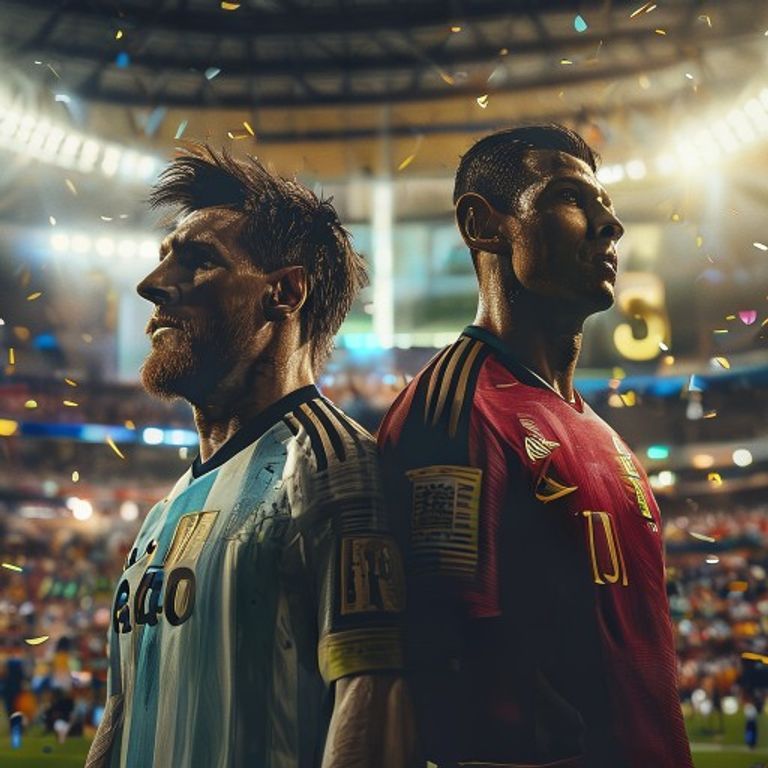
A Statistical Miracle in North America
The 2026 FIFA World Cup, hosted across the vast landscapes of Canada, Mexico, and the United States, was always destined to be a tournament of unprecedented scale. However, no pundit, mathematician, or fan could have predicted the sheer poetic symmetry that would unfold on the pitch. As the world watched in awe, the two greatest icons of the modern era—Lionel Messi and Cristiano Ronaldo—reached a statistical milestone so precise it feels scripted by the gods of football. At NewsMatrix, we are witnessing the culmination of a two-decade-long journey that has redefined the boundaries of human athletic peak and longevity.
In a stunning turn of events, both Messi and Ronaldo have recorded an identical 20-year and 6-day gap between their first-ever World Cup goals and their latest strikes in the 2026 tournament. This eerie alignment of their careers is more than just a coincidence; it is a testament to their parallel excellence. While the world has spent twenty years debating who is superior, the numbers have decided to crown them both as eternal mirrors of one another. This article explores the depth of this symmetry, Messi’s ascent to the top of the all-time scoring charts, and Ronaldo’s unprecedented feat of scoring in six different World Cup editions.
The 20-Year, 6-Day Symmetry: Mathematics of Greatness
To understand the magnitude of this feat, one must look back to the summer of 2006. In Germany, a young, long-haired Lionel Messi scored his first World Cup goal against Serbia and Montenegro on June 16, 2006. Only one day later, a flashy and fast Cristiano Ronaldo opened his account against Iran on June 17, 2006. Fast forward to the 2026 World Cup, and both players have managed to find the back of the net exactly 20 years and 6 days after those maiden strikes.
For Messi, the goal came in a high-stakes group stage match that saw the Argentine captain weave through a new generation of defenders, proving that while his pace may have slowed, his vision remains peerless. For Ronaldo, the milestone goal was a trademark header, rising above players nearly half his age to power the ball into the net. NewsMatrix analysts have noted that this level of consistency is historically unprecedented. Prior to this, the longest gaps between a player’s first and last World Cup goals were held by legends like Miroslav Klose and Pele, but none approached the two-decade mark.
Breaking Down the Timeline
- 2006: The debut goals. Messi (June 16) and Ronaldo (June 17) signal the arrival of a new era.
- 2010-2018: The peak years. Both players carry their nations through multiple tournaments, winning individual accolades but facing World Cup heartbreaks.
- 2022: Messi lifts the trophy in Qatar, while Ronaldo becomes the first to score in five tournaments. Many assumed this was the end.
- 2026: The “Last Dance” becomes a permanent legacy. Both players find the net to reach the 20-year, 6-day symmetry.
Lionel Messi: The New King of the World Cup Scoresheet
While the symmetry provides the narrative, the statistics provide the hardware. In the 2026 edition, Lionel Messi officially moved ahead as the all-time leading goalscorer in FIFA World Cup history. With his 18th goal, he surpassed the long-standing record of 16 goals held by Germany’s Miroslav Klose. Messi’s journey to 18 goals has been a masterclass in evolution. Starting as a pure winger in 2006, moving to a “False 9” in the 2010s, and eventually becoming the ultimate playmaker-finisher in the 2020s, his ability to adapt is why he stands at the summit today.
Reporting from the ground, NewsMatrix correspondents noted the atmosphere in the stadium when Messi struck his 18th goal. It wasn’t just a celebration for Argentina; it was a global acknowledgement of a record that may never be broken. Messi’s 18 goals are spread across five of the six tournaments he has participated in, showing a remarkable ability to peak when the stakes are highest. His performance in 2026 has been characterized by a veteran’s intelligence—knowing exactly when to sprint and exactly where the space will open up before the defenders even realize it.
The Evolution of the Argentine Icon
Messi’s 2026 form is distinct from his 2022 championship run. In Qatar, he was the emotional and tactical heartbeat of the team. In 2026, he has played a more refined role, acting as a “luxury” creator who still possesses the lethal finishing touch that defined his Barcelona years. The symmetry of his 20-year gap highlights not just that he is still playing, but that he is still scoring at the highest possible level of the sport.
Cristiano Ronaldo: Six Editions of Excellence
If Messi represents the artistry of the game, Cristiano Ronaldo represents the sheer will of the human spirit. By scoring in the 2026 World Cup, Ronaldo has become the first player in the history of football to score in six different editions of the tournament (2006, 2010, 2014, 2018, 2022, and 2026). This is a record of longevity that defies biological norms.
Ronaldo’s presence in the 2026 squad was a subject of much debate in Portugal. Critics argued that at 41, he could no longer keep up with the frantic pace of international football. However, Ronaldo silenced his detractors in the most “CR7” way possible. His goal—the one that completed the 20-year, 6-day symmetry—was a display of perfect positioning and athletic timing. NewsMatrix sports writers have pointed out that Ronaldo’s training regimen and dedication to his physique are the only reasons such a record is possible. He has transformed himself from the dribbling wizard of Manchester United into the greatest poacher the game has ever seen.
The Statistical Significance of Six Tournaments
Scoring in six tournaments means Ronaldo has remained an elite threat for nearly a quarter of a century. Consider the changes in football since 2006: the introduction of VAR, the shift toward high-pressing systems, and the rise of data analytics. Ronaldo has survived and thrived through all of it. His six-edition record is a monument to professional discipline. It is a record that requires a player to not only stay healthy but to remain the best option for their country for over 20 years.
NewsMatrix Analysis: The Cultural Impact of the Dual GOAT Era
At NewsMatrix, we believe that the 2026 World Cup marks the definitive end of the “Rivalry Era” and the beginning of the “Legacy Era.” For years, the conversation was about who was better. Now, the conversation has shifted to how lucky the world was to have both. The fact that they share this 20-year and 6-day gap suggests a cosmic link between their careers. They have pushed each other to heights that neither would have reached alone.
The economic and cultural impact of their continued presence in 2026 cannot be overstated. Ticket prices for Argentina and Portugal matches reached record highs, and jerseys with “Messi 10” and “Ronaldo 7” are still the most seen sights on the streets of New York, Mexico City, and Toronto. They have become more than footballers; they are living monuments. The 2026 World Cup has served as a global victory lap for two men who have dominated the cultural zeitgeist since the mid-2000s.
Comparing the Two Milestones
While their symmetry is identical in terms of time, their milestones in 2026 offer different flavors of greatness. Messi’s record is one of volume and peak performance—the most goals ever scored. Ronaldo’s record is one of endurance and consistency—the most tournaments ever scored in.
- Messi’s 18 Goals: Focuses on the “What.” He is the most productive forward in World Cup history.
- Ronaldo’s 6 Editions: Focuses on the “How Long.” He is the most enduring athlete in World Cup history.
- The 20-Year Symmetry: Focuses on the “When.” It anchors both of them in the same historical window, forever linking their start and end points.
The Impact on World Cup 2026 Narrative
The 2026 World Cup was supposed to be about the expansion to 48 teams and the new stars like Kylian Mbappé or Erling Haaland. However, the “Old Guard” has stolen the headlines. The symmetry between Messi and Ronaldo has provided a narrative anchor for the tournament. Every match they played was viewed through the lens of history. Whenever Messi scored, the world looked to see how Ronaldo would respond, and vice-versa, just as it has been for two decades.
This 20-year journey has also seen the evolution of the World Cup itself. In 2006, the tournament was a more localized European affair. In 2026, it is a sprawling, North American spectacle. Messi and Ronaldo have been the bridge between these two eras of football. They are the last remaining links to a different time in the sport, and their success in 2026 feels like a final gift to the fans who have followed them since their teenage years.
Conclusion: The Final Whistle on a Legendary Rivalry
As the curtains begin to close on the 2026 FIFA World Cup, the names of Lionel Messi and Cristiano Ronaldo are etched deeper into the stone of history than ever before. The 20-year and 6-day gap is a statistical anomaly that serves as the perfect “Full Stop” to their World Cup stories. Messi stands alone at the top of the scoring mountain with 18 goals, and Ronaldo stands alone as the only man to conquer six different tournaments.
We at NewsMatrix are honored to have covered this journey. The symmetry we see today is a reminder that greatness is not just about a single moment of brilliance, but about the relentless pursuit of excellence over decades. Whether you wear the Blue and White of Argentina or the Red and Green of Portugal, we can all agree that we have witnessed something that will likely never happen again. The 2026 World Cup wasn’t just a tournament; it was the final, perfect chapter in the greatest story football has ever told.