
 By NewsMatrix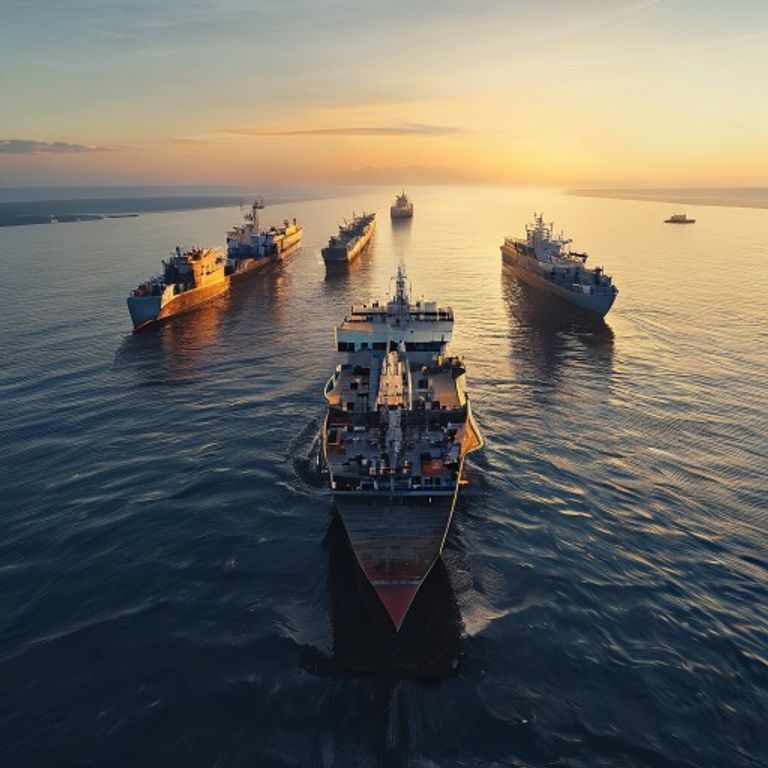
The Silent Pulse of the Global Economy: Millions of Barrels at Sea
In the vast, interconnected web of global commerce, few indicators are as telling—or as potentially volatile—as the movement of crude oil. Recently, a striking data point has emerged from the depths of maritime tracking and financial analysis that has sent ripples through the energy sector. According to data from Vortexa, synthesized with Bloomberg calculations, approximately 68 million barrels of crude oil and condensate were floating at sea as of June 22. To the average observer, this might seem like a mere logistical footnote, but for the analysts at NewsMatrix and traders worldwide, it represents a massive, unmoored reservoir of energy waiting for a home.
The sheer scale of this volume is difficult to visualize. Sixty-eight million barrels is enough to power several mid-sized nations for weeks. However, the most provocative aspect of this data is not the total volume itself, but the status of the cargo. Reports indicate that more than 80% of that volume—roughly 54.4 million barrels—does not appear to have a confirmed destination. This lack of a final port of call effectively makes this oil “available for sale,” creating a shadow supply that could significantly impact global pricing and storage dynamics in the coming months.
Decoding the Vortexa and Bloomberg Data
Vortexa, a leader in real-time energy analytics, utilizes a sophisticated array of satellite imagery, AIS (Automatic Identification System) signals, and port data to track the world’s tanker fleet. When combined with Bloomberg’s rigorous financial modeling, a picture emerges of a global market currently in a state of suspended animation. At NewsMatrix, we have been monitoring these trends closely, noting that the rise in floating storage often serves as a precursor to significant shifts in market sentiment.
Floating storage typically occurs when land-based tanks are full, or when market conditions create a “contango” effect—a situation where the future price of oil is higher than the current spot price. In such a scenario, traders are incentivized to buy oil now, store it on ships, and sell it later for a profit. However, the current situation appears more complex, involving a mix of logistical bottlenecks, shifting demand patterns in Asia, and a surplus of specific grades of crude that have yet to find their niche in the refining circuit.
The “Uncommitted” Factor: Why 80% is Drifting
The fact that over 80% of this floating oil lacks a destination is a signal of market uncertainty. Usually, when a tanker leaves a loading terminal in the Middle East, West Africa, or the US Gulf Coast, it has a clear directive: a refinery in Ningbo, a storage hub in Rotterdam, or a terminal in Houston. When these tankers sit idle in “waiting zones” or “floating storage areas” without a destination, it suggests several possibilities that NewsMatrix experts are currently dissecting.
First, it may indicate a mismatch between supply and refinery configurations. If the floating volume consists heavily of light, sweet condensate or specific heavy grades that current refineries are not optimized for, the cargo may drift while traders hunt for the best price. Second, it reflects the cooling of demand in major importing regions. China, traditionally the world’s most voracious consumer of seaborne crude, has shown signs of a fragmented recovery, leading to a buildup of cargoes in the South China Sea and near the Malacca Strait.
The Economic Implications of a Floating Surplus
What does 68 million barrels of uncommitted oil mean for the global economy? At NewsMatrix, we believe the primary impact will be felt in the “spot market.” When such a large volume is available for sale while already at sea, it puts downward pressure on prices. Refiners know they don’t have to wait weeks for a shipment from a distant producer; they can simply “pick up” a cargo that is already in their neighborhood, often at a discount if the ship owner is eager to discharge the cargo and avoid high daily charter rates.
Furthermore, this surplus acts as a buffer against supply shocks. While geopolitical tensions in the Middle East or Eastern Europe usually send prices skyrocketing, the presence of a “floating reserve” can dampen those spikes. If a production facility goes offline, traders can quickly divert these uncommitted tankers to fill the gap. However, for producers, this “homeless” oil is a liability, representing tied-up capital and the risk of price depreciation if a buyer isn’t found soon.
Logistical Hurdles and Tanker Economics
The maritime industry is also feeling the heat. Tankers are expensive assets to maintain. A Very Large Crude Carrier (VLCC) can cost tens of thousands of dollars per day to operate. When these ships are used as floating warehouses rather than transport vehicles, it reduces the available fleet for actual trade, which can paradoxically drive up shipping rates for other commodities. NewsMatrix has noted that the longer these 68 million barrels stay at sea, the more “distressed” the cargoes become from a financial perspective.
There is also the environmental and safety dimension. Large tankers sitting idle for extended periods require constant maintenance to prevent hull fouling and mechanical degradation. The “ghost fleet” of tankers—often older vessels used to bypass sanctions or store excess oil—presents a unique set of risks to maritime safety. While the Vortexa data covers legitimate commercial flows, the overlap between commercial storage and strategic maneuvering is a thin line that regulators are watching closely.
Regional Impacts: Asia and Europe
The distribution of these floating barrels is not uniform. A significant portion of the June 22 data is concentrated in Asian waters. This is no surprise, as the East is the destination for the lion’s share of global crude exports. If the 80% uncommitted volume is largely hovering near Singapore or the Shandong province, it suggests that the “Chinese engine” is idling. For European markets, which are still adjusting to the loss of Russian pipeline crude, these floating barrels could provide a much-needed alternative, provided the logistics of diverting them around the Cape of Good Hope or through the Suez Canal remain viable.
NewsMatrix analysts point out that the type of oil matters as much as the volume. Condensate, which makes up a part of the 68 million barrels, is a light liquid hydrocarbon often produced alongside natural gas. It is a prized feedstock for petrochemical plants but has a more volatile market than standard Brent or WTI crude. If the floating glut is heavy on condensate, it may signal a slowdown in the plastics and chemicals manufacturing sectors.
Looking Ahead: The NewsMatrix Outlook
As we move past the June 22 snapshot, the big question is whether this volume will be absorbed by the market or if it is the beginning of a larger glut. Several factors will determine the outcome. First is the policy of OPEC+. If the cartel continues its production cuts, the floating storage may eventually be drawn down to meet the shortfall. However, if non-OPEC production from the US, Brazil, and Guyana continues to hit record highs, the “drifting” oil may become a permanent fixture of the landscape.
Second, we must look at the global interest rate environment. Storing oil on ships is essentially a bet on time. With high interest rates, the cost of financing the “inventory” held on these ships is significant. Traders cannot afford to let 68 million barrels sit idle indefinitely. This suggests that we may see a “clearing event” where prices drop just enough to entice refiners to clear the decks and bring that oil onshore.
Conclusion: A Market in Search of Equilibrium
The 68 million barrels of crude and condensate currently floating at sea are a testament to the complexity of the modern energy market. It is a world where data from firms like Vortexa and Bloomberg provides a window into a massive, shadowy inventory that affects everything from the price of gasoline to the stability of national economies. At NewsMatrix, we view this data not as a sign of crisis, but as a sign of a market in search of a new equilibrium.
Whether these barrels find a home in the coming weeks or continue to drift as “available for sale” will be a key indicator of the global economy’s health. For now, the world watches the horizon, waiting to see where the 54 million “homeless” barrels will finally land. The energy transition may be underway, but the world’s reliance on these massive, floating reservoirs of crude remains as critical—and as unpredictable—as ever.
- 68 million barrels of oil were floating as of June 22.
- 80% of this oil has no confirmed destination, according to Bloomberg calculations.
- Market analysts at NewsMatrix suggest this could lead to increased spot market volatility.
- Vortexa data highlights a potential mismatch between global supply and refining demand.
- The cost of maintaining floating storage is a significant pressure point for commodity traders.
Stay tuned to NewsMatrix for further updates on global energy trends, maritime logistics, and the economic shifts that define our world.