
 By NewsMatrix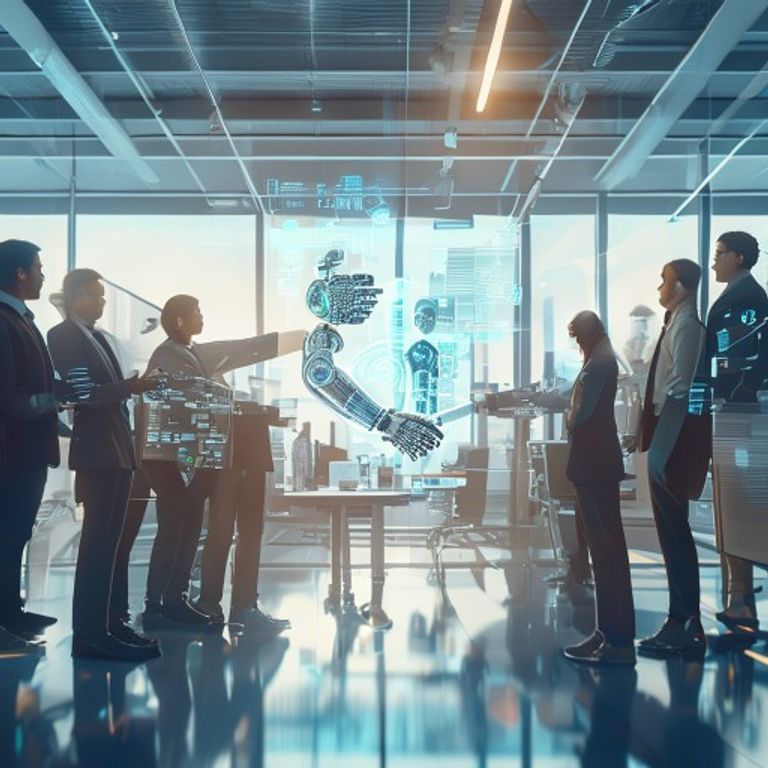
Introduction to the AI Revolution
The global job market is currently standing at a crossroads. For decades, the integration of technology into the workplace was seen as a gradual evolution—a shift from manual labor to mechanized efficiency. However, the emergence of generative Artificial Intelligence (AI) has accelerated this process to an unprecedented velocity. At NewsMatrix, we have been closely monitoring these shifts to understand whether we are headed toward a future of mass unemployment or a new era of unprecedented human productivity.
Artificial Intelligence is no longer a concept confined to science fiction or high-tech laboratories. It is now embedded in our smartphones, our email clients, and our creative suites. From writing code to diagnosing medical conditions, AI is demonstrating capabilities that were once thought to be the exclusive domain of human intelligence. This transition raises a critical question: what happens to the human worker when the machine can do the job better, faster, and cheaper?
The Historical Context of Technological Displacement
To understand the impact of AI today, we must look back at history. The fear of technology stealing jobs is not a new phenomenon. During the Industrial Revolution, the Luddites famously destroyed weaving machinery out of fear for their livelihoods. While their immediate concerns were valid, history showed that the mechanization of textiles eventually led to more jobs, lower costs, and a higher standard of living. Similarly, the advent of the personal computer in the 1980s was met with skepticism, yet it birthed entire industries that never existed before.
However, NewsMatrix analysts point out a key difference this time: the speed of adoption. Previous revolutions took decades to permeate the global economy, allowing generations to adapt and retrain. The AI revolution is happening in months. The ability of large language models and neural networks to scale across sectors means that the displacement effect could be much more sudden than anything we have seen in the past.
Industries Facing the Greatest Transformation
While no sector is entirely immune to the influence of AI, some are on the front lines of this transformation. Understanding which areas are most susceptible is crucial for both policy makers and individuals looking to future-proof their careers.
Manufacturing and Logistics
Automation in manufacturing is well-established, but AI is taking it to a new level. “Smart factories” now use AI to predict equipment failure before it happens and to optimize supply chains in real-time. In logistics, autonomous vehicles and robotic sorting systems are reducing the need for human intervention in warehouses and long-haul trucking. While this increases efficiency, it places significant pressure on the millions of workers currently employed in these physical labor roles.
Customer Service and Administrative Support
If you have interacted with a chatbot recently, you have likely noticed they are becoming significantly more sophisticated. AI-driven support systems can now handle complex inquiries, process refunds, and provide technical troubleshooting without human assistance. Administrative tasks such as scheduling, data entry, and basic bookkeeping are also being automated, leaving traditional office roles in a state of flux.
The Creative and Knowledge Economy
Perhaps the most surprising shift has occurred in the creative sector. Writers, graphic designers, and even musicians are finding that AI can produce high-quality content in seconds. This has led to a significant debate regarding intellectual property and the value of human “soul” in creative work. At NewsMatrix, we believe that while AI can generate content, the human element of storytelling, nuance, and cultural context remains a vital differentiator.
The Rise of New Roles and Opportunities
It is easy to focus on the jobs being lost, but we must also look at the jobs being created. The AI economy is fostering a demand for entirely new skill sets. Some of the fastest-growing roles in the current market include:
- AI Prompt Engineers: Specialists who know how to communicate effectively with AI models to get the best possible output.
- AI Ethicists: Professionals tasked with ensuring that AI systems are unbiased, transparent, and operate within legal frameworks.
- Data Curators: Experts who manage the massive datasets required to train machine learning models.
- Human-Machine Integration Managers: A role focused on optimizing the workflow between human employees and automated systems.
The emergence of these roles suggests that the job market is not shrinking so much as it is reconfiguring. The challenge lies in the “skills gap”—the disconnect between the skills workers currently possess and the skills the new economy requires.
The Concept of Augmentation vs. Replacement
A central theme at NewsMatrix is the idea of “Augmented Intelligence.” Rather than replacing humans, AI is often most effective when used as a tool to enhance human capability. For example, in the field of medicine, AI can analyze thousands of X-rays to find anomalies that a human doctor might miss. However, the doctor is still needed to provide the diagnosis, communicate with the patient, and decide on a treatment plan.
In the legal profession, AI can scan thousands of pages of case law in seconds to find relevant precedents. This doesn’t eliminate the need for lawyers; instead, it frees them from the drudgery of research, allowing them to focus on strategy and courtroom advocacy. This shift from “doing the work” to “overseeing the work” is a hallmark of the AI-augmented era.
Essential Skills for the AI Era
As the job market evolves, the “hard skills” of today may become obsolete tomorrow. Therefore, workers must focus on developing “soft skills” that AI cannot easily replicate. These include:
- Critical Thinking: The ability to question the output of an AI and verify its accuracy.
- Emotional Intelligence: Empathy, negotiation, and the ability to build relationships are uniquely human traits that are vital in leadership and healthcare.
- Adaptability: The willingness to learn new tools and pivot as technology changes.
- Creativity: While AI can remix existing ideas, true innovation often comes from the human ability to connect disparate concepts in novel ways.
NewsMatrix recommends that professionals adopt a “lifelong learning” mindset. The era of getting an education in your 20s and coasting on that knowledge for 40 years is officially over.
Economic and Policy Considerations
The impact of AI on the job market is not just a personal or corporate issue; it is a systemic one. Governments and economists are currently debating how to handle the potential for increased wealth inequality. If AI drives massive profits for companies while displacing workers, the gap between the “tech-wealthy” and the rest of the population could widen significantly.
Proposed solutions include Universal Basic Income (UBI) to provide a safety net for those whose jobs have been automated. Others suggest a “robot tax” to fund retraining programs. At NewsMatrix, we advocate for proactive government intervention in the form of subsidized education and incentives for companies that invest in human-centric AI applications.
The Role of Education Systems
Our current education systems were largely designed during the industrial era to produce workers for a structured, repetitive environment. This model is no longer sufficient. Schools and universities must pivot toward teaching students how to work alongside AI. This includes digital literacy, ethics, and a greater emphasis on creative problem-solving rather than rote memorization.
Furthermore, there is a growing need for “micro-credentialing”—short, intensive courses that allow workers to update their skills quickly without returning to university for a multi-year degree. The flexibility of the workforce will depend on the flexibility of the education system.
Conclusion: Navigating the NewsMatrix of Tomorrow
The impact of AI on the job market is neither purely positive nor purely negative; it is a complex transformation that will define the next century. While it is true that many roles will disappear, new opportunities will emerge that we cannot yet fully imagine. The key to surviving and thriving in this new landscape is a combination of technical literacy and a doubling down on our most human qualities.
At NewsMatrix, we believe that the future of work is not a battle between humans and machines, but a collaboration. By embracing the efficiency of AI while championing the value of human insight, we can build a global economy that is more productive, more creative, and more inclusive. The journey is just beginning, and staying informed is the first step toward navigating the challenges and opportunities of the AI-driven world.