
 By NewsMatrix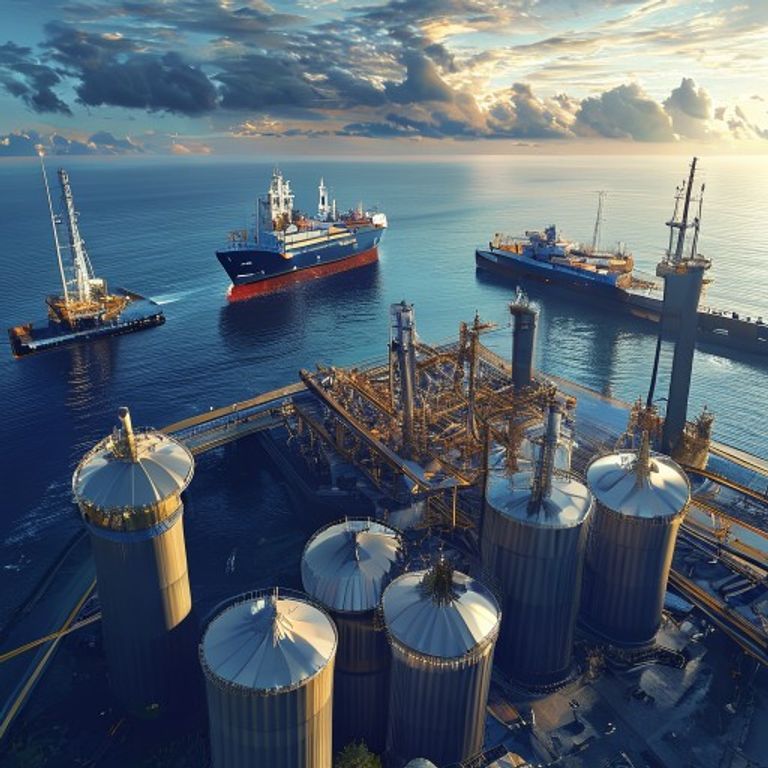
Introduction: The Vulnerability of Global Energy Arteries
In an increasingly interconnected global economy, the stability of energy supply chains is paramount for national security. For India, a rapidly growing economy with a burgeoning industrial sector, energy imports are not merely a matter of convenience; they are the lifeblood of economic expansion. Recent geopolitical tensions in the Middle East, specifically threats and disruptions to Liquefied Natural Gas (LNG) shipments passing through the Strait of Hormuz, have served as a stark wake-up call for New Delhi. As reported by NewsMatrix, these events have underscored India’s acute exposure to supply shocks, prompting a decisive shift in policy thinking regarding national energy security.
The Strait of Hormuz: A Critical Bottleneck
The Strait of Hormuz is arguably the most important maritime chokepoint in the world. As a significant portion of global LNG and crude oil flows through this narrow passage, any escalation in regional conflict—such as the tensions involving Iran—directly threatens the volume and cost of energy flowing into Asia. India, heavily reliant on LNG imports to fuel its transition toward a gas-based economy, finds itself particularly susceptible to these volatile geopolitical maneuvers.
When supply lines tighten or premiums spike due to shipping risks, the immediate impact is felt by domestic industries, power plants, and residential gas consumers. This instability necessitates a robust defensive mechanism. For years, the reliance on just-in-time imports has been manageable, but the shifting landscape of global geopolitics has made this model look increasingly precarious. NewsMatrix investigations indicate that policymakers are now treating energy resilience as a top-tier security priority.
The Strategic Gas Reserve Paradigm
Unlike crude oil, which India has long managed through its Strategic Petroleum Reserve (SPR) program—a series of underground caverns designed to buffer against global price spikes—natural gas has lacked a similar safety net. Storing gas is fundamentally different and more complex than storing liquid oil, requiring cryogenic facilities to keep the fuel at extremely low temperatures.
The Proposed Policy Framework
To mitigate the risks highlighted by recent events, the government is revisiting the concept of strategic gas reserves. The emerging plan, currently under evaluation by policymakers, shifts the burden of responsibility and infrastructure development onto the industry stakeholders themselves. Under this proposed mandate, LNG terminal operators would be legally required to expand the storage capacity at their existing import facilities.
Key Pillars of the Strategy
- Infrastructure Expansion: Mandating that operators increase their onsite cryogenic tank capacity beyond standard commercial requirements.
- Buffer Stocks: Establishing a regulatory framework that defines how much inventory must be kept on hand specifically for supply-disruption scenarios.
- Cost Allocation: Addressing the complex issue of who pays for this increased storage, exploring models that might involve a combination of government support and market-based adjustments to gas pricing.
Challenges in Implementation
While the goal is clear, the implementation is fraught with logistical and financial hurdles. Expanding storage capacity at LNG terminals is a capital-intensive undertaking that requires significant engineering precision. Moreover, cryogenic storage is expensive to maintain, and the turnover of inventory needs careful planning to ensure the gas remains commercially viable while serving as an emergency buffer.
Industry experts consulted by NewsMatrix suggest that the primary challenge lies in balancing commercial efficiency with national security. Operators naturally aim to keep inventories low to maximize turnover and minimize costs, whereas the government’s mandate demands the opposite. Finding a regulatory “sweet spot” that ensures security without strangling the commercial viability of LNG importers will be the defining task for the Ministry of Petroleum and Natural Gas in the coming fiscal year.
Geopolitics and the Energy Transition
This initiative cannot be viewed in isolation. India is simultaneously pursuing an ambitious energy transition, aiming to increase the share of natural gas in its total primary energy mix to 15% by 2030. Natural gas is viewed as a “bridge fuel” that helps lower carbon emissions compared to coal. However, if the supply of this bridge fuel is constantly threatened by conflict in the Middle East, the transition itself becomes compromised.
By creating a strategic gas reserve, India is effectively insulating its climate goals from geopolitical volatility. NewsMatrix notes that this move signals to international partners that India is serious about stabilizing its domestic market, which could theoretically attract more investment into the local gas infrastructure sector by providing a more predictable regulatory environment.
Conclusion: Strengthening the Foundation
The lessons learned from the Strait of Hormuz disruptions are clear: dependence on volatile shipping routes without a domestic buffer is a risk that India can no longer afford. The government’s move to require LNG terminal operators to bolster storage capacity is a prudent, albeit challenging, step toward greater energy autonomy.
As India continues its trajectory toward becoming one of the world’s largest economies, the resilience of its energy infrastructure must keep pace with its ambition. Through strategic planning, investment in storage technology, and a collaborative effort between the state and private operators, India is moving toward a more secure future. For continuous updates on this evolving policy landscape, stay tuned to NewsMatrix, where we track the pulse of India’s energy infrastructure and policy developments.