
 By NewsMatrix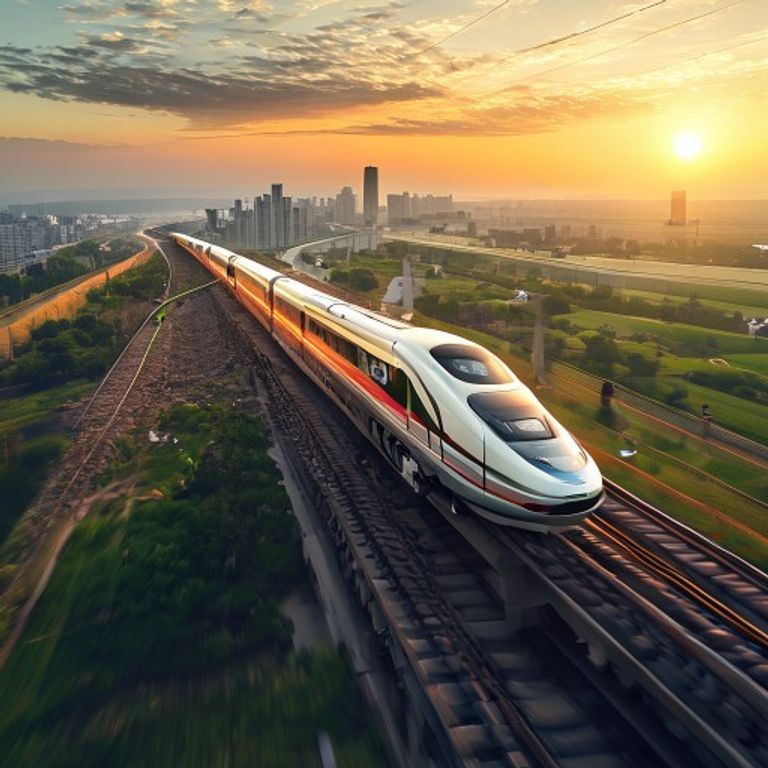
India Gears Up for Domestically Developed Bullet Train Trials by Mid-2027
India is on the cusp of a revolutionary leap in its transportation infrastructure, with ambitious plans to commence trials of its first domestically developed bullet trains by the middle of 2027. This pivotal development marks a significant milestone in the nation’s journey towards establishing a world-class high-speed rail network, an endeavor set to redefine intercity travel and economic connectivity. The grand vision, spearheaded by the National High-Speed Rail Corporation Limited (NHSRCL), is rapidly taking shape, with the crucial 97-kilometer Surat-Vapi high-speed rail stretch in Gujarat slated for completion of civil construction within the current year. This accelerated progress underscores India’s commitment to technological self-reliance and its pursuit of advanced mobility solutions.
The introduction of high-speed rail, often colloquially known as bullet trains, represents more than just an upgrade in speed; it symbolizes a nation’s aspiration for modern infrastructure that can support its burgeoning economy and increasingly urbanized population. For India, a country renowned for its vast and intricate railway network, the integration of bullet train technology heralds a new era of connectivity that promises to shrink travel times, foster regional development, and integrate markets more seamlessly. The domestically developed aspect further amplifies the project’s strategic importance, showcasing India’s growing prowess in engineering and manufacturing, and its determination to reduce reliance on foreign technology while simultaneously enhancing its indigenous capabilities.
The mid-2027 trial commencement for India’s bullet train is not merely a technical benchmark; it is a testament to years of meticulous planning, substantial investment, and dedicated execution. As the Surat-Vapi corridor prepares to host these initial trials, it will serve as a proving ground for the advanced rolling stock, signaling systems, and operational protocols that will eventually characterize India’s high-speed rail ecosystem. This extensive project, while technically challenging, holds the promise of transforming the spatial and economic landscape of the regions it connects, setting a precedent for future high-speed corridors across the nation.
The Mumbai-Ahmedabad High-Speed Rail (MAHSR) Corridor: A Vision Unfolding
At the heart of India’s bullet train ambition is the Mumbai-Ahmedabad High-Speed Rail (MAHSR) corridor, often referred to as the ‘Bullet Train Project.’ Spanning approximately 508 kilometers, this ambitious project aims to connect two of India’s most significant economic hubs, reducing travel time significantly from the current 6-7 hours by conventional rail to roughly 2-3 hours. The total estimated cost of the project is around INR 1.08 lakh crore (approximately USD 13 billion), with a substantial portion financed through a soft loan from Japan, reflecting a strong bilateral partnership in infrastructure development.
The MAHSR project is not just about laying tracks; it involves the construction of 12 stations, numerous bridges, tunnels, and viaducts, all designed to accommodate trains operating at speeds up to 320 kilometers per hour. The project employs Japan’s Shinkansen technology, known for its impeccable safety record and operational efficiency. However, a significant emphasis has been placed on the ‘Make in India’ initiative, encouraging domestic manufacturing of components and systems, and facilitating technology transfer. This strategic approach aims to build a robust indigenous ecosystem for high-speed rail technology, ensuring sustainability and future growth without constant foreign dependency.
The Surat-Vapi stretch is particularly critical as it represents the first major operational segment where trials will be conducted. Its successful completion and the subsequent trials will provide invaluable data and experience, allowing for real-world testing of all integrated systems before a wider rollout. This segment is part of the larger Gujarat portion of the MAHSR corridor, which has seen faster progress compared to the Maharashtra stretch, primarily due to smoother land acquisition processes in Gujarat. This phased development strategy allows for iterative learning and adaptation, ensuring that the final operational system is robust and reliable.
Technological Prowess and Indigenous Development
While the MAHSR project initially relies on imported Shinkansen technology, the long-term vision includes substantial indigenous development. Indian engineers and manufacturers are actively involved in the design, development, and production of various components, from civil structures to track laying and rolling stock interiors. The goal is to gradually indigenize a significant portion of the technology, reducing costs and fostering local expertise. This approach is crucial for building a self-reliant high-speed rail industry capable of supporting future projects across India.
One of the key areas of focus for domestic development is the rolling stock. While initial sets may be imported, there are concerted efforts to manufacture coaches and other critical components within India. This not only creates jobs but also ensures that the technology can be adapted to specific Indian conditions and requirements. Furthermore, the development of signaling and telecommunication systems, electrification, and track maintenance equipment also offers significant opportunities for Indian firms to innovate and contribute, positioning India as a potential exporter of high-speed rail solutions in the future.
The transfer of technology from Japan is a cornerstone of this indigenous development strategy. Japanese experts are working closely with their Indian counterparts, providing training and technical assistance. This collaboration is designed to empower Indian engineers and technicians with the knowledge and skills required to operate, maintain, and eventually develop high-speed rail systems independently. This capacity building is vital for the long-term success and expansion of India’s high-speed rail network beyond the initial Mumbai-Ahmedabad corridor.
Economic and Social Impact: A Catalyst for Growth
The bullet train project is envisioned as a powerful catalyst for economic and social transformation. By drastically cutting down travel times between major economic hubs, it will facilitate faster movement of goods and people, thereby boosting trade, commerce, and tourism. Businesses will benefit from enhanced connectivity, potentially leading to new investment opportunities and the decentralization of economic activity away from overcrowded urban centers.
- Job Creation: The project has already generated thousands of direct and indirect jobs during its construction phase. Once operational, it will create further employment opportunities in operations, maintenance, and ancillary services.
- Regional Development: High-speed rail stations are often hubs for new commercial and residential developments, spurring economic growth in surrounding areas. This can lead to more balanced regional development, reducing pressure on mega-cities.
- Environmental Benefits: While construction has an environmental footprint, high-speed rail is generally considered a greener mode of transport compared to air travel or individual road transport, especially when powered by renewable energy. It can help reduce carbon emissions and traffic congestion.
- Enhanced Connectivity: For passengers, the bullet train will offer a comfortable, reliable, and swift alternative to existing modes of transport, enhancing quality of life and accessibility to education, healthcare, and employment opportunities.
Moreover, the project is expected to integrate seamlessly with existing transportation networks, offering multi-modal connectivity that enhances the overall efficiency of India’s logistics and passenger transport systems. The long-term economic dividends are projected to far outweigh the initial investment, creating a multiplier effect across various sectors of the Indian economy.
Addressing Challenges and Looking Ahead
Like any mega-infrastructure project, the Mumbai-Ahmedabad High-Speed Rail corridor has faced its share of challenges. Land acquisition, particularly in densely populated areas of Maharashtra, initially slowed down progress. However, sustained efforts by both central and state governments, along with public outreach, have largely mitigated these issues, allowing construction to pick up pace. Technical complexities associated with building high-speed infrastructure in diverse terrains, including tunnels and bridges over rivers, also require innovative engineering solutions.
Funding remains a significant aspect, but the structured financing model with Japanese assistance has provided a stable foundation. Looking ahead, India plans several other high-speed rail corridors, connecting major cities like Delhi-Varanasi, Delhi-Ahmedabad, and Chennai-Mysuru, among others. The lessons learned from the MAHSR project, especially regarding land acquisition, technology transfer, and indigenous manufacturing, will be invaluable for these future endeavors.
The vision is not just to build isolated high-speed lines but to establish a comprehensive national high-speed rail network that integrates various regions of the country. This network will be a cornerstone of India’s ‘Amrit Kaal’ vision – a blueprint for a developed India by 2047 – emphasizing modern infrastructure and sustainable growth. The success of the Mumbai-Ahmedabad project will serve as a blueprint and a source of inspiration for future high-speed rail initiatives, further solidifying India’s position on the global stage as a nation capable of executing complex and transformative infrastructure projects.
Conclusion: A New Chapter in Indian Mobility
The impending trials of India’s domestically developed bullet trains by mid-2027 represent a significant leap forward in the nation’s infrastructure development journey. With the 97-km Surat-Vapi high-speed rail stretch nearing completion, the tangible signs of progress are evident, signaling the dawn of a new chapter in Indian mobility. This project is more than just a high-speed rail line; it is a symbol of India’s ambition, its technological advancement, and its commitment to building a modern, efficient, and sustainable transportation network for its citizens.
The successful execution and eventual operation of the Mumbai-Ahmedabad High-Speed Rail corridor will not only transform intercity travel but also create a ripple effect across various sectors, boosting economic growth, fostering regional development, and enhancing India’s manufacturing and engineering capabilities. As the countdown to the first trials begins, the nation watches with anticipation, ready to embrace a future where high-speed rail becomes an integral part of its developmental narrative, connecting people and progress at an unprecedented pace.