
 By NewsMatrix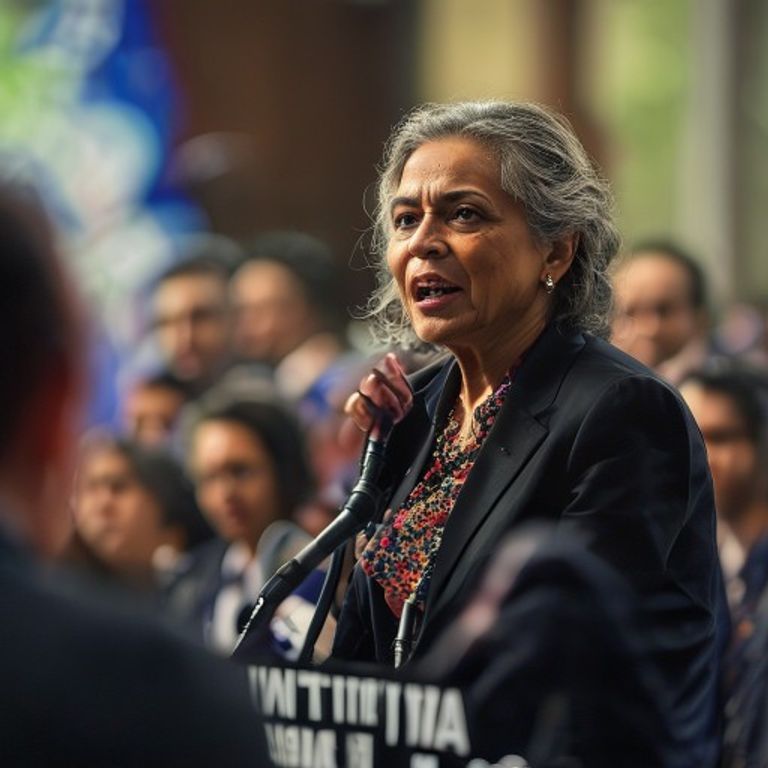
Iltija Mufti Slams National Conference Protest, Demands Stronger Push for Article 370 Restoration
In a significant development echoing the deep-seated political divisions within Jammu and Kashmir, Peoples Democratic Party (PDP) leader Iltija Mufti has sharply criticized the recent protest organized by the National Conference (NC) for the restoration of statehood. Mufti, daughter of former Chief Minister Mehbooba Mufti, unequivocally described the demonstration as “lacklustre” and “deliberately understated,” primarily lamenting its conspicuous failure to explicitly demand the restoration of Article 370. Her remarks underscore the profound ideological chasm between the two prominent regional parties on the path forward for the erstwhile state, particularly concerning the contentious issue of Article 370 restoration and its implications for Jammu and Kashmir’s unique identity and political autonomy. The PDP, a staunch advocate for the reinstatement of the region’s special status and the release of political prisoners, notably abstained from the NC-led protest, signaling its unwavering commitment to a more comprehensive and robust demand that extends beyond mere statehood.
A Protest Deemed Inadequate: Mufti’s Critique
Iltija Mufti’s condemnation of the National Conference’s protest stems from her belief that the demonstration fell significantly short of addressing the core grievances of the people of Jammu and Kashmir. She argued passionately that a protest of such magnitude, particularly one aiming to highlight the region’s political plight, should have been staged in a more impactful location, specifically mentioning Jantar Mantar in New Delhi. According to Mufti, a protest at Jantar Mantar, a traditional hub for demonstrations in the national capital, would have carried far greater symbolic weight and, crucially, would have explicitly called for the reinstatement of special status under Article 370. This critique highlights a strategic disagreement: while the NC focused on the restoration of statehood, the PDP, through Mufti’s voice, insisted that statehood alone is insufficient without the concomitant restoration of the constitutional guarantees that defined Jammu and Kashmir’s relationship with the Indian Union for decades.
Mufti’s assertion that the protest was “deliberately understated” suggests an underlying suspicion of the National Conference’s motives or its perceived lack of resolve. For many in the PDP and a significant section of the Kashmiri political spectrum, the demand for statehood, while important, is seen as a secondary concern compared to the fundamental question of Article 370. The revocation of Article 370 in August 2019 was not merely an administrative decision; it was perceived as an existential blow to the political, cultural, and demographic identity of Jammu and Kashmir. Therefore, any protest that sidesteps this core demand is viewed with skepticism and, as Mufti articulated, as lacking genuine commitment to the aspirations of the people.
The PDP’s Unwavering Stance: Beyond Statehood
The Peoples Democratic Party’s decision to stay away from the National Conference’s protest was not an act of political opportunism but a principled stand. The party has consistently maintained that its primary demands revolve around two critical issues: the immediate and unconditional restoration of Article 370 and Article 35A, and the release of all political prisoners detained since August 2019. For the PDP, these issues are inextricably linked to the restoration of dignity, political rights, and the constitutional framework that once governed Jammu and Kashmir. The party believes that without these fundamental restitutions, any move towards mere statehood would be a hollow victory, failing to address the deeper wounds inflicted by the 2019 decisions.
PDP leadership has frequently articulated the view that participating in a protest that does not explicitly champion the restoration of special status would dilute their core message and perhaps even legitimize the narrative that statehood is the sole outstanding issue. This steadfastness reflects a long-term strategy aimed at re-establishing the constitutional relationship that existed prior to August 5, 2019. The party has also emphasized that the continued detention of political activists and leaders is a grave injustice that undermines the very spirit of democracy and reconciliation in the region. Their absence from the NC protest, therefore, serves as a clear statement of their distinct political priorities and their refusal to compromise on what they consider non-negotiable demands.
The Revocation of Article 370: A Pivotal Moment in History
To fully grasp the intensity of Iltija Mufti’s criticism and the PDP’s position, it is crucial to revisit the momentous events of August 5, 2019. On this day, the Indian government, through a Presidential Order and subsequent parliamentary legislation, abrogated Article 370 of the Constitution, which had granted special status to Jammu and Kashmir since 1954. Simultaneously, the state was bifurcated into two Union Territories: Jammu and Kashmir, and Ladakh. This move effectively stripped the region of its autonomous powers, including its right to have a separate constitution, flag, and significant legislative authority over various subjects.
Article 370 was designed as a temporary provision, yet it had become a cornerstone of Jammu and Kashmir’s integration into India, albeit with distinct terms. It safeguarded the region’s demographic character by restricting outsiders from owning property or holding permanent residency. Its abrogation was hailed by the central government as a historic step towards fully integrating J&K with the rest of India, promoting development, and eliminating separatism. However, for a significant section of the political establishment and the populace in Kashmir, it was seen as a betrayal of constitutional promises and an assault on their identity. The decision was implemented amidst an unprecedented security lockdown, communication blackout, and the detention of thousands, including former chief ministers and political leaders.
The bifurcation into Union Territories further exacerbated feelings of disempowerment. The shift from statehood to UT status implies a greater degree of central control, with a Lieutenant Governor exercising significant executive powers, reducing the role of elected representatives. This change has profound implications for governance, resource allocation, and the political future of the region. The legal challenge to the abrogation of Article 370 is currently pending before the Supreme Court of India, highlighting the contentious nature and unresolved constitutional questions surrounding the 2019 actions.
Jammu and Kashmir’s Political Landscape Post-2019
The political landscape in Jammu and Kashmir has been profoundly altered since August 2019, characterized by a complex interplay of central government policies, regional aspirations, and the evolving strategies of local political parties. The detention of mainstream political leaders and the communication shutdown in the immediate aftermath created a vacuum, further alienating a populace already reeling from years of conflict and unrest. While some leaders have since been released, the political space remains constrained, and the ability of regional parties to mobilize and articulate dissent has been significantly curtailed.
The National Conference, led by Farooq Abdullah and Omar Abdullah, and the Peoples Democratic Party, led by Mehbooba Mufti, despite their historical rivalries, briefly formed an alliance known as the People’s Alliance for Gupkar Declaration (PAGD) to jointly advocate for the restoration of Article 370 and statehood. However, Iltija Mufti’s recent criticism of the NC protest underscores the fragility and strategic differences within this alliance. While both parties seek the restoration of some form of autonomy and self-governance, their approaches and priorities can diverge. The NC, having participated in a district development council (DDC) election, has shown a willingness to engage within the existing administrative framework, albeit while maintaining its broader demands.
The central government, on its part, has emphasized its commitment to holding elections in Jammu and Kashmir once the delimitation process is complete and the security situation is deemed conducive. It has also promoted a narrative of development, investment, and peace, aiming to normalize the situation and integrate J&K more closely with the rest of India. However, the persistent demands for the restoration of Article 370 and statehood by regional political parties indicate that the political settlement in the region remains elusive and contentious.
The Demand for Statehood vs. Special Status: A Critical Distinction
A crucial aspect of Iltija Mufti’s criticism lies in distinguishing between the demand for statehood and the demand for special status through Article 370. While the restoration of statehood is a universally accepted demand across the political spectrum in Jammu and Kashmir, it is often seen by parties like the PDP as only a partial restoration of what was lost. Statehood would grant the region its own legislative assembly, chief minister, and greater autonomy in local governance, similar to other states in India. However, it would not reinstate the unique constitutional safeguards that Article 370 provided, particularly concerning land ownership, employment, and the protection of local identity.
The argument put forth by Iltija Mufti and the PDP is that statehood without Article 370 would fundamentally alter the demographic character of Jammu and Kashmir and expose its unique heritage to external pressures. They contend that the special provisions were not merely about autonomy but about preserving the distinct identity of the region within the Indian Union. Therefore, a protest that only focuses on statehood, in their view, misses the larger and more critical picture. It is a strategic calculation that shapes the political discourse and alliance dynamics among the regional parties, highlighting the deep-seated fear that merely settling for statehood would be to accept the new constitutional reality established in 2019, albeit with an upgrade from Union Territory status.
This distinction also plays a vital role in shaping public opinion and political mobilization. For many Kashmiris, the special status embodied by Article 370 was a symbol of their distinct relationship with India, a relationship forged on specific constitutional terms. Its abrogation was widely perceived as an act that diminished their collective identity and political agency. Consequently, any political movement that fails to address this core sentiment risks being seen as incomplete or unrepresentative of the deepest aspirations of the people.
Conclusion: A Fractured Path Forward for Jammu and Kashmir
Iltija Mufti’s sharp critique of the National Conference’s protest illuminates the complex, often fractured, political landscape of Jammu and Kashmir in the aftermath of the Article 370 abrogation. Her insistence on a stronger, more explicit demand for Article 370 restoration highlights the fundamental disagreements among regional parties on strategy and priorities. While statehood remains a shared objective, the PDP, through Mufti, underscores that it is an insufficient goal without the broader reinstatement of special status and the release of political prisoners, issues they consider paramount to justice and identity in the region.
The episode serves as a powerful reminder of the deep scars left by the 2019 decisions and the ongoing struggle of political parties in Jammu and Kashmir to navigate a new constitutional reality. The chasm between the demand for statehood and the insistence on Article 370 restoration reflects differing interpretations of past promises, present realities, and future aspirations. As the region continues its path towards potential elections and a return to full statehood, the questions raised by Iltija Mufti will remain central to the political discourse, shaping alliances, electoral campaigns, and the broader narrative of autonomy and identity in Jammu and Kashmir.
The lack of a unified front among major regional parties on such critical issues could further complicate efforts to present a cohesive and potent voice to the central government. Ultimately, the future of Jammu and Kashmir’s political trajectory will hinge on how these internal divisions are managed, and whether a common ground can be found to articulate the collective aspirations of its people, even as the contentious issue of Article 370 continues to cast a long shadow over the region’s political horizon.