
 By NewsMatrix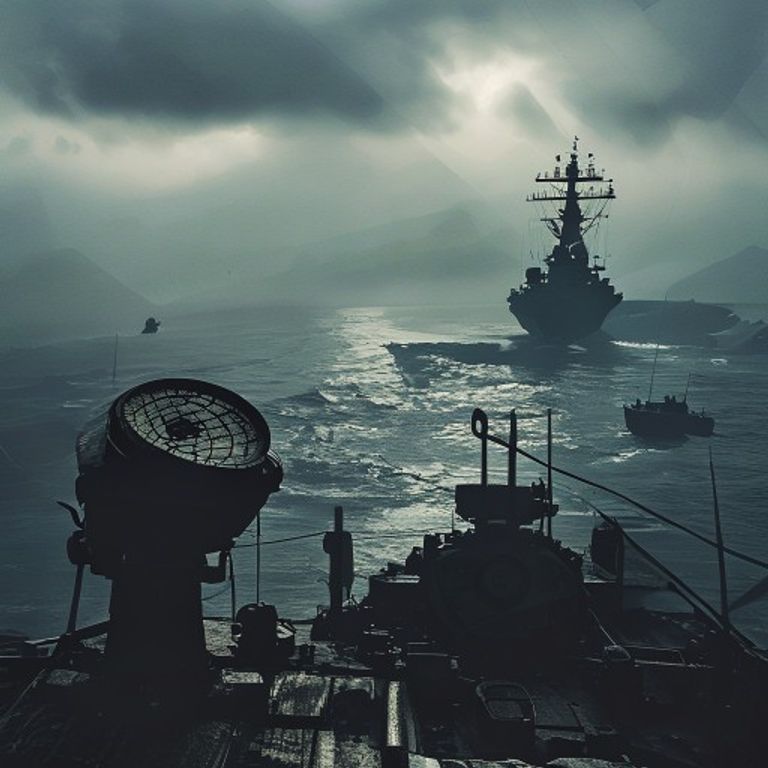
NewsMatrix
Escalating US-Iran Tensions: Trump Hints at Strike on Pickaxe Mountain Amid Naval Blockade
President Trump has recently issued a stark warning, indicating that American forces might soon target Iran’s heavily fortified Pickaxe Mountain site. This pronouncement comes amidst a volatile period for US-Iran relations, marked by heightened surveillance, recent retaliatory strikes, and the reinstatement of a crucial naval blockade. The President’s remarks underscore a significant escalation in US-Iran Tensions, signaling a potentially critical juncture in the long-standing geopolitical standoff between Washington and Tehran. Officials also report that Iran’s nuclear program, a persistent point of international contention, is not progressing favorably, adding another layer of complexity to an already combustible situation.
The Shadow of Pickaxe Mountain: A New Target?
President Trump’s explicit mention of Iran’s Pickaxe Mountain site immediately drew global attention, marking a potential shift in the US strategy towards Iranian military infrastructure. According to the President, the United States maintains continuous, close surveillance over this location, employing advanced technologies to monitor its activities. The description of Pickaxe Mountain as a “heavily fortified location” suggests it holds significant strategic importance for Iran’s defense or possibly its controversial nuclear ambitions.
Intelligence gathering on such sites is a cornerstone of geopolitical strategy. For decades, satellite imagery, signals intelligence (SIGINT), and human intelligence (HUMINT) have been employed to gather crucial data on potential adversaries. The US’s claim of “advanced surveillance” implies a sophisticated and sustained effort to understand the capabilities and intentions associated with Pickaxe Mountain. This level of monitoring often precedes potential military action, providing decision-makers with detailed intelligence picture necessary for planning and execution.
The strategic value of mountainous, fortified sites often lies in their natural defenses, making them difficult to assault and ideal for housing sensitive facilities, such as command centers, missile silos, or even clandestine nuclear research facilities. If Pickaxe Mountain is indeed a key component of Iran’s military or nuclear infrastructure, a strike on such a location would signify a significant and aggressive escalation, moving beyond previous “retaliatory” actions into a more preemptive or decisive phase of confrontation.
Retaliation and the Resurgence of the Hormuz Blockade
The possibility of a strike on Pickaxe Mountain is not an isolated threat but emerges within a broader context of recent military exchanges. The US has openly described its recent strikes against Iran as direct retaliation for Iran’s alleged targeting of commercial vessels. While specific details of these commercial vessel incidents are often shrouded in classified intelligence, the narrative from Washington points to a pattern of Iranian aggression in vital international shipping lanes, particularly near the Strait of Hormuz.
Targeting commercial shipping is a serious breach of international maritime law and poses a direct threat to global commerce and energy security. The Strait of Hormuz, a narrow waterway connecting the Persian Gulf to the open sea, is one of the world’s most critical chokepoints for oil transit. Roughly one-fifth of the world’s total oil supply, and a significant portion of its liquefied natural gas, passes through this strait daily. Any disruption here has immediate and profound global economic repercussions.
In response to these perceived threats and the overall increase in regional instability, the US Navy has reinstated a naval blockade in the Strait of Hormuz. A naval blockade, while a powerful tool of coercion and control, is also a highly provocative act under international law, often considered an act of war if enforced against sovereign states without UN Security Council authorization. The immediate objective of such a blockade would be to interdict Iranian shipping, prevent the flow of specific goods, or deter further Iranian actions against commercial vessels. Its broader implications include disrupting Iran’s economy and projecting American military might into a critical region.
Historically, blockades have been used to great effect, but also carry significant risks of unintended escalation. The last time the US Navy had a significant presence and implied blockade posture in the region, tensions were similarly high. Reinstating such a measure now amplifies the existing dangers, placing US and Iranian naval forces in close proximity in a highly contested waterway, increasing the potential for miscalculation and accidental conflict.
Iran’s Nuclear Program: A Persistent Concern
Amidst the military posturing, the long-standing issue of Iran’s nuclear program continues to be a central concern for the international community. According to US officials, Iran’s nuclear situation is “reportedly not progressing well.” This ambiguous statement can be interpreted in several ways. It could mean that international sanctions are effectively hindering Iran’s ability to advance its nuclear capabilities, or it could imply that Iran is facing technical difficulties in its enrichment or weaponization efforts.
Since the US withdrawal from the Joint Comprehensive Plan of Action (JCPOA), commonly known as the Iran nuclear deal, in 2018, Iran has progressively scaled back its commitments under the accord. This has included increasing its uranium enrichment levels beyond the agreed limits, accumulating larger stockpiles of enriched uranium, and restricting the access of International Atomic Energy Agency (IAEA) inspectors to certain facilities. These actions have consistently raised alarms among global powers, particularly those who fear Iran’s potential to develop nuclear weapons.
The IAEA, the UN’s nuclear watchdog, regularly publishes reports detailing Iran’s compliance—or lack thereof—with its non-proliferation obligations. These reports are critical for informing international policy and assessing the true state of Iran’s nuclear program. While Iran consistently maintains that its nuclear program is solely for peaceful civilian purposes, its actions, combined with historical suspicions, continue to fuel international concern about its true intentions. Any indication that the program is facing internal setbacks, whether due to sanctions or technical issues, might be seen by some as an opportunity to exert further pressure, or by others as a sign that the current strategy is yielding results without direct military intervention.
The interconnectedness of these issues—military threats, maritime blockades, and nuclear proliferation concerns—paints a picture of profound instability. A strike on a site like Pickaxe Mountain, if it were perceived to be linked to Iran’s nuclear program, would further complicate diplomatic efforts and potentially ignite a wider regional conflict.
Regional Dynamics and Global Ramifications
The escalating US-Iran Tensions reverberate far beyond the immediate belligerents, profoundly impacting regional dynamics and eliciting reactions from global powers. Regional allies of the United States, particularly Saudi Arabia and Israel, have long viewed Iran as a primary threat to their security and stability. For these nations, a more assertive US posture, including potential military strikes, might be seen as a welcome development, aligning with their own strategic objectives of containing Iranian influence. However, an open conflict could also drag them into the fray, with significant economic and security consequences.
Conversely, global powers like Russia and China, which maintain varying degrees of diplomatic and economic ties with Iran, typically advocate for de-escalation and diplomatic solutions. Russia, a key player in the Syrian conflict alongside Iran, often opposes what it perceives as unilateral US military action. China, a major consumer of Iranian oil (despite sanctions), has its own economic interests at stake and generally prefers stability in the region for its Belt and Road Initiative. The European Union, a signatory to the original JCPOA, has consistently sought to preserve the nuclear deal and de-escalate tensions, often finding itself at odds with the US’s “maximum pressure” campaign.
Economically, the mere threat of conflict in the Persian Gulf can send shockwaves through global oil markets. Any actual military engagement, especially one involving the Strait of Hormuz, would almost certainly lead to a sharp spike in oil prices, disrupting supply chains and potentially triggering a global economic downturn. Shipping and insurance costs for vessels operating in the region would also soar, impacting international trade.
Humanitarian concerns are also paramount. A military conflict in a densely populated region like the Middle East carries the risk of significant civilian casualties, displacement, and a worsening of existing humanitarian crises. International organizations and aid agencies would undoubtedly face immense challenges in providing assistance to affected populations.
A Historical Arc of Animosity
The current state of US-Iran Tensions is not a sudden development but the latest chapter in a long and often bitter history. Relations between the two nations have been fraught since the 1979 Iranian Revolution, which saw the overthrow of the US-backed Shah and the establishment of an Islamic Republic. The subsequent hostage crisis, where American diplomats were held captive for 444 days, permanently soured relations.
Throughout the decades, the relationship has been characterized by proxy conflicts, economic sanctions, and accusations of state-sponsored terrorism. Major flashpoints have included Iran’s alleged support for militant groups in the Middle East, its nuclear program, and its ballistic missile development. The US, in turn, has been accused by Iran of interference in its internal affairs and supporting regional adversaries.
Periods of attempted rapprochement, such as during the negotiation of the JCPOA, have been short-lived and ultimately fragile. The “maximum pressure” campaign initiated by the Trump administration, involving stringent sanctions and a robust military presence, aimed to compel Iran to negotiate a more comprehensive deal addressing its nuclear program, ballistic missiles, and regional activities. However, this strategy has largely been met with defiance from Tehran, leading to the current precarious standoff.
Understanding this historical context is crucial for interpreting the present crisis. Both nations operate with deep-seated grievances and strategic objectives, making any resolution incredibly complex and fraught with potential pitfalls. The shadow of past events heavily influences current decision-making and public perception in both Washington and Tehran.
Conclusion: A Perilous Path Forward
The prospect of American military action against Iran’s Pickaxe Mountain site, coupled with a reinstated naval blockade and persistent concerns over Iran’s nuclear program, paints a grim picture for regional and global stability. The escalation in US-Iran Tensions has reached a critical point where rhetoric could quickly transform into direct military confrontation. The intricate web of retaliatory strikes, surveillance, and economic pressure creates a highly unpredictable environment, where miscalculation by either side could have catastrophic consequences.
While the United States asserts its right to protect its interests and respond to threats against commercial shipping, Iran views any such actions as provocations against its sovereignty and security. The international community watches with bated breath, urging de-escalation and a return to diplomatic channels. The stakes are immensely high, not just for the US and Iran, but for the global economy, energy security, and the delicate balance of power in the Middle East.
The path forward remains perilous and uncertain. Whether through concerted diplomatic efforts or further military posturing, the resolution of these escalating tensions will undoubtedly shape the geopolitical landscape for years to come. NewsMatrix will continue to monitor developments in this critical and rapidly evolving situation.