
 By NewsMatrix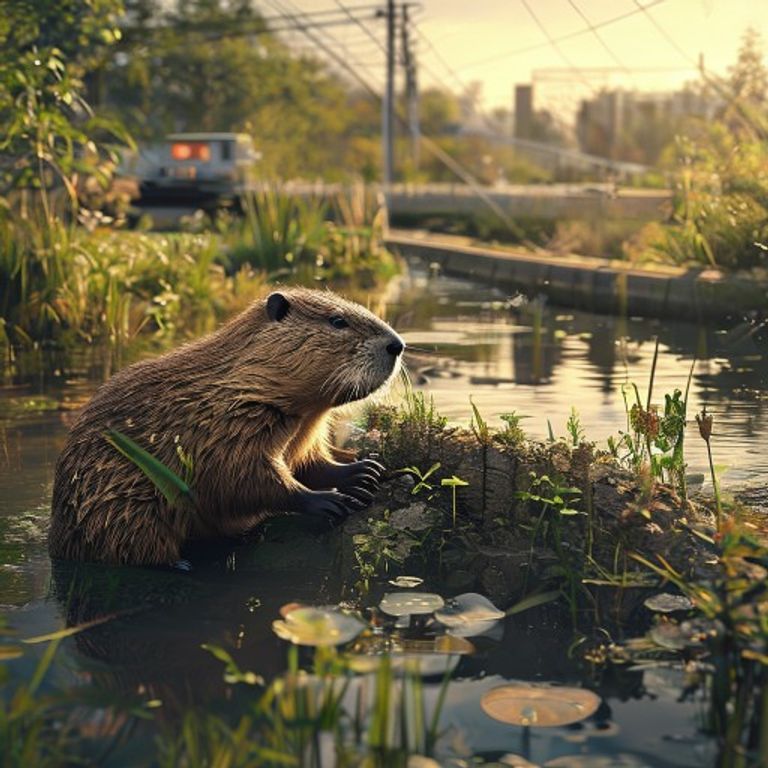
In a remarkable demonstration of nature’s ability to solve complex urban challenges, the London Borough of Ealing has witnessed an extraordinary transformation. For decades, areas susceptible to the unpredictable wrath of urban flooding wrestled with conventional, often insufficient, engineering solutions. However, a pioneering initiative involving the reintroduction of beavers has not only stemmed the tide of these recurrent deluges but has also breathed new life into the local ecosystem. The success of the Ealing beavers, particularly their steadfast protection of the area surrounding Greenford station from flooding for a continuous three-year period, stands as a testament to the profound potential of nature-based interventions.
The industrious beavers, once absent from the British landscape for centuries, have returned as vital ecosystem engineers. Their innate ability to construct dams and create intricate wetland systems has proven to be an unparalleled defense mechanism against intense rainfall. These newly formed wetlands act as natural sponges, effectively retaining vast quantities of excess rainwater during severe storms and slowly releasing it, thereby preventing overwhelming surges that previously inundated streets and properties. This innovative approach by Ealing council and its partners has not only safeguarded infrastructure and livelihoods but has also fostered a vibrant resurgence of biodiversity, illustrating a powerful paradigm shift in how urban environments can adapt to the escalating pressures of climate change.
The Persistent Threat of Urban Flooding in London
London’s Vulnerability to Climate Change
London, a sprawling metropolis intersected by rivers and countless drainage systems, has always grappled with the inherent risks of flooding. However, in an era defined by a rapidly changing climate, the frequency and intensity of extreme weather events have dramatically increased. The capital now faces more prolonged periods of heavy rainfall, overwhelming its Victorian-era drainage infrastructure and pushing its rivers to their limits. Ealing, located in West London and traversed by several waterways, including the River Brent, has historically been particularly vulnerable to flash floods and riverine inundation. These events not only cause extensive damage to homes and businesses but also disrupt transportation, pose significant health risks, and inflict substantial psychological stress on affected communities.
Limitations of Traditional Engineering Solutions
For years, the conventional response to flooding has revolved around large-scale engineering projects: higher concrete walls, deeper culverts, and faster-draining channels. While these methods offer some level of protection, they often come with considerable drawbacks. Such ‘hard engineering’ solutions can be costly to implement and maintain, visually intrusive, and frequently transfer the flood risk downstream, merely shifting the problem rather than solving it holistically. Furthermore, they can detrimentally impact natural habitats, disconnect rivers from their floodplains, and reduce biodiversity. The long-term sustainability and ecological compatibility of these approaches have increasingly been called into question, paving the way for a re-evaluation of strategies to build urban resilience.
A Groundbreaking Initiative: Reintroducing Nature’s Engineers
The Return of the Beaver to Britain
Beavers, or Castor fiber, were once a ubiquitous presence across the British Isles, playing a crucial role in shaping the landscape through their dam-building activities. Their populations were driven to extinction in the 16th century due to overhunting for their fur, meat, and castoreum. Their absence left a significant void in the ecosystem, leading to less complex river systems and reduced wetland habitats. In recent decades, a growing understanding of their ecological benefits has led to a movement for their reintroduction, initially in controlled enclosures and later in wilder settings across the UK.
Ealing’s Visionary Decision
The decision to reintroduce beavers into Ealing was a bold and innovative step, representing a significant departure from traditional flood management. This ambitious project was the culmination of collaborative efforts between the Ealing Council, the Middlesex Wildlife Trust, and other environmental organizations, all driven by a shared vision of integrating natural processes into urban planning. The chosen site, within the Paradise Fields nature reserve, provided an ideal habitat with suitable water sources and vegetation. The proposal faced initial scrutiny and required careful planning to address potential concerns from local residents and landowners, demonstrating a commitment to community engagement and scientific rigor. The success of earlier beaver reintroductions in other parts of the UK provided a compelling case study, showcasing the positive impact these animals could have on both flood mitigation and biodiversity enhancement.
How Beavers Act as Natural Flood Defenders
The Art of Dam Construction and Wetland Creation
Beavers are renowned for their remarkable ability to modify their environment. Their signature activity, dam construction, is not arbitrary; it is driven by an instinct to create deep, still pools of water to protect their underwater lodge entrances and facilitate access to food sources. Using branches, mud, stones, and vegetation, they skillfully erect dams that span watercourses. These structures effectively slow down the flow of water, causing it to back up and spread out across the floodplain. Over time, this process leads to the formation of intricate and dynamic wetland systems comprising multiple ponds, channels, and marshy areas.
Slowing, Storing, and Filtering Water
The ecological impact of beaver wetlands is profound and multi-faceted. During periods of heavy rainfall, these expanded wetland areas act as natural reservoirs. Instead of water rushing downstream, causing surges and overwhelming existing drainage, it is detained within the beaver-created landscape. This slows down the release of water, significantly reducing peak flow rates further along the catchment. The wetlands also function as natural filters, trapping sediments, pollutants, and excess nutrients, thereby improving water quality. This multi-layered approach to water management mimics the natural hydrological processes that have been lost in many urbanized river systems, offering a sustainable and self-sustaining solution to flood attenuation.
A Natural Infrastructure Against Climate Extremes
The network of dams and ponds created by beavers essentially constructs a natural, resilient infrastructure. Unlike engineered defenses that can be damaged or breached during extreme events, beaver landscapes possess an inherent adaptability. As water levels rise, beavers often respond by reinforcing existing dams or building new ones, continuously adjusting their environment to suit their needs. This dynamic response makes their flood mitigation efforts particularly effective in the face of increasingly unpredictable weather patterns, offering a robust and evolving defense against the vagaries of climate change.
Greenford’s Three-Year Flood-Free Success Story
A Landmark Achievement in Urban Resilience
The most compelling evidence of the Ealing beavers’ success lies in the area surrounding Greenford station. For three consecutive years, this previously flood-prone locale has remained remarkably safeguarded from inundation, even amidst periods of intense and prolonged rainfall that have challenged other parts of London. This achievement is not merely a stroke of luck but a direct consequence of the beavers’ tireless work upstream, where their dams and wetlands have effectively managed floodwaters before they can reach critical urban infrastructure.
Impact on Community and Economy
Prior to the beaver reintroduction, residents and businesses around Greenford station faced constant anxiety during heavy rainfall. Roads would become impassable, homes would be damaged, and local commerce would suffer. The consistent protection afforded by the Ealing beavers has brought a significant sense of relief and stability to the community. It has reduced the financial burden of flood damage, lowered insurance risks, and fostered a greater sense of security. This tangible success offers a powerful example of how ecological restoration can translate into direct economic and social benefits for urban populations, proving that investing in nature can yield dividends far beyond environmental conservation alone.
A Cost-Effective and Sustainable Model
Compared to the astronomical costs associated with constructing and maintaining traditional flood defenses, the beaver reintroduction project in Ealing represents a highly cost-effective and sustainable solution. Once established, the beavers largely manage themselves, requiring minimal human intervention. Their work offers a perpetual, self-repairing, and evolving defense system that continuously adapts to changing environmental conditions. This low-maintenance, high-impact model presents a compelling argument for scaling up similar initiatives in other flood-vulnerable regions, both within the UK and internationally.
Beyond Flood Control: Reinvigorating Ealing’s Ecosystems
A Biodiversity Boom
The benefits of the Ealing beaver project extend far beyond flood attenuation. The creation of complex wetland habitats has triggered a remarkable resurgence of biodiversity. The new ponds and marshy areas provide ideal breeding grounds and foraging sites for a multitude of species that were previously scarce or absent. Dragonflies and damselflies now dart over the water, their larvae forming a crucial food source for fish and amphibians. New populations of frogs, toads, and newts thrive in the still waters, attracting predatory birds like herons and kingfishers. Water voles, a native species whose numbers have plummeted across the UK, have also found sanctuary in these revitalized habitats, indicative of a healthy and balanced ecosystem.
Improved Water Quality and Ecological Health
Beaver activity also plays a critical role in improving overall water quality. Their dams filter out sediments and pollutants, and the slow flow through the wetlands allows for natural purification processes to occur. This leads to cleaner, healthier water, benefiting not only aquatic life but also downstream communities. The increased vegetation around the wetlands also contributes to carbon sequestration, helping to mitigate climate change, while the diverse plant life supports a broader range of insect pollinators, further enhancing the ecological health of the area. Ealing’s landscape is transforming into a richer, more resilient tapestry of life, demonstrating the interconnectedness of flood management and ecological restoration.
Educational and Recreational Opportunities
The presence of the Ealing beavers has also created invaluable educational and recreational opportunities. Local schools and community groups now have a living laboratory to study ecological processes, conservation, and the impact of human actions on the environment. Guided tours and public viewing areas allow residents to safely observe these fascinating creatures and their engineering marvels, fostering a deeper connection to nature within an urban setting. This public engagement is vital in building support for conservation efforts and inspiring future generations to embrace nature-based solutions.
A Blueprint for Global Urban Resilience
Ealing as a Case Study for Nature-Based Solutions
The success of the Ealing beavers is rapidly gaining international recognition, positioning the borough as a leading example of how nature-based solutions can effectively address pressing environmental challenges in urban environments. As cities worldwide grapple with the dual threats of climate change and biodiversity loss, Ealing’s experience offers a compelling blueprint. It demonstrates that rather than solely relying on expensive, often unsustainable, concrete infrastructure, working in harmony with natural processes can deliver more robust, adaptable, and ecologically beneficial outcomes.
The Paradigm Shift in Environmental Policy
This initiative represents a significant paradigm shift in environmental policy and urban planning. It encourages a move away from an adversarial relationship with nature towards one of collaboration and restoration. Policymakers and urban planners are increasingly looking to such projects for inspiration, understanding that integrating ecological principles into infrastructure development is not just environmentally responsible but also economically savvy. The Ealing beavers exemplify a future where urban development and natural ecosystems can coexist and mutually thrive, creating more livable, resilient, and biodiverse cities.
Addressing Climate Change Adaptation Globally
As climate change accelerates, the need for effective adaptation strategies becomes paramount. The Ealing project highlights that natural interventions, such as beaver reintroduction and wetland creation, are powerful tools in a broader toolkit for climate resilience. They offer a sustainable pathway to managing water resources, enhancing biodiversity, and creating greener, healthier urban spaces. The lessons learned from Ealing can inform similar initiatives in cities across the globe, inspiring a wave of environmental restoration that prioritizes natural capital as a cornerstone of future urban development.
Conclusion: The Harmony of Progress and Nature
The return of beavers to Ealing borough is more than just a local conservation success story; it is a beacon of hope for urban environments worldwide. These diligent animals have not only provided a robust, self-sustaining defense against the devastating impacts of flooding, particularly safeguarding areas like Greenford station for three consecutive years, but have also catalysed an extraordinary ecological renaissance. The revitalisation of wetlands and the subsequent surge in biodiversity underscore the profound benefits of reconnecting with natural processes.
Ealing’s pioneering initiative demonstrates that effective climate change adaptation and ecological restoration do not require a compromise between human progress and environmental well-being. Instead, by embracing and facilitating the work of nature’s own engineers, urban communities can build greater resilience, foster healthier ecosystems, and create richer, more harmonious living spaces. The Ealing beavers stand as a living testament to a future where cities thrive not despite nature, but in symbiotic partnership with it, offering an inspiring model for a greener, more sustainable world.