
 By NewsMatrix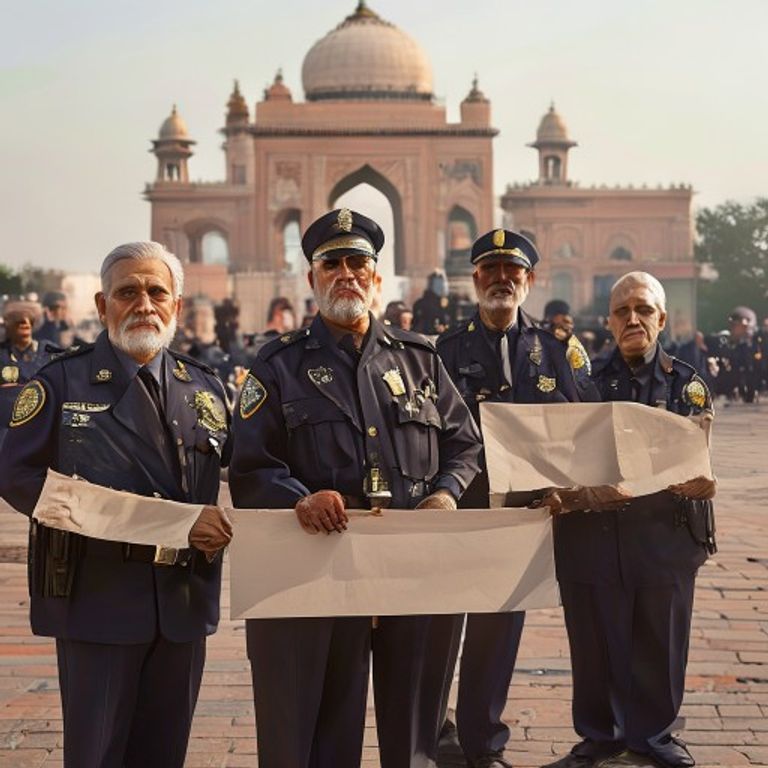
Retired Delhi Police Officers Announce Jantar Mantar Dharna for Injured Colleagues
New Delhi, India – In a significant move highlighting concerns over law enforcement safety, an association of Retired Delhi Police Officers has formally sought permission to hold a peaceful ‘dharna’ (sit-in protest) at the iconic Jantar Mantar on July 31. The primary objective of this demonstration is to express unwavering solidarity with police personnel who sustained injuries during recent, tumultuous parliament protests. Beyond offering support, the association is resolute in its demand for stringent, decisive action against individuals responsible for the violence and assaults that marred these demonstrations. Organizers have emphatically assured authorities and the public alike that the gathering will remain entirely peaceful and disciplined, strictly adhering to all designated limits, police directives, and prevailing laws, underscoring their commitment to upholding the very principles they once swore to protect.
Recent Protests and the Plight of Law Enforcement
The backdrop to this unprecedented show of solidarity is a series of recent parliament protests that escalated into scenes of significant disorder and confrontation. While the specifics of these protests, encompassing various socio-political and economic grievances, are well-documented, a recurring and deeply troubling aspect has been the direct assault on uniformed personnel. News reports and official statements have detailed numerous instances where police officers, deployed to maintain peace and order, found themselves at the receiving end of aggressive behavior, projectiles, and physical violence. These incidents, occurring close to the nation’s legislative heart, not only posed an immediate threat to the lives and well-being of the officers involved but also raised serious questions about the sanctity of public spaces and the respect accorded to those upholding the rule of law. The injuries sustained by police personnel ranged from minor abrasions and contusions to more severe fractures and head injuries, requiring extensive medical attention and recovery periods. Such events serve as a stark reminder of the inherent dangers faced by law enforcement agencies in their daily duties, particularly when confronted with large-scale, volatile public gatherings. The emotional and psychological toll on these officers and their families is often understated, yet it is a critical component of the challenges they endure.
A Call to Action from Seasoned Veterans
The decision by Retired Delhi Police Officers to organize this dharna stems from a profound sense of duty and camaraderie. These are individuals who have dedicated decades of their lives to public service, safeguarding citizens, and maintaining law and order within the complex urban landscape of Delhi. Their extensive experience provides them with a unique perspective on the challenges and sacrifices inherent in police work. For them, witnessing their active-duty colleagues being subjected to violence is not merely a news report; it is a personal affront to the uniform they once wore and the principles they embodied. The association comprises officers from various ranks and departments, united by a shared history of service and an enduring commitment to the welfare of the police force. Their motivation is not political but deeply rooted in professional ethics and a desire to ensure that the sacrifices of police personnel are acknowledged and protected. Many of these retired officers have themselves faced similar situations during their active service, giving them an intimate understanding of the physical and mental pressures involved. They believe that if those who assault police officers are not held accountable, it could have a chilling effect on the morale and effectiveness of the entire force, potentially undermining the very foundation of public safety.
Demanding Justice and Accountability
The core demands of the Retired Delhi Police Officers‘ association are clear and unequivocal. Firstly, they insist on strict and expeditious legal action against all individuals identified as instigators and perpetrators of violence during the recent parliament protests. This demand goes beyond mere arrests; it calls for a thorough investigative process followed by swift prosecution to ensure justice is served and to deter future acts of aggression against law enforcement. The association emphasizes that impunity for such acts emboldens miscreants and undermines the authority of the state. Secondly, they advocate for enhanced measures to protect police personnel during public demonstrations, including better equipment, improved training in crowd control without excessive force, and robust legal frameworks that clearly define the boundaries of protest and the consequences of crossing them. They argue that police officers, as frontline protectors of democratic processes, deserve the utmost protection and respect. Furthermore, the dharna aims to draw public attention to the critical role police play in maintaining civic order and the often-overlooked risks they undertake. By raising awareness, the association hopes to foster greater public empathy and support for the police force, moving beyond the often-negative stereotypes that can sometimes overshadow their vital contributions to society. They believe that a strong, secure, and respected police force is fundamental to a functioning democracy and the overall well-being of the nation.
A Model of Peaceful Protest
Crucially, the organizers of the July 31 dharna have gone to great lengths to assure both the police authorities and the general public of their unwavering commitment to a peaceful and disciplined demonstration. This assurance is not merely a formality; it reflects the deep understanding of law and order that these retired officers possess. Having spent their careers enforcing laws and managing public gatherings, they are acutely aware of the protocols and responsibilities associated with organizing a protest, especially at a sensitive location like Jantar Mantar. Their application for permission explicitly states their intention to comply with all directives issued by the Delhi Police, including restrictions on numbers, timings, and designated areas for the gathering. They plan to remain within the prescribed limits, ensuring no disruption to public life or traffic. The association’s leadership has communicated a clear message to all participants, emphasizing the importance of decorum, non-violence, and respectful conduct throughout the dharna. This approach is intended to distinguish their protest from the very acts of violence they are condemning, reinforcing their message through example. Their commitment to a lawful assembly serves as a powerful testament to their professional integrity and their belief in the democratic right to peaceful expression, even as they demand accountability for violent acts committed by others. This careful adherence to rules and regulations also strengthens their moral standing and makes their demands harder to dismiss by authorities.
Symbolism and Broader Implications for Law Enforcement
The decision by Retired Delhi Police Officers to hold a solidarity dharna at Jantar Mantar carries significant symbolic weight and broader implications for law enforcement in India. It serves as a visible and vocal affirmation of the fraternal bonds within the police force, transcending the distinction between active and retired service. This act of solidarity can significantly boost the morale of serving officers who often feel isolated and undervalued, especially when facing public backlash or violent confrontations. Knowing that their senior, retired colleagues stand firmly behind them can provide a crucial psychological uplift. Furthermore, this dharna compels public discourse to focus on the working conditions, safety, and rights of police personnel, an aspect often overshadowed by discussions on police accountability and misconduct. While accountability is undeniably vital, the challenges and risks faced by officers in the line of duty also warrant serious attention and systemic solutions. The event at Jantar Mantar is not merely a localized protest; it sends a strong message across the nation about the need to protect those who protect us. It highlights the inherent vulnerability of law enforcement personnel when confronted by large, agitated crowds, and the imperative for the state to provide them with adequate resources, training, and legal backing. The involvement of retired officers, who are free from the direct constraints of active service, also lends a particular credibility and gravitas to their demands, positioning them as objective voices advocating for justice and professional integrity.
Jantar Mantar: A Nexus of Democratic Expression
Jantar Mantar, located in the heart of Delhi, holds a unique and revered position in India’s democratic landscape. Originally an 18th-century astronomical observatory, it has, over decades, transformed into the nation’s most prominent designated site for peaceful protests, demonstrations, and public expressions of dissent or solidarity. Its proximity to the Parliament House and other governmental institutions makes it a powerful symbolic location for various social and political movements to voice their concerns directly to the corridors of power. From farmers’ protests to civil rights campaigns, and from student movements to demands for legislative reforms, Jantar Mantar has witnessed a kaleidoscope of public activism. The choice of Jantar Mantar by the Retired Delhi Police Officers is thus deliberate and strategic. It leverages the site’s historical significance as a legitimate platform for grievance redressal and public discourse. By choosing this location, the association implicitly aligns itself with the democratic tradition of peaceful assembly while simultaneously drawing maximum attention to their cause. The echoes of countless previous protests at Jantar Mantar will resonate with their message, lending it a certain historical weight and amplifying its reach across the nation’s political and social consciousness. This venue allows for visibility, media attention, and direct communication with decision-makers and the wider citizenry, making it an ideal choice for a demonstration intended to effect change and garner support for police welfare.
Voices from the Veterans: A Pledge for Justice
While official statements from the association’s leadership are forthcoming, the sentiments driving this dharna are widely understood among its members. One hypothetical senior member, reflecting on decades of service, might express: “We have spent our lives upholding the law and protecting citizens. To see our young colleagues injured while performing their duty, and to witness the perpetrators often escape swift justice, is deeply unsettling. We stand in solidarity not just as former officers, but as citizens who believe in the rule of law and the safety of our protectors. This dharna is a testament to our enduring commitment to justice and the welfare of the force.” Another might add, “Our message is clear: violence against law enforcement is unacceptable and must be met with the full force of the law. We are here to ensure that the sacrifices of our police personnel are not in vain, and that their fundamental right to safety is paramount. Our protest will be disciplined, respectful, and entirely within the legal framework, just as we expect every citizen to respect the law.” These imagined sentiments encapsulate the deep-seated motivations behind the July 31 event, emphasizing both their steadfast resolve and their adherence to the principles of lawful conduct.
Looking Ahead: The Path to Resolution and Respect
As July 31 approaches, all eyes will be on Jantar Mantar, where Retired Delhi Police Officers will assemble for their significant solidarity dharna. This peaceful demonstration is more than just a protest; it is a powerful statement about the imperative of respecting and safeguarding those who serve on the frontlines of law enforcement. Their demands for strict action against individuals responsible for violence against police officers, coupled with their assurance of a disciplined and lawful gathering, underscore a mature and principled approach to advocacy. The event is poised to reignite crucial discussions about public order, the boundaries of democratic protest, and the welfare of police personnel who tirelessly work to maintain peace and security. The outcome of this dharna, and the subsequent response from authorities, will undoubtedly shape future dialogues on police safety and accountability in India. It serves as a potent reminder that the strength of a nation’s law enforcement lies not only in its operational capabilities but also in the unwavering support and respect it commands from its citizens and, indeed, from its own esteemed veterans.