
 By NewsMatrix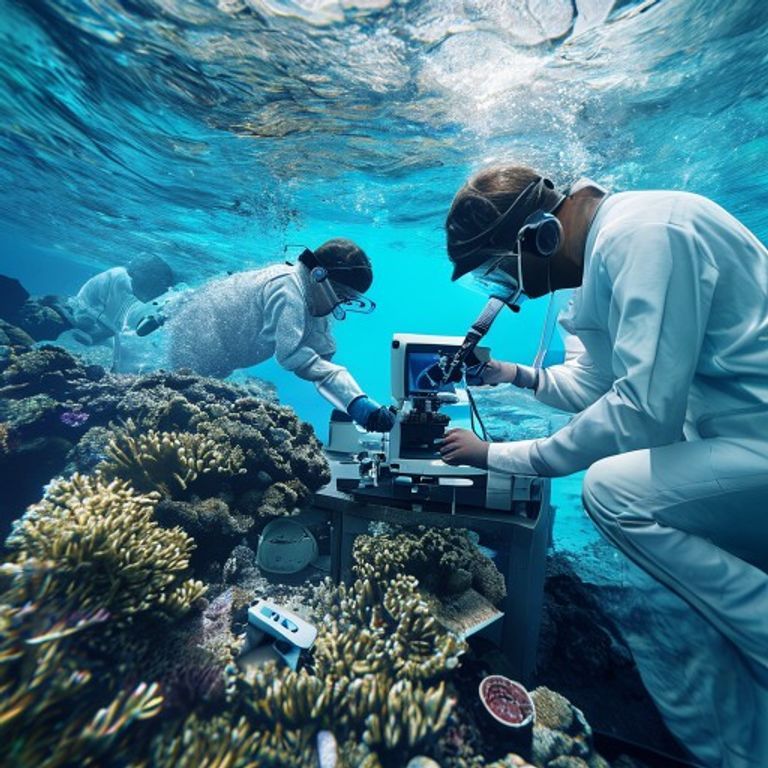
Revolutionizing Coral Reef Health Monitoring Through Advanced Water Chemistry and Microbiome Analysis
NewsMatrix Exclusive – In a groundbreaking stride towards safeguarding the world’s precious underwater ecosystems, an international consortium of researchers is deploying cutting-edge techniques in water chemistry and microbial analysis to monitor the health of coral reefs. This innovative approach, drawing parallels to the early disease detection methods in human medicine, promises to identify signs of stress in corals long before any visible degradation appears, offering a critical window for intervention. The intricate interplay of ocean currents, which significantly influences these chemical and microbial patterns, is a key focus of this ambitious, interdisciplinary work aimed at protecting vital ocean ecosystems.
Coral reefs, often dubbed the “rainforests of the sea,” are biodiversity hotspots, supporting an estimated 25% of all marine species despite occupying less than 0.1% of the ocean’s surface. Beyond their ecological significance, reefs provide essential services to human populations, including coastal protection, food security, tourism, and sources for new medicines. However, these fragile ecosystems face unprecedented threats from climate change, ocean acidification, pollution, and overfishing, leading to widespread decline globally. Traditional monitoring methods, which primarily rely on visual inspection, often detect problems only after significant damage has occurred, making effective recovery challenging. The urgency for more proactive and sensitive diagnostic tools has never been greater, and this new research offers a beacon of hope.
The Microscopic Sentinels: Unveiling Hidden Stressors
At the heart of this new paradigm in Coral Reef Health Monitoring lies the understanding that changes in a coral reef’s environment – whether due to rising temperatures, pollution, or disease – first manifest at a microscopic level. Just as a doctor might detect an infection by analyzing blood markers or microbial cultures before a patient shows severe symptoms, marine scientists are now looking to the invisible world within and around corals for early warnings.
Water Chemistry: The Ocean’s Diagnostic Fluid
Ocean water is a complex soup of chemical compounds, and its composition can reveal much about the health of the ecosystems it bathes. Researchers are employing highly sensitive analytical techniques to detect subtle shifts in the concentration of various chemical markers. These markers can include:
- Nutrient Levels: Elevated levels of nitrates and phosphates, often from agricultural runoff or sewage, can lead to algal overgrowth, suffocating corals. Early detection allows for pinpointing pollution sources and implementing mitigation strategies.
- Dissolved Organic Matter (DOM): The composition and quantity of DOM, which consists of carbon-based molecules released by living organisms and decaying matter, can indicate changes in the metabolic activity of reef inhabitants or the presence of specific stressors.
- Trace Metals: While some trace metals are essential, elevated levels of heavy metals can be toxic to corals and their symbiotic algae, leading to bleaching and disease.
- pH and Carbonate Chemistry: Ocean acidification, caused by increased absorption of atmospheric CO2, lowers ocean pH and reduces the availability of carbonate ions, crucial for coral skeleton formation. Monitoring these changes precisely provides early warnings of acidification stress.
- Metabolites: Corals and their associated organisms release a diverse array of metabolites – small molecules that are products of metabolism. Changes in these metabolite profiles can signal stress responses, disease onset, or shifts in community dynamics even before physiological changes are visually apparent.
By continuously monitoring these chemical signatures, scientists can establish baselines for healthy reefs and identify deviations that signal impending trouble. This chemical fingerprinting provides an objective, quantifiable measure of environmental stress that visual assessments simply cannot achieve.
The Microbiome: An Ecosystem’s Inner Balance
Every coral polyp is a host to a vibrant and diverse community of microorganisms, collectively known as its microbiome. This includes bacteria, archaea, fungi, and viruses that live on and within the coral tissue, playing crucial roles in nutrient cycling, disease resistance, and overall coral health. Similar to the human gut microbiome, a healthy coral microbiome is characterized by a specific balance of species. When a coral experiences stress – be it from temperature fluctuations, pollution, or pathogens – its microbiome can shift dramatically.
- Dysbiosis Detection: Researchers are using advanced DNA sequencing technologies to map the microbial communities associated with corals and the surrounding water. They look for changes in microbial diversity, the dominance of certain pathogenic bacteria, or the decline of beneficial microbes. Such shifts, known as dysbiosis, are often precursors to coral disease and mortality.
- Pathogen Identification: The presence of specific microbial pathogens can be detected early, allowing for targeted research into disease prevention and treatment, potentially through probiotic interventions or improved water quality management.
- Functional Changes: Beyond identifying species, scientists are also investigating the functional genes present in the microbiome, revealing what metabolic processes are active and how these might be altered under stress conditions. This offers insights into the coral’s physiological state and resilience.
The ability to analyze these microbial communities offers an unparalleled level of detail into the internal state of the reef ecosystem, providing early indicators of stress long before any external signs appear.
The Influence of Ocean Currents: A Dynamic Puzzle Piece
One of the most complex yet critical aspects of this advanced monitoring system is understanding the role of ocean currents. Currents are not merely passive transporters of water; they are dynamic forces that profoundly influence the distribution of chemical cues and microbial populations across a reef system and between reefs. This presents both a challenge and an opportunity for researchers.
- Signal Dispersal: Ocean currents can rapidly disperse chemical and microbial signals from a stressed area to seemingly healthy parts of a reef, or even to distant reefs. This means a localized issue could have broader implications, but also that a monitoring station down-current might detect problems originating far away.
- Source Tracing: By combining sophisticated oceanographic models with chemical and microbial data, scientists can work backwards to potentially identify the source of pollution or stress events. Understanding current patterns is vital for accurately interpreting where a detected anomaly originated.
- Connectivity: Currents dictate the connectivity between different reef sections and even entire reef systems, influencing how diseases spread or how beneficial microbes are shared. Mapping these connections is crucial for predicting the spread of threats and designing effective conservation strategies.
- Monitoring Network Design: Knowledge of current patterns is indispensable for designing an effective network of monitoring stations. Strategic placement allows for maximum coverage and the ability to detect signals from upstream stressors, providing a more comprehensive real-time assessment of reef health.
Integrating oceanographic data with biological and chemical measurements transforms the monitoring effort from a static snapshot into a dynamic, predictive system, much like weather forecasting models that integrate atmospheric data.
Interdisciplinary Collaboration: The Future of Ocean Conservation
The success of this revolutionary Coral Reef Health Monitoring initiative hinges on robust interdisciplinary collaboration. It brings together marine biologists, oceanographers, chemists, microbiologists, ecologists, and data scientists. This convergence of expertise is essential to:
- Develop Advanced Sensors: Engineers and chemists are working on creating more sensitive and autonomous sensors that can continuously collect data on water chemistry in situ, transmitting information in real-time.
- Refine Genomic Techniques: Microbiologists and geneticists are constantly improving DNA sequencing and bioinformatics tools to quickly and accurately analyze complex microbial communities.
- Build Predictive Models: Oceanographers and data scientists are developing sophisticated computational models that integrate current data, chemical signatures, and microbial profiles to predict disease outbreaks or environmental stress events.
- Translate Science to Action: Conservation practitioners and policymakers are crucial for translating scientific findings into effective management strategies, from implementing marine protected areas to regulating pollution and advocating for climate action.
This holistic approach acknowledges the multifaceted nature of marine ecosystems and the complex challenges they face. By fostering collaboration across traditional scientific boundaries, researchers are building a more comprehensive understanding of coral reef health and resilience.
A Paradigm Shift for Conservation
This early detection system represents a significant paradigm shift in marine conservation. Instead of reacting to widespread coral bleaching events or disease outbreaks after they have caused irreversible damage, conservationists can now envision a future where they can proactively intervene. Potential interventions could include:
- Targeted Pollution Control: Identifying specific chemical markers can lead to pinpointing pollution sources and implementing targeted clean-up or regulatory actions.
- Disease Management: Early detection of microbial shifts can allow for the isolation of affected areas, targeted treatments (if feasible), or the implementation of measures to boost coral immunity.
- Resilience Building: Understanding the chemical and microbial profiles of resilient coral populations can inform efforts to restore and protect these robust strains.
- Informing Policy: Real-time data provides powerful evidence for policymakers to enact stricter environmental regulations and support conservation funding.
The ability to detect subtle changes before visible stress appears gives hope that marine managers will have the crucial time needed to implement effective mitigation strategies, potentially saving vast stretches of coral reef from catastrophic collapse.
Conclusion: A Brighter Future for Our Oceans
The integration of water chemistry and microbial analysis, interpreted through the lens of ocean currents, marks a transformative moment for coral reef conservation. By adopting a diagnostic approach akin to early disease detection in human health, scientists are equipping themselves with powerful tools to understand, monitor, and ultimately protect these vital marine ecosystems. This interdisciplinary endeavor not only deepens our scientific understanding of coral reefs but also provides actionable intelligence for conservation efforts worldwide. As the threats to our oceans continue to mount, such innovative research offers a tangible path towards a future where coral reefs can not only survive but thrive for generations to come, ensuring the health and biodiversity of our planet’s most precious underwater habitats. NewsMatrix will continue to follow the developments of this crucial scientific work.