
 By NewsMatrix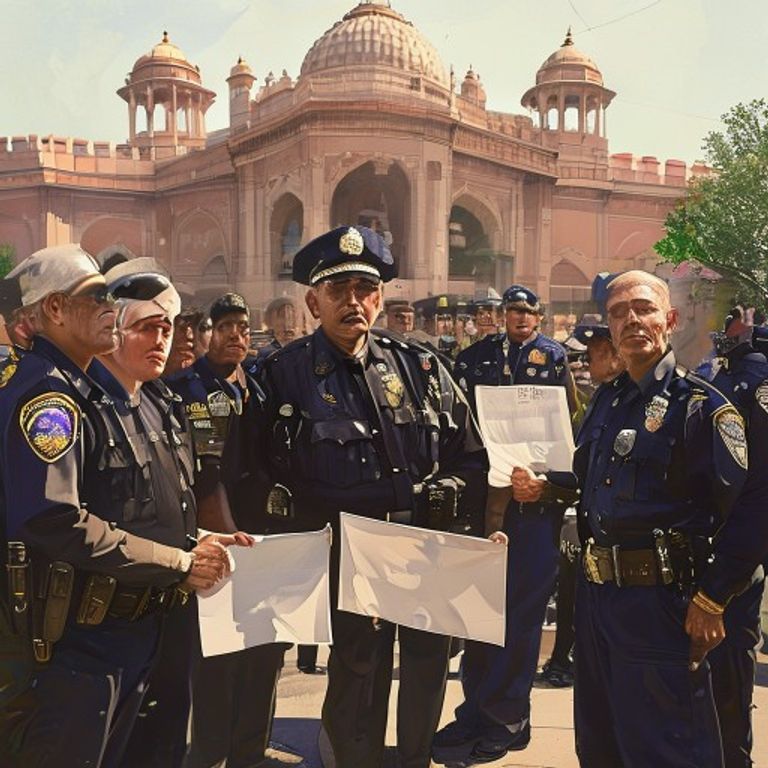
Retired Delhi Police Officers to Hold Jantar Mantar Dharna: A Call for Justice and Solidarity
New Delhi, India – In a significant move highlighting the enduring bonds and commitment to justice within the force, an association of retired Delhi Police officers has formally sought permission to stage a dharna (sit-in protest) at Jantar Mantar on July 31st. This unprecedented demonstration aims to express profound solidarity with police personnel who sustained injuries during recent parliament-related protests and to vociferously demand stringent action against those responsible for the acts of violence and assault. The organisers of this planned Delhi Police Dharna have unequivocally assured authorities of a peaceful and disciplined gathering, pledging full compliance with all police directions and relevant laws, ensuring the protest remains within designated limits.
The proposed dharna at Jantar Mantar, a historic site synonymous with public demonstrations and expressions of dissent in the nation’s capital, underscores a collective resolve to uphold the dignity and safety of law enforcement. This initiative transcends the traditional boundaries of post-retirement life, with former officers stepping forward to advocate for their injured active-duty colleagues. It sends a powerful message about the sacrifices made by police personnel in the line of duty and the imperative for accountability when they become targets of aggression.
The Unprecedented Call for Solidarity
The decision by the retired Delhi Police officers to organise a dharna is noteworthy for several reasons. Firstly, it represents a visible and organised show of internal solidarity within the broader police fraternity, bridging the gap between those who have served and those who are currently serving. Often, the public perception of law enforcement can be monolithic; however, this action reveals a deep-seated camaraderie and a shared understanding of the inherent risks and challenges of police work. The association’s meticulously planned approach, beginning with seeking official permission, reflects their professional training and respect for due process, even when exercising their right to protest.
The move also highlights a potential area of concern for the morale of the active police force. When retired officers feel compelled to protest for the safety and justice of their younger counterparts, it implicitly draws attention to the systemic pressures and sometimes insufficient protections faced by law enforcement. The association’s public stance is not merely a symbolic gesture; it is a direct appeal to the government and the judiciary to acknowledge the gravity of assaults on police officers and to ensure that such acts are met with the full force of the law. Their professional background grants their voice a unique weight, as they possess firsthand experience of the operational realities and dangers inherent in maintaining public order.
Background to the Parliament Protests and Police Injuries
The recent period has witnessed a series of protests and demonstrations around the Parliament complex and other key governmental areas in Delhi. While the specifics of these protests vary, ranging from policy disagreements to socio-economic grievances, a common thread has unfortunately been the occasional eruption of violence. During these tumultuous events, police personnel, tasked with maintaining law and order, managing crowds, and ensuring the safety of both protesters and public property, have frequently found themselves on the front lines of conflict.
Reports from various incidents have detailed instances where police officers were subjected to stone-pelting, physical assaults, and other forms of aggression. These encounters have resulted in numerous injuries, some minor, others severe, impacting the physical and psychological well-being of the officers involved. For law enforcement, responding to such situations requires immense restraint and adherence to protocols, even in the face of provocation. The injuries sustained by these officers are not merely statistics; they represent individuals who were fulfilling their sworn duty to protect and serve, often at great personal risk. The retired officers’ dharna seeks to bring these often-overlooked human stories to the forefront, demanding empathy and accountability.
Demands for Accountability and Justice
At the core of the retired officers’ upcoming protest lies a fervent demand for strict and swift action against individuals identified as instigators and perpetrators of violence against police personnel. The association argues that attacking police officers, who are symbols and enforcers of the rule of law, undermines the very fabric of a civil society. Such acts are not merely disruptions of public order but direct assaults on the authority of the state and the safety of its citizens.
Their demands extend beyond mere arrests; they advocate for thorough investigations, timely prosecution, and exemplary punishment for those found guilty. This stance is rooted in the belief that impunity for attacks on law enforcement can erode police morale, embolden further acts of aggression, and ultimately jeopardise the ability of the police to effectively perform their duties. The retired officers are keen to see a clear message sent that violence against uniformed personnel will not be tolerated in a democratic society. This call for justice is not about retribution but about reinforcing the principle that accountability is paramount, regardless of the context of a protest.
Jantar Mantar: A Symbol of Democratic Dissent
The choice of Jantar Mantar as the venue for the dharna is highly symbolic and strategically significant. Located in the heart of New Delhi, Jantar Mantar has historically served as a crucible for India’s vibrant democracy, witnessing countless protests, rallies, and demonstrations across a spectrum of political, social, and economic issues. It is a designated space where citizens can publicly express their grievances and demands, making their voices heard by the government and the wider public.
For the retired Delhi Police officers, protesting at Jantar Mantar places their cause squarely within the public consciousness and the national dialogue. It leverages the site’s reputation as a legitimate platform for dissent, lending credibility and visibility to their message of solidarity and justice. The historical context of Jantar Mantar as a place where the collective will of the people is often articulated adds a layer of solemnity and importance to their endeavour. It is a place where causes, whether popular or niche, vie for attention, and the presence of former custodians of law and order here will undoubtedly draw significant public and media interest.
Organisational Ethics and Adherence to Law
A central tenet of the retired officers’ appeal for permission is their unwavering commitment to a peaceful and disciplined gathering. This assurance is not merely a formality but a reflection of their ingrained professional ethos, honed over years of service in maintaining law and order. They have explicitly stated their intention to comply with all police directions and relevant laws, operating strictly within the designated boundaries for public assembly.
This commitment is crucial for several reasons. Firstly, it distinguishes their protest from those that may devolve into disorder, reinforcing their message of respect for the rule of law. Secondly, it pre-empts any potential governmental apprehension regarding the nature of the protest, making it more likely for permission to be granted. Thirdly, it sets a precedent for how even those with grievances can express them responsibly and constructively within a democratic framework. The retired officers understand the fine line between exercising fundamental rights and infringing upon public order, and their planned dharna is poised to be an exemplary model of organised and lawful dissent.
The Broader Implications for Law Enforcement Morale
The solidarity dharna holds profound implications for the morale of the active police force across the nation, not just in Delhi. Police work is inherently demanding, often thankless, and frequently places officers in harm’s way. Knowing that their former colleagues, who understand the unique pressures of the job, are advocating for their well-being and justice can provide a significant boost to morale. It reinforces the idea that their sacrifices are seen, acknowledged, and valued, not just by the public but, critically, by their own fraternity.
Moreover, this public demonstration can help reshape public perception of police personnel. By highlighting the injuries sustained during duty, the dharna humanises the police, moving beyond stereotypes to showcase the real dangers they face. It serves as a reminder that officers are also citizens, with families and lives, who deserve protection and justice when they are assaulted. In a society grappling with complex issues of public trust and accountability, such an act of solidarity from within the ranks can foster a more nuanced understanding of the challenges faced by those tasked with maintaining peace and order.
Legal Framework and the Right to Protest in India
India’s democratic framework enshrines the right to peaceful assembly and protest as a fundamental freedom under Article 19(1)(b) of its Constitution. However, this right is not absolute and is subject to reasonable restrictions in the interest of public order, morality, or the sovereignty and integrity of India, as outlined in Article 19(3). The balance between these rights and restrictions is a cornerstone of India’s democratic practice.
The process of seeking permission for a dharna, as undertaken by the retired Delhi Police officers, is a manifestation of this legal framework. It involves informing the relevant police authorities, outlining the nature, purpose, and estimated duration of the protest, and agreeing to abide by conditions set to ensure public safety and minimise disruption. The police, in turn, have a dual role: to facilitate peaceful protests and to prevent any breakdown of law and order. The retired officers’ explicit commitment to complying with all directions demonstrates their understanding of this delicate balance and their intention to operate strictly within the legal parameters, reinforcing their status as responsible citizens and former guardians of the law.
Past Precedents and Future Projections
While organised protests by retired police officers for the specific cause of injured active personnel might be relatively uncommon in India, the history of public service personnel, including those from various government departments and even paramilitary forces, engaging in peaceful demonstrations for their rights or specific causes is not entirely new. This particular dharna, however, stands out due to its direct focus on the safety and justice for currently serving officers who have been victims of violence during public unrest.
The outcome of this July 31st demonstration could set a significant precedent. A successful, peaceful, and impactful dharna could potentially inspire similar solidarity movements within other branches of public service, underscoring the importance of internal support structures. Conversely, how the authorities respond to the demands for justice could also influence future interactions between the state and those who serve it. It is a moment that brings into sharp focus the imperative for mutual respect between citizens and law enforcement, and for the state to unequivocally protect those who protect society.
Conclusion
The planned July 31st Delhi Police Dharna at Jantar Mantar by retired Delhi Police officers represents a potent confluence of solidarity, a demand for justice, and a reaffirmation of democratic values. It is a poignant reminder of the sacrifices made by law enforcement officers and the imperative to ensure their safety and dignity, even amidst the turbulence of public protests. The organisers’ unwavering commitment to a peaceful and disciplined gathering, strictly adhering to legal provisions, sets a commendable example of responsible civic engagement.
As the date approaches, all eyes will be on Jantar Mantar, not just to observe a protest, but to witness a unique expression of fraternal support and a collective appeal for accountability. This initiative transcends mere protest; it is a call for a deeper societal respect for those who stand on the front lines of maintaining order, a testament to the enduring spirit of service, and a hope for a future where the rule of law is upheld for all, including those who enforce it.