
 By NewsMatrix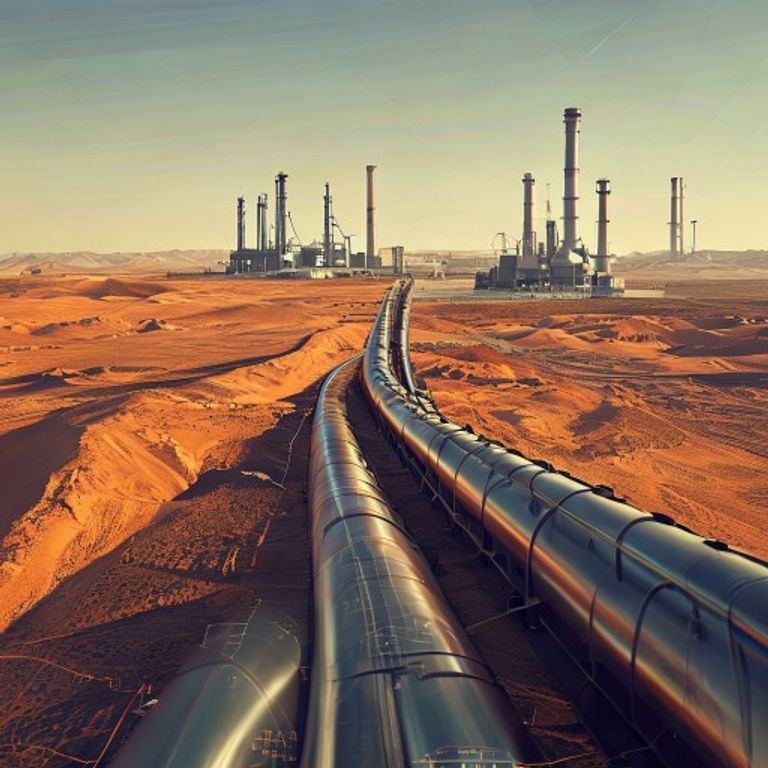
Yanbu Pipeline: India’s Crucial Crude Supply Cushion Amid Red Sea Volatility
NewsMatrix – In an increasingly volatile global energy landscape, the reliability of crude oil supply chains has become paramount for major importing nations. For India, a rapidly growing economy heavily reliant on oil imports, the strategic significance of diversified supply routes cannot be overstated. Amidst ongoing tensions affecting shipping lanes in the Red Sea, Indian refiners continue to benefit from an important supply cushion through Saudi Arabia’s East-West (Yanbu) pipeline. This critical artery has consistently provided between 300,000 to 500,000 barrels per day (kbd) of crude, offering a vital alternative that bypasses the Suez Canal and the Red Sea bottleneck.
Geopolitical Undercurrents and the Red Sea Conundrum
The Red Sea, a narrow stretch of water connecting the Indian Ocean to the Mediterranean Sea via the Suez Canal, is a linchpin for global maritime trade, especially for oil and gas shipments. Recent geopolitical events, particularly heightened security concerns and attacks on commercial vessels, have cast a long shadow over the safety and efficiency of this crucial waterway. Shipping companies worldwide have been forced to re-evaluate their routes, with many opting for the longer and more expensive detour around the Cape of Good Hope. This rerouting adds significant time and cost to voyages, impacting supply schedules and potentially driving up global commodity prices.
For India, which sources a substantial portion of its crude oil from the Middle East, disruptions in the Red Sea pose a direct threat to its energy security. The nation’s refining capacity is among the largest globally, and a consistent, predictable flow of crude is essential to meet its burgeoning domestic demand for petroleum products. Any slowdown or increased cost in receiving crude through traditional Red Sea routes could translate into higher fuel prices for consumers and increased operational costs for industries.
The Strategic Significance of the East-West (Yanbu) Pipeline
It is in this context that the Saudi East-West Pipeline, also known as the Petroline or Yanbu pipeline, emerges as an indispensable strategic asset. Originating in Saudi Arabia’s eastern oil fields and extending approximately 1,200 kilometers across the Arabian Peninsula to the Red Sea port of Yanbu, this pipeline offers a direct conduit for Saudi crude to reach the Red Sea without transiting the Persian Gulf and the Strait of Hormuz. While the Persian Gulf route remains dominant, the Yanbu pipeline provides an invaluable alternative, particularly for destinations west of Saudi Arabia.
For Indian refiners, the pipeline’s consistent supply of 300-500 kbd represents a significant portion of their daily crude requirements. This volume is not merely a supplemental source; it acts as a critical buffer, mitigating the immediate impacts of Red Sea disruptions. By receiving crude directly at Yanbu, shipments can then proceed south through the Red Sea to India with a shorter transit time compared to an alternative route around Africa. More importantly, it diversifies the initial transit point, reducing reliance on a single choke point for sourcing crude from major Middle Eastern producers.
- Route Diversification: Bypasses the Strait of Hormuz, offering an alternative for crude originating from Saudi Arabia’s eastern provinces.
- Reduced Transit Risk: Although crude still passes through the southern Red Sea, the pipeline reduces the overall exposure to potential disruptions affecting the Persian Gulf and northern Red Sea.
- Consistent Supply Volume: The reported 300-500 kbd flow provides a reliable and substantial base load for Indian refineries.
- Economic Efficiency: Compared to circumnavigating Africa, utilizing the pipeline and then transiting the Red Sea remains a more cost-effective and time-efficient option for Indian importers.
India’s Energy Security Imperatives
India is the world’s third-largest energy consumer and a major importer of crude oil, fulfilling over 80% of its crude oil needs through imports. This inherent dependency makes the nation highly susceptible to global oil market fluctuations and geopolitical disruptions in key producing regions or transit routes. The Indian government and its national oil companies have, for years, pursued a multifaceted strategy to enhance energy security, which includes:
- Diversification of Supply Sources: Reducing over-reliance on any single region or country for crude imports.
- Strategic Petroleum Reserves (SPR): Building and maintaining emergency crude oil stockpiles to cushion against sudden supply shocks.
- Investments in Upstream Projects Abroad: Securing equity oil from overseas assets.
- Development of Alternative Transport Routes: Exploring and utilizing pipelines and other non-maritime channels where feasible.
The continued operation of the Yanbu pipeline perfectly aligns with this strategic vision. It provides a tangible example of how existing infrastructure, when utilized effectively, can contribute significantly to a nation’s energy resilience. The steady influx of Yanbu pipeline crude supply underscores the foresight in developing such cross-country transportation arteries that offer redundancy in an unpredictable world.
Impact on Indian Refiners and the Domestic Market
For Indian refiners, the continuous flow from the Yanbu pipeline translates directly into operational stability and reduced supply uncertainty. Companies such as Indian Oil Corporation (IOC), Bharat Petroleum Corporation Limited (BPCL), and Hindustan Petroleum Corporation Limited (HPCL), among others, are primary beneficiaries. This stability allows them to:
- Maintain Optimal Utilization Rates: Ensuring that refineries operate at or near full capacity without interruptions due to crude shortages.
- Manage Inventory Levels: Better planning and management of crude oil inventories, avoiding costly stockouts or excessive holding costs.
- Price Stability: Contributing to greater stability in the domestic petroleum product market by ensuring a consistent input cost component.
- Supply Chain Predictability: Enhancing the overall predictability of their supply chains, crucial for long-term planning and investment decisions.
The ability to access this crude without significant disruption also helps India maintain its competitive edge in the regional refining market. With robust demand for refined products both domestically and from neighboring countries, a secure crude supply is foundational to India’s economic growth trajectory.
Global Market Implications and Future Outlook
While the Yanbu pipeline primarily serves Saudi Arabia’s strategic interests and its customers, its sustained operation has broader implications for global oil markets. By helping to stabilize a significant importer like India, it indirectly contributes to reducing overall market volatility that might otherwise stem from Red Sea disruptions. If more crude were forced to take the longer route around Africa, the global tanker fleet would be stretched, freight rates would soar, and delivery times would extend, creating upward pressure on crude prices worldwide.
Looking ahead, the importance of resilient energy infrastructure is only set to grow. As geopolitical flashpoints continue to emerge and climate-related events pose new challenges to traditional shipping routes, nations will increasingly prioritize securing diverse and robust supply lines. The Red Sea’s strategic importance is unlikely to diminish, making alternative routes and supply cushions like the Yanbu pipeline even more critical.
India’s proactive engagement with key oil-producing nations, particularly Saudi Arabia, on energy security matters will remain a cornerstone of its foreign policy. The sustained flow through the East-West pipeline is a testament to strong bilateral energy partnerships and the shared understanding of the need for stable global energy markets. As India continues its economic ascent, securing its energy future will involve a continuous assessment and enhancement of its supply chain resilience, with strategic pipelines playing an increasingly central role.
Conclusion
The East-West (Yanbu) pipeline stands as a testament to strategic infrastructure planning, offering a crucial lifeline for Indian refiners amidst the complexities of Red Sea shipping. Its consistent delivery of 300,000-500,000 barrels per day of crude provides India with an essential supply cushion, safeguarding its energy security and mitigating the economic repercussions of maritime disruptions. As global trade routes face persistent challenges, the foresight in establishing and maintaining such alternative conduits proves invaluable. For India, the reliable flow of Yanbu pipeline crude supply is not just about barrels of oil; it is about sustaining economic growth, ensuring price stability, and bolstering national resilience in an unpredictable world.