
 By NewsMatrix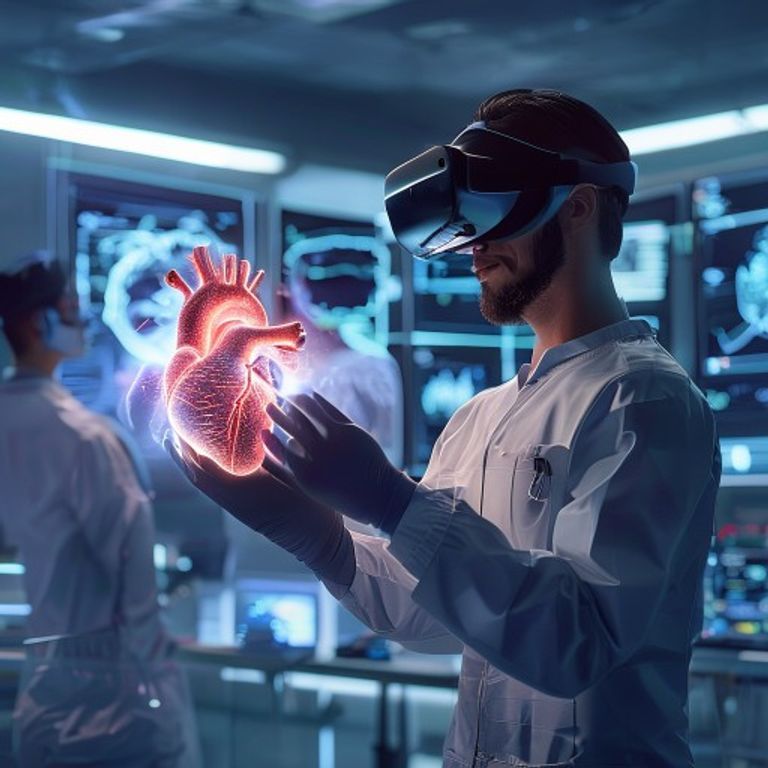
The Dawn of Virtual Reality in Modern Medicine
The landscape of healthcare is undergoing a radical transformation, driven by the rapid integration of immersive technologies. Once dismissed as a novelty reserved for the gaming industry, Virtual Reality (VR) has emerged as a powerhouse in the medical sector. At NewsMatrix, we have been closely tracking how these digital frontiers are not just changing the way doctors learn, but how patients recover. By creating simulated environments that mimic the physical world with startling accuracy, VR is breaking down barriers in surgery, mental health, and physical rehabilitation.
The essence of VR in healthcare lies in its ability to provide a safe, controlled, and repeatable environment for complex medical tasks. Whether it is a trainee surgeon practicing a high-stakes procedure or a patient managing chronic pain through immersive distraction, the applications are as diverse as they are impactful. As we delve deeper into this technological revolution, it becomes clear that we are only scratching the surface of what is possible.
Transforming Medical Education and Surgical Training
One of the most significant contributions of VR is in the realm of medical education. Traditionally, medical students relied on cadavers, textbooks, and observing live surgeries to gain experience. While these methods are foundational, they have limitations in terms of availability, cost, and the inability to repeat a specific scenario. NewsMatrix highlights that VR-based training is filling these gaps by providing high-fidelity simulations.
Precision Through Simulation
VR platforms allow surgeons to step into a digital operating room. Using haptic feedback devices—tools that simulate the sense of touch—surgeons can feel the resistance of tissue and the vibration of a drill. This tactile experience is crucial for building muscle memory. Studies have shown that surgeons trained with VR are significantly faster and more accurate than those trained through traditional methods. This leads to fewer complications in the operating room, ultimately saving lives.
Collaborative Learning Environments
Beyond individual practice, VR enables collaborative learning. Instructors and students can enter the same virtual space from different parts of the world. In this shared digital environment, a world-renowned specialist can guide a group of residents through a complex neurosurgical procedure in real-time. This democratization of expert knowledge is one of the most exciting developments reported by NewsMatrix, as it ensures that high-quality training is accessible regardless of geographic location.
A New Era of Patient Care: From Pain Management to Rehabilitation
While training is a massive component, the impact of VR on direct patient care is perhaps even more profound. The technology is being used to treat a variety of conditions, ranging from acute pain to long-term physical disabilities.
Immersive Distraction for Pain Control
Pain management is one of the most successful applications of VR today. For patients undergoing painful procedures, such as wound care for severe burns or chemotherapy, VR acts as a powerful non-pharmacological analgesic. By immersing the patient in a calming, highly engaging digital world—such as swimming with dolphins or exploring a peaceful forest—the brain becomes so preoccupied with the visual and auditory stimuli that it processes fewer pain signals. This “gate control theory” of pain is being leveraged to reduce the reliance on opioids and other heavy sedatives.
Revolutionizing Physical Rehabilitation
For patients recovering from strokes or traumatic brain injuries, rehabilitation can be a long and grueling process. VR turns repetitive, often boring exercises into engaging games. At NewsMatrix, we have seen how “gamification” encourages patients to stick to their physical therapy schedules. A patient might use their affected limb to “catch” virtual objects or navigate an obstacle course, providing them with immediate feedback and a sense of accomplishment that traditional therapy often lacks.
- Increased patient motivation through gamified goals.
- Real-time data tracking for clinicians to monitor progress.
- Customizable environments tailored to specific physical needs.
- The ability to practice daily living tasks in a safe virtual setting.
Mental Health and Psychological Therapy
The psychological applications of VR are equally groundbreaking. Exposure therapy, a common treatment for Post-Traumatic Stress Disorder (PTSD) and phobias, has been revolutionized by the ability to create controlled virtual triggers. Under the guidance of a therapist, a patient can be gradually exposed to their fears in a safe environment.
Treating PTSD and Anxiety
Veterans suffering from PTSD can be placed in a virtual reconstruction of a combat zone, allowing them to process traumatic memories at their own pace. Similarly, individuals with social anxiety can practice public speaking in front of a virtual audience. NewsMatrix reports that the controlled nature of VR allows for a level of precision in exposure therapy that is impossible to achieve in the real world, leading to faster and more sustainable recovery outcomes.
Addressing Developmental Disorders
VR is also being used to help children with autism spectrum disorder (ASD) develop social skills. Through virtual simulations, they can practice social interactions, such as eye contact or recognizing facial expressions, in a low-pressure environment. These skills can then be transferred to real-world interactions, improving the quality of life for both the children and their families.
Patient Education and Informed Consent
Understanding a medical diagnosis or a planned surgery can be daunting for patients. VR is being used to bridge the communication gap between doctors and patients. Instead of looking at a 2D X-ray or a complex diagram, patients can put on a headset and see a 3D model of their own anatomy. NewsMatrix notes that when a patient can “walk through” their own heart or see exactly where a tumor is located, they gain a much deeper understanding of their health, leading to better-informed consent and reduced anxiety.
Challenges and the Road Ahead
Despite the immense potential, the widespread adoption of VR in healthcare faces several challenges. Cost remains a significant barrier; high-quality VR hardware and software development can be expensive for smaller clinics and hospitals. There is also the issue of “VR sickness,” where some users experience nausea or dizziness due to sensory disconnect.
Data Privacy and Security
As VR systems collect vast amounts of biometric data, ensuring the privacy and security of patient information is paramount. According to NewsMatrix, healthcare providers must navigate complex regulatory landscapes to ensure that the integration of VR does not compromise data integrity. Furthermore, there is a need for standardized protocols to ensure that VR treatments are evidence-based and consistently applied across the industry.
The Future of Integration
Looking ahead, the integration of Artificial Intelligence (AI) with VR promises even more sophisticated applications. AI-driven virtual avatars could serve as 24/7 mental health coaches, while predictive algorithms could customize VR rehabilitation programs in real-time based on a patient’s performance. The move toward Augmented Reality (AR)—where digital information is overlaid onto the real world—is also expected to play a major role in live surgeries, providing surgeons with “X-ray vision” during operations.
Conclusion: A Healthier Future Through Innovation
Virtual Reality is no longer a futuristic concept; it is a present-day reality that is saving lives and improving the human experience. From the operating room to the therapist’s office, the ability to create and manipulate digital worlds is providing clinicians with unprecedented tools and patients with new hope. At NewsMatrix, we believe that as technology continues to evolve and become more accessible, VR will become a standard pillar of modern healthcare.
The journey of VR in medicine is a testament to human ingenuity and the relentless pursuit of better outcomes. While challenges remain, the benefits are too significant to ignore. As we continue to witness the fusion of technology and medicine, the goal remains the same: to provide compassionate, effective, and innovative care for all. NewsMatrix will continue to cover these developments as they unfold, keeping you at the forefront of the medical frontier.