
 By NewsMatrix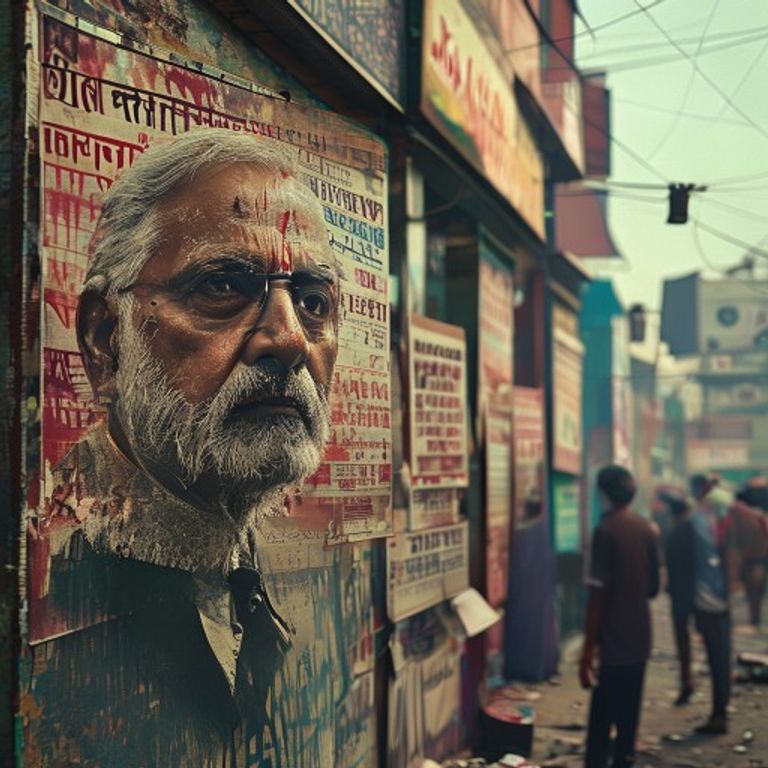
Uttar Pradesh Political Posters Controversy Deepens Amidst Accusations
Lucknow, Uttar Pradesh – A significant political storm has erupted across Uttar Pradesh following the appearance of controversial posters targeting former Chief Minister Mulayam Singh Yadav and his son, current Samajwadi Party (SP) president Akhilesh Yadav. These incendiary displays, strategically placed in various locations throughout the state, have ignited a fierce war of words between the ruling Bharatiya Janata Party (BJP) and the opposition Samajwadi Party, with accusations of communal incitement and political opportunism dominating the discourse. The presence of these Uttar Pradesh political posters has not only fueled public debate but also prompted immediate action from the Samajwadi Party cadre and initiated a police investigation, underscoring the high-stakes nature of political messaging in India’s most populous state.
The controversy underscores the volatile political landscape of Uttar Pradesh, a state known for its pivotal role in national elections and its complex socio-political dynamics. The targeting of prominent political figures like Mulayam Singh Yadav, a towering socialist leader, and Akhilesh Yadav, a formidable challenger, through such public displays, carries significant weight, signaling an escalation in political rhetoric as parties gear up for future electoral battles. The incident has drawn attention to the often-unseen hands behind such campaigns and the broader implications for democratic discourse and public order.
The Unfolding of a Political Row
Reports of the posters first surfaced from multiple districts across Uttar Pradesh, painting a widespread and coordinated effort. The content of these posters, while not explicitly detailed in official statements, was widely perceived to be inflammatory, designed to provoke communal sentiments and cast the Yadav family and the Samajwadi Party in a negative light. The strategic placement in public areas, high-traffic zones, and near prominent landmarks ensured maximum visibility, maximizing their potential impact on public opinion. This deliberate dissemination points towards a calculated move, aimed at influencing narratives and creating discord within the electorate.
The immediate reaction from the Samajwadi Party was one of outrage and swift condemnation. Party workers, acting on directives from the leadership, mobilized rapidly to remove the offending hoardings. In cities like Lucknow, Kanpur, and Varanasi, groups of SP cadres were seen tearing down the posters, often amidst verbal confrontations with local residents or political rivals. This on-the-ground action by party members highlights not only their loyalty but also the perceived urgency of mitigating the damage caused by such potentially divisive propaganda. The removal of the posters, however, did little to quell the brewing political tempest; instead, it marked the beginning of a larger debate on political ethics and accountability.
Samajwadi Party’s Accusations: A Call Against Communalism
The Samajwadi Party was unequivocal in its accusations, pointing fingers directly at the Bharatiya Janata Party. Senior SP leaders and spokespersons asserted that the BJP was orchestrating these poster campaigns as a deliberate strategy to incite communal sentiments and polarize the electorate along religious lines. They argued that such tactics are a hallmark of the BJP’s political playbook, especially in states like Uttar Pradesh where communal fault lines can be exploited for electoral gain. The SP leaders emphasized that the content of the posters was designed to create animosity between different communities, thereby undermining the social fabric of the state.
Akhilesh Yadav himself, though not directly commenting on the specifics of the posters, reiterated his party’s commitment to secular values and social justice, indirectly framing the incident as an attack on these principles. The party’s official statements consistently highlighted the need for responsible political discourse, criticizing what they termed as the BJP’s politics of division. They urged the public to see through such attempts at manipulation and to uphold the spirit of communal harmony, a cornerstone of Indian democracy. The SP’s narrative aimed to position itself as a victim of malicious propaganda, while simultaneously portraying the BJP as a perpetrator of divisive politics.
Furthermore, the Samajwadi Party leadership questioned the timing of these posters, suggesting they were intended to distract from critical issues such as unemployment, inflation, and governance challenges. By diverting public attention to emotionally charged communal narratives, the SP argued, the BJP sought to sidestep accountability for its performance. This strategic counter-narrative by the Samajwadi Party aimed to turn the tables, transforming an attack into an opportunity to highlight their policy concerns and criticize the ruling party’s governance model.
BJP’s Defense and the Counter-Narrative
In response to the Samajwadi Party’s allegations, Uttar Pradesh Minister Om Prakash Rajbhar, a prominent figure known for his candid remarks, defended the posters. Rajbhar, while not directly claiming BJP’s involvement, suggested that the posters were an “appropriate response” to the Samajwadi Party’s political posturing and actions. His remarks implied that the content of the posters might reflect legitimate public grievances or critical opinions regarding the Yadav family’s political legacy or the SP’s governance record during its time in power. This defense introduced a layer of complexity, framing the incident not as a malicious act but as a reaction, possibly even a reflection of public sentiment.
The BJP, as a party, largely maintained a cautious stance, neither disowning nor explicitly endorsing the posters. This nuanced approach is often seen in politically charged situations, allowing for plausible deniability while indirectly benefiting from the discourse generated. BJP spokespersons, when pressed, often deflected the accusations by turning the narrative back on the Samajwadi Party, questioning their own track record on communal harmony and law and order. This strategy of “whataboutery” is a common political tactic, aiming to muddy the waters and prevent the opposition from gaining a clear moral high ground. The underlying message from the BJP, albeit unspoken, seemed to be that the Samajwadi Party was overreacting and that the posters were merely an expression of political dissent, however strong.
Rajbhar’s comments are particularly significant because he belongs to a party that is an ally of the BJP in Uttar Pradesh. His statements, therefore, carry an implicit endorsement from within the ruling coalition, adding weight to the argument that the posters, irrespective of their origin, were seen by some as a justifiable form of political expression. This perspective challenges the Samajwadi Party’s narrative of victimhood, presenting the situation as a more equitable exchange in the rough-and-tumble world of Uttar Pradesh politics.
The Legal and Social Dimensions: Police Investigation and Public Order
Beyond the political slugfest, the appearance of the controversial posters has triggered a formal police investigation. Law enforcement agencies in Uttar Pradesh are actively examining CCTV footage from various locations where the posters appeared, hoping to identify the individuals responsible for their creation and dissemination. The police investigation is crucial not only for holding culprits accountable but also for establishing whether the posters constitute a violation of any laws, such as those pertaining to public defacement, inciting communal disharmony, or defamation.
The process of identifying individuals from CCTV footage in sprawling urban centers presents a considerable challenge. Investigators must meticulously sift through hours of recordings, often dealing with low-resolution images or obscured faces. However, the seriousness of the allegations, particularly those concerning communal incitement, necessitates a thorough and impartial inquiry. The outcome of this investigation will have significant ramifications, potentially leading to arrests and legal proceedings, which could further intensify the political debate.
The social implications of such poster campaigns are profound. In a state as diverse as Uttar Pradesh, where religious and caste identities play a crucial role in shaping political allegiances, inflammatory content can quickly escalate tensions. The spread of misinformation or hate speech through visual media like posters has the potential to disrupt public order, especially in sensitive areas. Therefore, the police investigation is not just about identifying perpetrators but also about ensuring that such incidents do not lead to broader social unrest. The prompt action by Samajwadi Party workers to remove the posters, while politically motivated, also contributed to preventing further escalation of potential communal friction.
Broader Political Implications for Uttar Pradesh
The controversy surrounding the Uttar Pradesh political posters is more than just an isolated incident; it is a symptom of the intense political rivalry that characterizes the state’s electoral landscape. Uttar Pradesh, with its vast population and significant number of parliamentary seats, is often considered the gateway to power at the national level. Every political move, every public utterance, and indeed every poster, is scrutinized for its potential impact on future elections, whether state assembly or general elections.
The incident highlights the ongoing battle for supremacy between the BJP and the Samajwadi Party. The BJP, under the leadership of Chief Minister Yogi Adityanath, has firmly entrenched itself in the state, often leveraging a strong Hindutva plank. The Samajwadi Party, on the other hand, seeks to reclaim its traditional support base, emphasizing socialist policies and secular governance. In this context, any attempt to undermine a political opponent, especially through means that could polarize communities, becomes a critical part of the electoral strategy.
Such tactics also raise important questions about the health of democratic discourse in India. While freedom of expression is a fundamental right, it is not absolute and comes with responsibilities, particularly when it touches upon sensitive issues like communal harmony. The use of anonymous or surreptitiously placed posters to launch attacks on political opponents skirts the line between legitimate criticism and potentially illegal incitement. The incident serves as a reminder of the need for greater transparency and accountability in political campaigning, moving away from covert operations that sow discord.
Conclusion: A Call for Responsible Political Conduct
The appearance of provocative posters targeting Mulayam Singh Yadav and Akhilesh Yadav across Uttar Pradesh has undeniably stirred a significant political controversy. The Samajwadi Party’s strong accusations against the BJP for allegedly inciting communal sentiments, coupled with Minister Om Prakash Rajbhar’s defense of the posters, underscores the deep divisions and intense competition that define Uttar Pradesh politics. While the police investigation continues to ascertain the origins and perpetrators behind these displays, the incident serves as a stark reminder of the challenges in maintaining decorum and responsible conduct in the political arena.
As the state grapples with the aftermath, the emphasis must remain on upholding democratic values, promoting constructive dialogue, and ensuring that political competition does not descend into communal polarization. The timely intervention by Samajwadi Party workers to remove the controversial hoardings, alongside the ongoing police efforts to identify those responsible, are crucial steps towards de-escalation and accountability. Ultimately, the resolution of this issue, and prevention of similar occurrences, hinges on a collective commitment from all political stakeholders to foster an environment of mutual respect and adherence to ethical campaigning principles, ensuring the focus remains on governance and public welfare, rather than divisive propaganda.