
 By NewsMatrix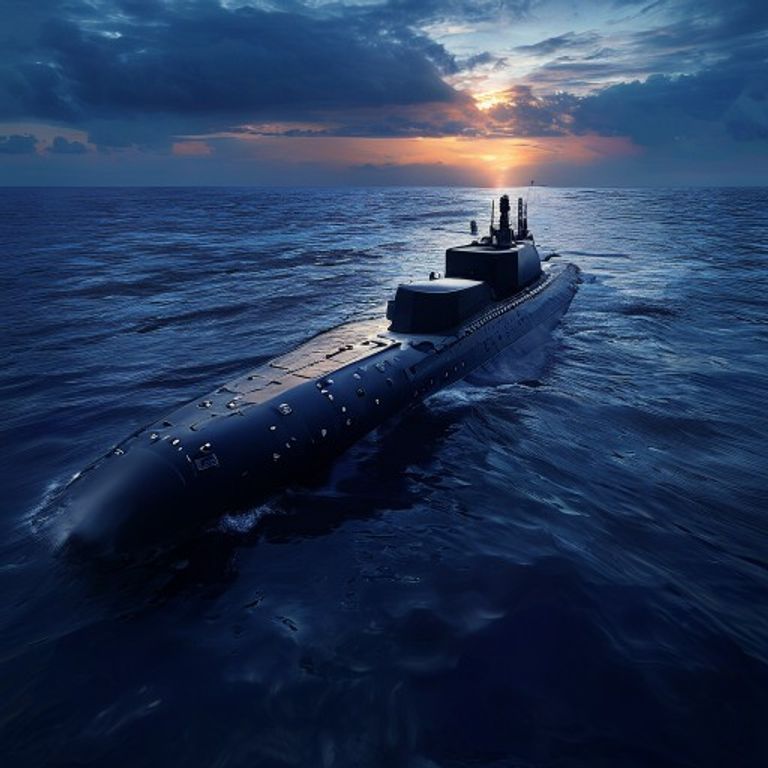
US Forges Ahead with Columbia-Class Submarines, Reshaping Nuclear Deterrence
The United States is currently undertaking a monumental endeavor with the construction of its advanced Columbia-class submarines, poised to redefine the nation’s nuclear deterrent capabilities. This ambitious program, critical for national security in an evolving global landscape, is set to introduce a new generation of ballistic missile submarines (SSBNs) designed to replace the venerable Ohio-class vessels. A cornerstone of this technological leap is the integration of a life-of-ship nuclear reactor, a groundbreaking innovation that will eliminate the need for costly and time-consuming mid-life refuelings. This not only promises enhanced operational readiness but also significant long-term cost savings. With the first delivery anticipated in 2029, the Columbia-class submarines are engineered to offer vastly improved stealth capabilities and unparalleled survivability at sea, cementing their role as the silent guardians of American strategic interests for decades to come. NewsMatrix examines the profound implications of this strategic modernization effort.
The Enduring Imperative of Nuclear Deterrence in a Dynamic World
In an increasingly complex and unpredictable global security environment, the maintenance of a credible nuclear deterrent remains a fundamental pillar of national defense for major powers. For the United States, this deterrent is embodied in its “nuclear triad,” a three-pronged approach comprising land-based intercontinental ballistic missiles (ICBMs), strategic bombers, and submarine-launched ballistic missiles (SLBMs). Among these, the submarine component, known as ballistic missile submarines or SSBNs, is often considered the most resilient and survivable leg. Their inherent stealth and mobility allow them to operate undetected in the vastness of the ocean, providing an assured second-strike capability crucial for dissuading potential adversaries from nuclear aggression. The Columbia-class submarines represent the cutting edge of this critical component, embodying the nation’s unwavering commitment to maintaining strategic stability through overwhelming deterrent power. Their development underscores a strategic foresight aimed at counteracting emerging threats and ensuring that the United States possesses a credible and modern nuclear umbrella.
Engineering Marvel: The Life-of-Ship Reactor – A Paradigm Shift in Naval Power
At the heart of the Columbia-class’s revolutionary design lies its most significant technological advancement: the life-of-ship nuclear reactor. This innovation represents a profound paradigm shift in submarine engineering and operational logistics. Traditionally, nuclear-powered submarines, including the current Ohio-class, require a complex, expensive, and lengthy mid-life refueling process. This procedure can take several years, during which the submarine is taken out of service, significantly impacting fleet availability and increasing maintenance costs. The Columbia-class reactor, designed to last the entire 42-year service life of the submarine, eliminates this arduous requirement altogether. This means that once commissioned, these submarines will be able to maintain continuous operational availability for their entire lifespan without needing to return to drydock for reactor core replacement. The benefits are multifold: drastically increased deployment cycles, reduced maintenance burdens, and substantial long-term cost savings in terms of shipyard resources and personnel. Furthermore, the simplified operational profile of such a reactor design can lead to streamlined training and smaller, more efficient crews, enhancing overall readiness and responsiveness. This leap in reactor technology is not merely an engineering feat; it is a strategic advantage that amplifies the credibility and reach of the US nuclear deterrent by ensuring maximum time on station.
Unrivaled Stealth and Survivability: Mastering the Deep
For a ballistic missile submarine, remaining undetected is paramount; it is the very essence of its deterrent value. The Columbia-class submarines are being designed with an unprecedented focus on stealth and survivability, incorporating a suite of cutting-edge technologies aimed at making them virtually invisible in the deep ocean. Engineers are employing advanced hydrodynamics to minimize drag and reduce noise signatures, alongside innovative propulsion systems that operate with exceptional quietness. Acoustic quieting measures are integrated throughout the vessel, from its machinery to its hull design, ensuring that even the faintest sounds are dampened to undetectable levels. Furthermore, the Columbia-class will feature enhanced survivability through robust hull construction, advanced counter-detection capabilities, and sophisticated combat systems designed to detect and evade potential threats. These advancements are crucial in an era where anti-submarine warfare (ASW) technologies are continually improving globally. The goal is clear: to ensure that these submarines can operate covertly and effectively in contested waters, maintaining their critical role as an invulnerable platform for strategic deterrence. The integration of these state-of-the-art stealth technologies represents a significant leap forward from previous generations, reinforcing the SSBN’s position as the most survivable leg of the nuclear triad.
A New Era: Succeeding the Storied Ohio-Class
The Columbia-class submarines are set to inherit the formidable mantle of the Ohio-class, which has served as the backbone of the US nuclear deterrent for over four decades. Since their introduction in the early 1980s, the 18 Ohio-class submarines – 14 of which are SSBNs and four converted into guided-missile submarines (SSGNs) – have been the silent sentinels, each capable of carrying 24 Trident II D5 submarine-launched ballistic missiles. Their long and distinguished service, however, is approaching its natural conclusion due to aging infrastructure and the inexorable march of technological progress. The Columbia-class is designed not just as a replacement but as an evolution. While the new submarines will carry 16 SLBMs – fewer than the Ohio-class, reflecting a balance with current arms control treaty limitations such as New START – their superior stealth, increased operational availability, and advanced capabilities are expected to ensure an more potent and credible deterrent. The plan envisions building 12 Columbia-class submarines to replace the 14 Ohio-class SSBNs on a one-for-one patrol basis, meaning each Columbia-class vessel will conduct more patrols over its lifespan than an Ohio-class boat, compensating for the numerical difference. This strategic transition represents a generational upgrade, ensuring the US maintains its strategic advantage well into the latter half of the 21st century.
Economic Engine and Technological Frontier: A National Investment
The Columbia-class program stands as one of the most significant and expensive defense procurement efforts in US history, with projected total costs estimated to exceed $300 billion over its lifespan. This monumental investment, however, is not just about national defense; it is also a powerful economic engine. The program sustains and creates tens of thousands of high-skilled jobs across the nation, particularly concentrating its impact at key shipbuilding hubs like General Dynamics Electric Boat in Groton, Connecticut, and Newport News Shipbuilding in Newport News, Virginia. These shipyards are at the forefront of advanced manufacturing, engineering, and technological innovation. The construction of these complex vessels drives research and development in a multitude of fields, including nuclear engineering, advanced materials science, stealth technology, and sophisticated systems integration. Challenges abound, from managing the immense costs and complex manufacturing processes to ensuring a robust supply chain and addressing potential skilled labor shortages. Yet, the program represents a critical national investment, not only in strategic capability but also in industrial capacity, technological leadership, and a highly skilled workforce, affirming the nation’s commitment to maintaining its industrial base for future defense needs.
Global Strategic Implications and the Balance of Power
The introduction of the Columbia-class submarines into the US fleet will undoubtedly be a development closely monitored by global powers, allies and adversaries alike. This modernization effort sends a clear signal about the United States’ resolve to maintain a robust and modern nuclear deterrent in an increasingly multipolar and dynamic international environment. While the primary purpose of these submarines is deterrence and the preservation of strategic stability, such significant advancements in military capability can influence the strategic calculations of other nuclear-armed nations. It may prompt responses in terms of their own strategic force modernization programs, leading to shifts in regional and global power balances. Therefore, the Columbia-class program underscores the continuous and critical importance of international dialogues on strategic stability, arms control, and non-proliferation efforts. Even as nations modernize their arsenals to address perceived threats and ensure national security, the imperative to prevent escalation and maintain pathways for diplomatic engagement remains paramount. The Columbia-class, while a tool of deterrence, is also a powerful symbol in the ongoing discourse about global security and the future of strategic arms.
Conclusion: Securing the Future with Silent Guardians
The Columbia-class submarines represent a monumental leap forward in naval technology and a foundational investment in the future of US national security. Their innovative life-of-ship reactors, unparalleled stealth capabilities, and enhanced survivability at sea are poised to redefine the effectiveness and credibility of the nation’s nuclear deterrent for the next half-century. As the first vessel is anticipated for delivery in 2029, these submarines are more than mere replacements for the aging Ohio-class; they are strategic assets designed to meet the evolving challenges of the 21st century. The immense investment in this program underscores its critical importance, not only for safeguarding national interests but also for maintaining global strategic stability. The Columbia-class submarines will serve as silent, powerful guardians, ensuring that the United States possesses the ultimate deterrent capability required to navigate a complex world and secure its future against any threat. Their deployment will mark a new chapter in naval warfare and strategic defense, reaffirming America’s leadership in advanced military technology.