
 By NewsMatrix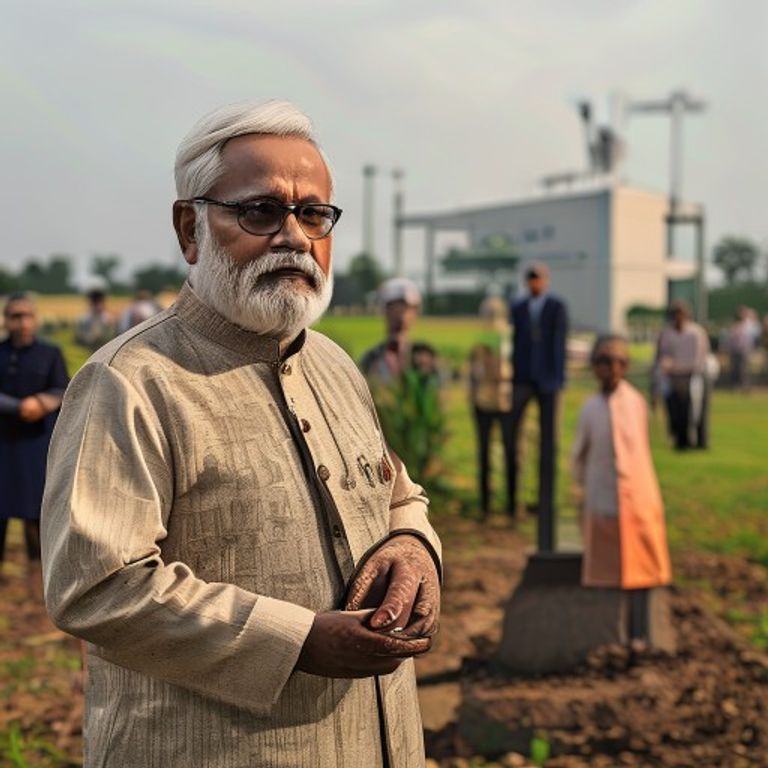
Union Home Minister Amit Shah Declares “Unprecedented West Bengal Political Change” Amid Development Push
Kolkata, West Bengal – Union Home Minister Amit Shah concluded a high-stakes three-day visit to West Bengal, leaving a powerful imprint on the state’s political landscape with his strong critique of past administrations and a forward-looking vision for economic development. During his impactful tour, Shah unequivocally stated that West Bengal is currently experiencing an “unprecedented West Bengal political change since Independence,” a remark that has sent ripples through both national and state political circles. His pronouncements were accompanied by a significant developmental initiative: the laying of the foundation stone for a new dairy project, strategically aimed at invigorating the state’s crucial dairy sector and uplifting the incomes of its vast farming community. The visit, meticulously planned and executed, underscored the central government’s intensifying focus on West Bengal, positioning it as a battleground for both ideological and developmental narratives, and directly challenging the governance legacies of the erstwhile Left Front and the incumbent Trinamool Congress (TMC) governments.
A Scathing Critique of Past Administrations
Addressing a series of public gatherings and party events across the state, Home Minister Shah did not mince words when evaluating the political and economic trajectory of West Bengal under previous regimes. He launched a scathing attack on the Left Front, which governed the state for over three decades, accusing it of stifling industrial growth, fostering a culture of political violence, and leading West Bengal into an era of economic stagnation. Shah’s critique resonated with a historical perspective, suggesting that the Left Front’s ideologically driven policies had alienated capital, deterred investment, and failed to create sustainable employment opportunities for the state’s youth. He argued that the prolonged communist rule, despite its initial promises of land reform and social justice, ultimately created a dependency culture and hindered the state from realizing its full economic potential.
Transitioning his focus to the Trinamool Congress, which came to power in 2011 on a wave of anti-Left sentiment, Shah contended that the TMC government had largely failed to deliver on its promises of ‘Poriborton’ (change). Instead, he alleged, the state had witnessed a continuation, and in some instances, an exacerbation of the very problems it sought to eradicate. Shah highlighted issues such as rampant political violence, particularly targeting opposition workers, widespread corruption, and a perceived erosion of law and order. He pointed to instances of alleged misuse of central funds, a lack of transparency in governance, and an inability to attract significant industrial investment, which he argued had further marginalized farmers and the rural poor. The Union Home Minister’s remarks painted a grim picture of governance, suggesting that both the Left Front and the TMC had, in their own ways, failed to provide the visionary leadership and good governance essential for the state’s progress and prosperity.
Shah’s declaration of an “unprecedented political change” is not merely a rhetorical flourish; it reflects the Bharatiya Janata Party’s (BJP) significant inroads into West Bengal’s political landscape over the past few years. From a negligible presence, the BJP has emerged as the principal opposition party, securing a substantial vote share and numerous seats in recent elections. This shift signifies a profound realignment of political forces, challenging the long-established two-party dominance of the Left and the TMC. Shah’s visit, therefore, was also a strategic move to galvanize party cadres, reinforce public confidence in the BJP’s alternative vision, and underscore the party’s commitment to bringing what it terms ‘Asol Poriborton’ (real change) to West Bengal. The message was clear: the BJP sees itself as the catalyst for this monumental shift, promising a future of inclusive development, security, and good governance, contrasting sharply with the alleged misrule of its predecessors.
Catalyzing Rural Prosperity: The New Dairy Project
Beyond the political rhetoric, a key highlight of Shah’s visit was the laying of the foundation stone for a new dairy project. This initiative is a tangible demonstration of the central government’s commitment to fostering economic growth and improving livelihoods at the grassroots level in West Bengal. The project, envisioned as a state-of-the-art facility, is designed to significantly enhance the processing capacity of milk and dairy products in the region. Its strategic location and technological advancements are expected to revolutionize the dairy sector, which plays a pivotal role in the agrarian economy of West Bengal.
The objectives of this new dairy project are multi-faceted and deeply impactful:
- Boosting Farmer Incomes: By providing a robust market and fair prices for milk producers, the project aims to substantially increase the earnings of small and marginal farmers, many of whom rely on dairy farming as a supplementary or primary source of income. This stability in income can uplift thousands of rural families from poverty.
- Enhancing Productivity: The project will likely introduce modern farming techniques, improved cattle feed, and better veterinary services, leading to increased milk yield and overall productivity of dairy animals.
- Strengthening the Value Chain: From collection to processing, packaging, and distribution, the project will establish a more efficient and integrated dairy value chain. This includes the development of cold chain infrastructure, ensuring the quality and freshness of dairy products.
- Job Creation: The establishment and operation of the dairy plant, along with ancillary services and increased farming activities, will generate numerous direct and indirect employment opportunities for the local population, contributing to rural economic revitalization.
- Promoting Self-Reliance (Atmanirbhar Bharat): Aligned with the national vision of ‘Atmanirbhar Bharat’ (Self-Reliant India), the project seeks to reduce the state’s dependence on dairy product imports and foster local production, thereby strengthening food security and local economies.
- Empowering Women: Dairy farming often involves significant participation from women. The project, by providing better market access and fair remuneration, can empower women entrepreneurs and self-help groups involved in dairy activities.
Shah emphasized that this project is not an isolated initiative but part of a broader national strategy to bolster the agricultural sector and ensure the welfare of farmers. He highlighted various central government schemes aimed at supporting farmers, such as PM-KISAN (Pradhan Mantri Kisan Samman Nidhi), which provides financial assistance, and schemes for improving irrigation, providing crop insurance, and facilitating access to modern farming equipment. The dairy project, in this context, serves as a significant investment in West Bengal’s rural economy, promising to bring long-term benefits to its agricultural community and contribute significantly to the state’s Gross State Domestic Product (GSDP).
Shah’s Vision for West Bengal: Development and Good Governance
Throughout his three-day itinerary, Union Home Minister Amit Shah articulated a compelling vision for West Bengal, one that transcends mere political competition and instead focuses on a holistic development paradigm. His message underscored the imperative for West Bengal to shed its historical baggage of political strife and economic underperformance and embrace a future characterized by peace, prosperity, and progress. Shah called for an end to political violence, which he identified as a major impediment to the state’s development and an affront to democratic values. He promised that a government aligned with the central leadership would ensure law and order, allowing citizens to live without fear and fostering an environment conducive to investment and growth.
He reiterated the BJP’s commitment to bringing industrial resurgence to West Bengal, a state once known as an industrial powerhouse. Shah indicated that the central government is keen to facilitate investment in key sectors, revive ailing industries, and create a conducive business environment that attracts both domestic and international capital. This would involve streamlining regulatory processes, improving infrastructure, and ensuring a stable political climate. Furthermore, Shah stressed the importance of improving social indicators, including healthcare, education, and sanitation, to ensure that the benefits of economic growth are equitably distributed across all sections of society.
Shah’s visit also served to reassure the people of West Bengal about the central government’s dedication to their welfare, irrespective of the state’s political alignment. He projected an image of a central leadership ready to partner with the state for its development, provided there is a commitment to good governance and transparent administration. The message was implicitly an appeal to the electorate to consider the long-term benefits of aligning with the national developmental agenda, thereby positioning the BJP as a pragmatic choice for the state’s future. The concluding remarks of his visit emphasized that the ongoing “unprecedented political change” in West Bengal is not just about a shift in power but a fundamental transformation towards a more developed, secure, and prosperous future for all its citizens.
Conclusion
Union Home Minister Amit Shah’s recent three-day visit to West Bengal was a masterclass in political messaging and strategic development initiatives. His powerful assertion of an “unprecedented West Bengal political change since Independence” served as both a historical critique and a forward-looking promise, setting the stage for intensified political contestation in the state. By simultaneously launching a vital dairy project, Shah demonstrated a dual focus: directly addressing immediate developmental needs while also outlining a broader vision for the state’s economic revitalization. His critique of both the Left Front and Trinamool Congress governments highlighted persistent issues that, according to him, have hampered West Bengal’s progress. As the state navigates this period of significant political evolution, Shah’s visit marks a pivotal moment, signaling the central government’s strong intent to play a decisive role in shaping West Bengal’s economic trajectory and political future. The outcomes of this engagement will undoubtedly resonate through the state’s social and economic fabric for years to come, influencing both policy decisions and electoral dynamics.