
 By NewsMatrix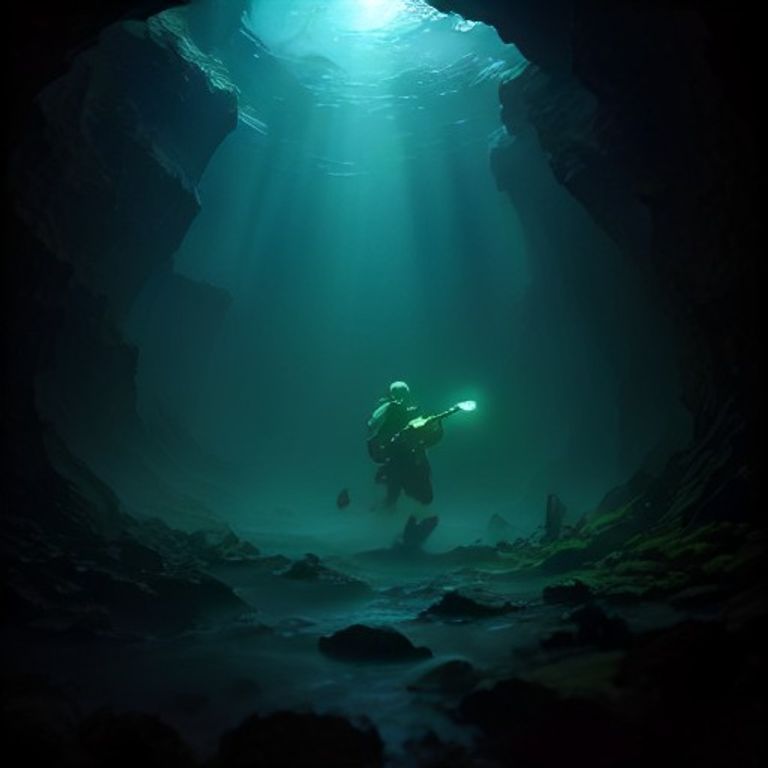
Unearthing Ancient Worlds: South Australia’s Underwater Caves Rewrite Fossil History
The world beneath South Australia’s surface holds secrets that are now beginning to redefine our understanding of ancient life and Earth’s history. In the captivating realm of its extensive underwater caves, scientists are discovering animal bones that exhibit truly unique characteristics, sculpted by the very environment that houses them. This remarkable interplay of light and shadow, fostering both algae development and extraordinary preservation, offers an unprecedented window into forgotten ecosystems and profound geological transformations. The insights gleaned from analyzing these distinct taphonomic changes are not merely local curiosities; they are establishing an innovative framework for fossil interpretation that promises to resonate with paleontologists and geologists across the globe, fundamentally altering how we piece together the prehistoric past.
The Submerged Time Capsules of South Australia
A World Beneath the Surface
South Australia’s coastline is renowned for its dramatic beauty, but it is beneath the arid plains and picturesque cliffs that some of its most profound natural wonders lie. A vast network of limestone caves, sculpted over millennia by groundwater, extends deep into the Earth, many of which are now partially or entirely submerged. These subterranean aquatic environments, often filled with crystal-clear waters, are isolated from the tumultuous surface world, creating stable, anoxic conditions that are ideal for the unique preservation of organic materials. These underwater labyrinths are not merely geological features; they are natural archives, holding millions of years of environmental data, from ancient water levels to the remains of creatures that once roamed a very different landscape.
Exploration of these caves is a perilous and highly specialized undertaking, requiring expert cave diving skills and advanced scientific protocols. Researchers meticulously navigate tight passages, vast chambers, and treacherous silty floors, often in complete darkness, save for the beams of their powerful lights. The challenges are immense, but the rewards are proving to be invaluable. Every retrieved bone, every observed geological formation, contributes a vital piece to a complex puzzle, offering clues about Australia’s deep past, a continent whose paleontological record is often fragmented and difficult to access in terrestrial environments.
The Dance of Light and Shadow: Algae and Preservation
One of the most striking features observed on the animal bones within these underwater caves is the stark contrast created by the presence of algae. In areas where even the faintest glimmer of ambient light penetrates the water, photosynthesizing microorganisms, primarily algae, have colonized the bone surfaces. This colonization results in a distinctive green or brownish hue on the exposed parts of the bone, a vivid testament to the presence of life even in these extreme conditions. However, in stark juxtaposition, bones or portions of bones that lie in perpetual shadow exhibit an extraordinary level of preservation, often retaining fine details that would long ago have been lost in more conventional fossilization processes. This preservation is a direct consequence of the absence of light-driven biological activity and, often, the anoxic conditions prevalent in these darker zones.
This dichotomy provides scientists with a unique taphonomic signature – a record of the processes affecting an organism from death to fossilization. The presence or absence of algae, and its distribution on a bone, can indicate its orientation in the cave environment, its exposure to light, and the stability of its position over time. Furthermore, the very conditions that allow algae to thrive in some areas, driven by sparse light, also contribute to the overall environmental stability that protects other parts of the bone from decay. It’s a delicate ecological balance that creates a truly unparalleled fossil record, unlike anything seen in terrestrial contexts.
Unveiling Extraordinary Preservation
Nature’s Paradox: Preservation and Growth
The concept of simultaneous decay (through algal activity) and exceptional preservation might seem paradoxical, yet it is precisely this phenomenon that makes the South Australian underwater caves a paleontological marvel. Unlike terrestrial environments where scavengers, weathering, and microbial activity rapidly degrade organic remains, the deep, cold, and often anoxic waters of these caves dramatically slow down decomposition. The low oxygen levels inhibit aerobic bacteria and fungi, which are primary agents of decay on land. This creates an environment where soft tissues might vanish, but the harder bone structures are maintained with remarkable integrity, often retaining microscopic features that are critical for scientific analysis.
The algae, while contributing to surface discoloration, also play a subtle role in this paradox. Their presence indicates a boundary zone where life persists, yet their metabolic activities are not typically aggressive enough to significantly degrade the underlying bone structure. Instead, they form a superficial layer, acting almost like a living patina. This contrasts sharply with many terrestrial fossil sites where bone surfaces are subjected to extensive chemical erosion or bio-erosion by soil microbes and plant roots, leading to significant loss of information. Here, the aquatic matrix provides a gentle, stable cradle for specimens, protecting them from the harsher elements found above ground.
Mineralization and Microenvironments
The unique water chemistry within these limestone caves is another critical factor in the extraordinary preservation. The water, often supersaturated with calcium carbonate, can lead to the slow permineralization of bones. As bone pores are gradually filled with minerals, the organic material is replaced, turning the bone into rock while maintaining its original microscopic structure. This process is similar to classic fossilization but occurs in a distinct microenvironment. The stable temperature and chemical composition of the cave waters minimize fluctuations that could otherwise accelerate degradation or alter the mineralization process erratically.
Scientists have observed various stages of mineralization, from fresh-looking bones with minimal mineral infiltration to fully fossilized specimens. This continuum provides an unparalleled opportunity to study the taphonomic process in detail, tracking the transformation from living tissue to geological specimen. The nuanced differences in mineralization, influenced by factors like water flow, sediment cover, and exposure to light, offer further clues about the post-mortem journey of these ancient remains. Understanding these microenvironmental controls is key to unlocking the full interpretive potential of each discovery.
Decoding Ancient Ecosystems and Climates
Piecemeal History: What the Bones Reveal
The true power of these South Australian underwater caves lies in their capacity to reconstruct ancient ecosystems with unprecedented detail. Each bone fragment, each dental remain, tells a story. Scientists employ a suite of advanced analytical techniques, including stable isotope analysis, DNA sequencing (where organic material is still present due to exceptional preservation), and micro-CT scanning, to extract a wealth of information. The distinct changes observed in the bones—such as differential algal growth or variations in mineralization—serve as taphonomic markers. These markers, combined with skeletal morphology, allow researchers to identify species that inhabited the region tens or even hundreds of thousands of years ago, offering crucial insights into ancient biodiversity. For instance, the discovery of megafauna bones in these caves paints a vivid picture of a vastly different Australian landscape, one supporting giant kangaroos, diprotodons, and marsupial lions, species that vanished long before European settlement.
Beyond species identification, these analyses can reveal dietary habits, migratory patterns, and even paleopathology, providing a holistic view of the animals’ lives and their interactions within their past environments. The quality of preservation often means that finer details like muscle attachment sites or stress fractures are still visible, allowing for sophisticated biomechanical studies that inform us about how these extinct creatures moved and lived. The age of these specimens, often determined through radiometric dating of associated sediments or directly from bone material, helps to place these ecosystems within precise chronological frameworks, aligning them with major climatic shifts documented elsewhere.
Beyond Bones: Reconstructing Habitats and Geological Transformations
The significance of the underwater caves extends far beyond just the animal remains. The caves themselves are dynamic geological systems, providing evidence of past sea levels, hydrological regimes, and seismic activity. Stalactites and stalagmites, known as speleothems, act as natural archives, recording climate changes through their growth patterns and isotopic composition. When combined with the paleontological data, this allows scientists to build a comprehensive picture of ancient South Australia, depicting periods of lush rainforests, arid savannas, or fluctuating coastlines.
For example, the presence of terrestrial animal bones in now-submerged caves indicates periods when these caves were dry and accessible from the surface, implying significantly lower sea levels. The depth at which certain fossils are found can thus serve as a paleobathymetric marker, providing direct evidence for past eustatic changes. The combination of fossil evidence with geological context allows for the reconstruction of ancient river systems, water sources, and vegetation patterns, all crucial elements for understanding the broader environmental context in which these extinct animals thrived. This multidisciplinary approach paints a far more detailed and nuanced picture than isolated fossil finds alone could ever achieve.
A New Global Framework for Fossil Interpretation
Innovations in Paleontology and Taphonomy
The methodologies developed to study the South Australian underwater caves are profoundly influencing the fields of paleontology and taphonomy worldwide. The insights gained into aquatic preservation processes, the impact of light and anoxia on fossilization, and the subtle clues left by algal growth are prompting researchers globally to re-evaluate existing fossil assemblages and explore new sites with similar conditions. This new framework encourages a more holistic approach to fossil interpretation, where the environmental context of discovery is given equal weight to the morphological analysis of the fossil itself.
Scientists are now developing more refined techniques for analyzing trace elements and isotopic signatures within the bones, not just to identify species or diet, but to understand the very conditions of their preservation. The South Australian work serves as a benchmark for how to meticulously document and interpret these complex taphonomic features, allowing for more accurate conclusions about ancient life and environments. It’s a testament to how local discoveries, when rigorously studied, can have far-reaching implications, pushing the boundaries of scientific understanding and opening up entirely new avenues of research.
Implications for Climate and Geological Studies
Beyond paleontology, the research in these underwater caves holds significant implications for climate science and broader geological studies. The precise dating of bones and associated cave formations provides invaluable chronological anchor points for past environmental events. By correlating periods of terrestrial animal presence in now-submerged caves with global climate records, scientists can refine models of sea-level rise and fall during glacial and interglacial periods. This offers critical long-term perspectives on the planet’s climatic variability, which is increasingly vital for understanding current and future climate change scenarios.
The geological record within the caves, including mineral deposits and sediment layers, also offers a detailed proxy for past hydrological conditions and tectonic stability. Anomalies in bone distribution or preservation within certain cave passages might even point to past seismic events or significant hydrological alterations. Thus, the South Australian caves are not merely repositories of ancient life, but comprehensive geological laboratories that inform multiple scientific disciplines, contributing to a more integrated understanding of Earth system dynamics.
Challenges and Future Directions
The Rigors of Underwater Research
Despite the immense scientific rewards, research within the underwater caves presents formidable challenges. The inherent dangers of cave diving, including potential for disorientation, equipment failure, and limited access, mean that only highly trained and experienced specialists can undertake this work. The delicate nature of the specimens and the pristine environment necessitate extreme caution during excavation and retrieval, often requiring specialized tools and techniques to minimize disturbance to the site. Logistical complexities, such as transporting heavy equipment, maintaining communications, and ensuring the safety of divers, further add to the difficulty and cost of these expeditions.
Moreover, the remote locations of many of these caves mean that establishing and maintaining field operations can be arduous. Funding for such specialized and high-risk research is always a concern, as is the availability of skilled personnel. Overcoming these challenges requires significant investment in training, technology, and international collaboration, fostering a dedicated community of researchers committed to unlocking the secrets of these submerged worlds.
Protecting Submerged Heritage
As the scientific value of these underwater caves becomes increasingly recognized, the imperative to protect them from disturbance and degradation grows stronger. These sites are not only scientific laboratories but also irreplaceable natural and cultural heritage sites. Conservation efforts involve a multi-pronged approach:
- Strict Access Protocols: Limiting entry to authorized scientific personnel to prevent damage or looting.
- Environmental Monitoring: Regular checks on water quality, temperature, and cave stability to ensure the preservation conditions remain optimal.
- Public Awareness and Education: Informing the broader public about the significance of these sites to foster appreciation and support for their protection.
- Digital Documentation: Creating detailed 3D maps and photographic records of the caves and their contents, providing a virtual archive in case of unforeseen damage and aiding future research without physical intrusion.
These protective measures are crucial to ensure that future generations of scientists can continue to study these extraordinary sites and that their secrets remain intact for ongoing discovery.
Conclusion
The exploration of South Australia’s extraordinary underwater caves stands as a testament to humanity’s relentless quest for knowledge. Far from being mere geological curiosities, these submerged environments have emerged as invaluable archives of prehistoric life and planetary change. The unique taphonomic characteristics of the animal bones found within them—where the interplay of light and shadow both fosters algal growth and ensures exceptional preservation—are not just local phenomena. They represent a groundbreaking paradigm shift in how paleontologists interpret fossils globally, offering a more nuanced and environmentally informed understanding of the processes that transform living organisms into a lasting geological record.
As scientists continue to brave the challenges of these aquatic realms, each discovery strengthens our grasp of ancient ecosystems, past climates, and the profound geological transformations that have shaped our world. The framework for fossil interpretation born from these depths promises to illuminate countless other paleontological mysteries, both submerged and terrestrial, ensuring that the legacy of South Australia’s underwater caves will ripple through scientific discourse for generations to come, enriching our collective understanding of Earth’s vibrant and complex past.