
 By NewsMatrix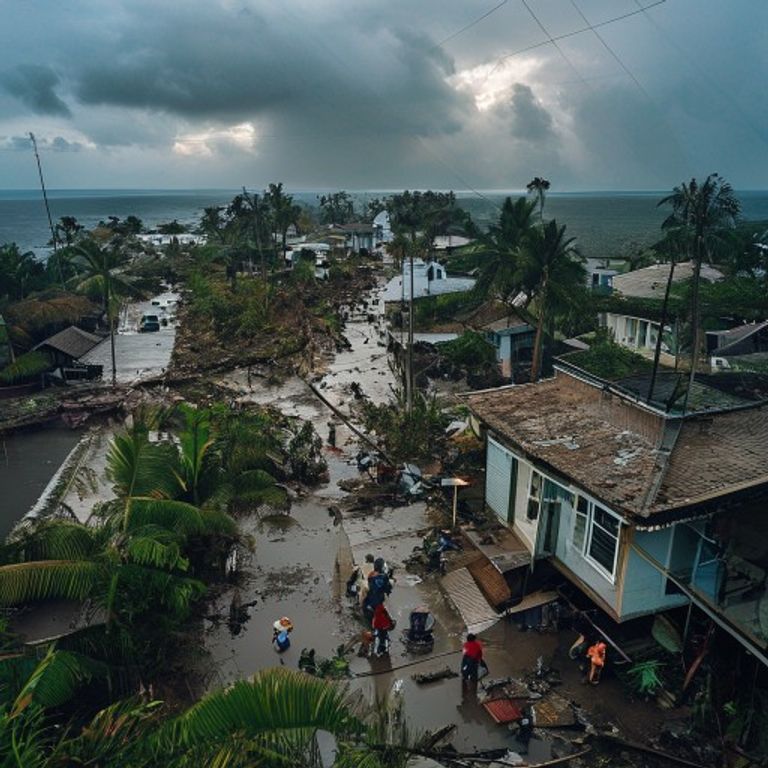
Typhoon Bavi Unleashes Deadly Havoc in Philippines, Taiwan Braces, China Prepares
MANILA, Philippines & TAIPEI, Taiwan – Typhoon Bavi, a formidable weather system that has already left a trail of destruction across the Philippines, is now forcing massive evacuations and widespread disruptions as it bears down on Taiwan, with eastern China next in its sights. The powerful storm’s initial onslaught in the Philippines tragically led to devastating landslides, claiming the lives of at least fifteen individuals and leaving communities grappling with widespread devastation. As the storm progresses, its anticipated trajectory through some of Asia’s most densely populated and economically vital regions underscores a pressing humanitarian and economic challenge, demanding coordinated international response and robust disaster preparedness measures.
Philippines Endures Tragic Landslides and Widespread Destruction
The initial impact of Typhoon Bavi on the Philippines was nothing short of catastrophic. Reports from disaster management agencies confirm that heavy, incessant rainfall triggered by the typhoon saturated mountainous regions, leading to multiple, deadly landslides. The confirmed death toll stands at fifteen, a grim reminder of the storm’s destructive power, with fears that this number could rise as rescue operations continue in remote and severely affected areas. Provinces known for their rugged terrain and vulnerable communities bore the brunt of Bavi’s fury. Entire hillsides collapsed, burying homes, cutting off critical infrastructure, and isolating thousands of residents. Emergency response teams, often battling adverse weather conditions and difficult access, have been working tirelessly to search for survivors, provide aid, and clear debris. The immediate aftermath has seen local hospitals overwhelmed with casualties, and temporary shelters struggling to accommodate the scores of displaced families who have lost their homes and livelihoods.
- Roads and bridges rendered impassable, severely hampering aid efforts.
- Agricultural lands, a primary source of income for many communities, were submerged or destroyed.
- Power outages affected vast areas, complicating communication and relief coordination.
- Local governments have declared states of calamity in several affected regions, unlocking emergency funds and resources.
The human cost extends beyond the fatalities and injuries; countless individuals have been left without shelter, food, and clean water. The Philippine government, alongside local and international humanitarian organizations, has mobilized resources to provide immediate relief, including food packs, medical supplies, and temporary housing. However, the scale of the damage necessitates a prolonged recovery effort, focusing on rebuilding infrastructure, restoring essential services, and supporting affected communities in their journey towards normalcy.
Taiwan Braces for Severe Onslaught: Evacuations and Closures
As Typhoon Bavi moved away from the Philippines, its formidable presence quickly shifted the focus to Taiwan. Forecasters issued stern warnings of the approaching storm’s potential to unleash severe flooding and trigger further landslides across the island, particularly in its northern and eastern regions. In response to these grave predictions, Taiwanese authorities initiated comprehensive preparedness measures, including large-scale evacuations from high-risk coastal and mountainous areas. Tens of thousands of residents were urged to leave their homes and seek refuge in designated shelters, a testament to Taiwan’s well-established disaster management protocols aimed at minimizing casualties.
The impending arrival of Bavi brought the island to a near standstill. Government directives led to the widespread closure of schools and businesses across numerous counties and cities, transforming bustling urban centers into quiet, deserted landscapes. Public transportation systems, including high-speed rail, regular train services, and domestic flights, experienced significant disruptions or outright cancellations, effectively halting inter-city travel and stranding thousands of commuters and tourists. Ports also ceased operations, impacting shipping and trade. The closures were a proactive measure to ensure public safety and to allow emergency services to prepare for rapid deployment once the typhoon made landfall.
- More than 50,000 people estimated to have been evacuated from vulnerable zones.
- Emergency services placed on high alert, with rescue teams pre-positioned.
- Military personnel deployed to assist in evacuation efforts and potential relief operations.
- Reservoirs and drainage systems meticulously checked to mitigate flooding risks.
Taiwan’s sophisticated infrastructure and advanced early warning systems are crucial in mitigating the typhoon’s impact. However, the sheer power of Bavi presents an extraordinary challenge. Authorities continuously broadcast updates and safety instructions, emphasizing the importance of public cooperation with evacuation orders and adherence to safety guidelines. The economic ramifications of such widespread closures and disruptions, even for a short period, are considerable, affecting supply chains, retail, and tourism, adding another layer of complexity to the disaster response.
Typhoon Bavi’s Evolving Trajectory and Threat to Eastern China
Despite showing signs of weakening after its passage through the Philippines and its imminent encounter with Taiwan, Typhoon Bavi remains a significant threat as it continues its westward trajectory. Meteorological agencies confirm that while its intensity has somewhat diminished, the storm still possesses considerable strength to inflict substantial damage. Its anticipated path is set to impact northern and eastern Taiwan directly, bringing with it torrential rains and powerful winds that could exacerbate the risk of flash floods and landslides in the island’s mountainous terrain.
Following its expected impact on Taiwan, Bavi is projected to head towards eastern China, posing a direct threat to its densely populated coastal provinces. Regions such as Zhejiang, Fujian, and Shanghai are now on high alert, with Chinese meteorological authorities issuing severe weather warnings and initiating their own comprehensive disaster preparedness protocols. These regions are accustomed to typhoon season, but the potential for extensive damage from a still-powerful Bavi is a serious concern, especially given the concentration of industrial and commercial activity along China’s eastern seaboard.
The interplay of landmasses, sea surface temperatures, and atmospheric conditions will continue to influence Bavi’s strength and precise path. Coastal defenses are being reinforced, fishing vessels have been recalled to port, and residents in low-lying areas are being advised to prepare for potential evacuation. The global shipping industry is closely monitoring Bavi’s movement, as major ports in China and Taiwan are crucial links in international trade, and any prolonged disruption could have ripple effects on global supply chains.
- Continuous monitoring by regional meteorological centers in Japan, Taiwan, and China.
- International cooperation in sharing weather data and forecasts proves critical for early warnings.
- Potential for significant agricultural losses in affected Chinese provinces.
- Heightened risk for critical infrastructure, including power grids and transportation networks.
The cyclical nature of typhoons in the Asia-Pacific region highlights the urgent need for robust long-term climate resilience strategies. While immediate response focuses on saving lives and providing aid, the broader challenge involves adapting to and mitigating the increasing frequency and intensity of such extreme weather events, which are often linked to global climate change trends.
Regional Response and International Solidarity
The progression of Typhoon Bavi through the Philippines, Taiwan, and towards China has underscored the importance of regional cooperation and international solidarity in disaster management. From Manila to Taipei, and extending to Beijing, government agencies, emergency services, and humanitarian organizations are working round the clock. In the Philippines, the focus remains on search and rescue, provision of immediate relief, and initial damage assessment for long-term recovery planning. The government has activated its national disaster response mechanisms, deploying military assets and coordinating efforts with local municipalities.
Taiwan’s robust disaster preparedness framework, honed over decades of facing similar natural calamities, has been fully activated. The central government is coordinating with local authorities to ensure efficient evacuations, establish emergency shelters, and pre-position resources. Public awareness campaigns are crucial, empowering citizens with information on safety measures and emergency contacts. This proactive approach aims to minimize human casualties, even in the face of a powerful storm.
As China prepares for Bavi’s arrival, similar measures are being implemented along its eastern coast. Provincial governments are mobilizing resources, issuing early warnings, and securing coastal areas. Lessons learned from previous typhoons are being applied to strengthen infrastructure and enhance response capabilities. The interconnectedness of these nations, both geographically and economically, means that the impact on one can quickly affect others, necessitating a harmonized approach to forecasting, warning, and response.
- The World Health Organization (WHO) and other international bodies are monitoring the situation to offer support.
- Neighboring countries are ready to provide assistance if requested, showcasing regional diplomatic ties.
- Emphasis on community-level preparedness, including family emergency plans and supply kits.
- Challenges in managing large-scale evacuations while adhering to public health guidelines, if any, adds complexity.
The collective experience in responding to such natural disasters has led to the development of sophisticated meteorological tracking systems and rapid deployment protocols. However, the sheer scale and unpredictable nature of typhoons like Bavi continuously test these systems, highlighting the ongoing need for investment in resilient infrastructure and sustainable urban planning.
Long-Term Implications: Economic and Environmental Fallout
Beyond the immediate humanitarian crisis, Typhoon Bavi is poised to leave significant long-term economic and environmental implications for the affected regions. In the Philippines, the destruction of agricultural lands, particularly rice paddies and fishing communities, will have a cascading effect on food security and local economies. The damage to infrastructure, including roads, bridges, and communication networks, will impede commerce and daily life for months, if not longer, requiring substantial government and international investment for reconstruction.
Taiwan, despite its advanced preparedness, will face economic disruptions due to widespread closures, flight cancellations, and potential damage to its industrial and agricultural sectors. Port operations, vital for global trade, could experience delays, affecting international supply chains. The cost of repairs and recovery efforts will place an additional strain on national budgets, diverting resources that could otherwise be allocated to development projects.
Should Bavi strike eastern China with significant force, the economic ramifications could be even more far-reaching. The coastal provinces are manufacturing powerhouses and major trade hubs. Disruptions to factories, ports, and transportation arteries could impact global markets, given China’s integral role in global production and supply chains. Environmental concerns also loom large: increased erosion from heavy rains, potential contamination of water sources, and damage to fragile coastal ecosystems are anticipated. The displacement of communities and the psychological toll on survivors will necessitate long-term social support and mental health services.
- Impact on fisheries and aquaculture due to coastal flooding and saltwater intrusion.
- Potential for long-term power supply issues in severely damaged areas.
- Insurance claims and rebuilding costs are expected to run into billions of dollars across the affected nations.
- Focus on resilient recovery: building back stronger infrastructure capable of withstanding future events.
The repeated assault of such powerful storms in the region also raises pertinent questions about climate change adaptation and mitigation strategies. Scientists increasingly link the intensification of tropical cyclones to rising global temperatures, underscoring the urgency for a global concerted effort to address climate-related risks and protect vulnerable populations and ecosystems.
Conclusion: A Region United in Vigilance and Resilience
As Typhoon Bavi continues its destructive journey, the focus remains firmly on protecting lives, providing immediate relief, and mitigating further damage across the Philippines, Taiwan, and eastern China. The tragic loss of life in the Philippines serves as a somber reminder of the raw power of nature, while the extensive preparedness efforts in Taiwan and China highlight a region united in its vigilance and commitment to resilience. The storm’s trajectory, even as it weakens, underscores the continuous threat posed by extreme weather events and the vital importance of robust disaster management systems, early warning technologies, and seamless regional cooperation.
The coming days will be critical as the full extent of Bavi’s impact becomes clear. Beyond the immediate crisis, the long road to recovery will require sustained effort, international support, and a renewed commitment to building more resilient communities capable of weathering the increasing challenges posed by a changing climate. The spirit of solidarity among the affected nations, coupled with the unwavering dedication of emergency responders and humanitarian aid workers, will undoubtedly be instrumental in overcoming the widespread devastation wrought by Typhoon Bavi.