
 By NewsMatrix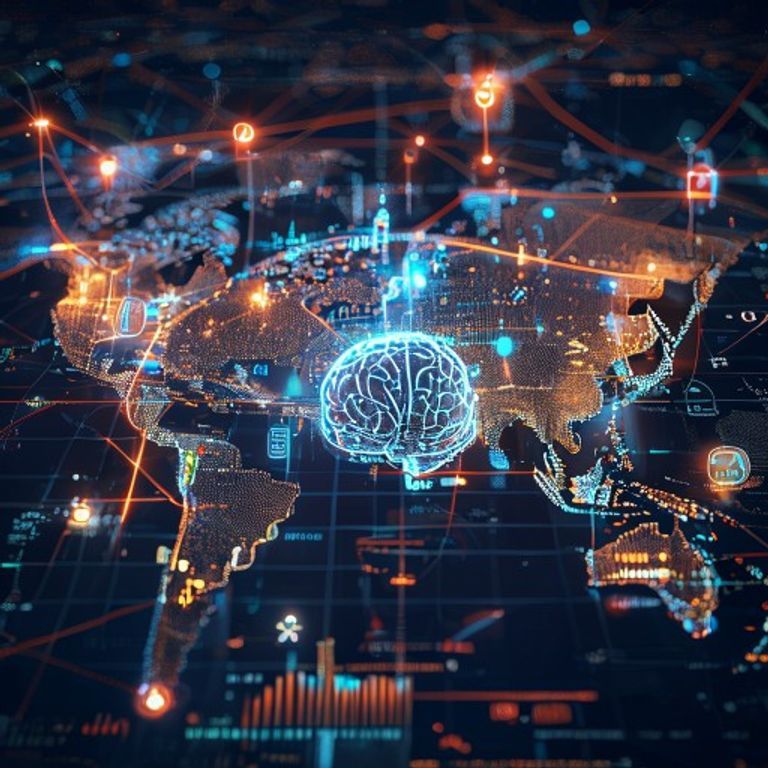
The Transformative Artificial Intelligence Impact on Global Economies
In an era defined by rapid technological advancements, Artificial Intelligence (AI) has emerged as a paramount force fundamentally reshaping global economic landscapes. The pervasive Artificial Intelligence Impact is evident across virtually every industry, from optimizing complex industrial processes to transforming daily consumer interactions. This article delves into the profound and multifaceted ways AI is influencing economies worldwide, exploring its immense potential to drive unprecedented growth and innovation, while simultaneously posing significant challenges related to employment, ethics, and geopolitical stability. Understanding this dual nature is crucial for navigating the opportunities and complexities of an AI-driven future.
AI as a Catalyst for Economic Growth and Efficiency
A primary aspect of the Artificial Intelligence Impact on economies is its capacity to significantly enhance productivity and operational efficiency across diverse sectors. AI automates repetitive, data-intensive tasks, thereby enabling human capital to focus on higher-value activities demanding creativity, critical thinking, and strategic decision-making. This efficiency gain is manifest in AI-powered robots optimizing manufacturing production lines and intelligent chatbots providing instant customer support, ultimately reducing operational costs and improving service delivery. Beyond automation, AI serves as a potent engine for innovation, fostering the creation of entirely new industries and services like autonomous vehicles and personalized medicine. These innovations generate novel revenue streams and stimulate continuous technological advancement, attracting investment and creating high-skilled employment opportunities. AI’s ability to swiftly process and derive actionable insights from massive datasets transforms research and development, accelerating breakthroughs in fields like biotechnology and clean energy, which hold substantial economic promise.
Transformative Effects Across Key Sectors
AI’s influence is profoundly reshaping core economic sectors:
- Financial Services and Healthcare: The financial sector has rapidly integrated AI for algorithmic trading, advanced fraud detection, and sophisticated credit scoring, leading to more efficient markets and personalized banking. In healthcare, AI assists in early disease diagnosis through image recognition, accelerates drug discovery, and enables predictive analytics for proactive interventions. Personalized medicine, tailoring treatments to individual genetic makeup, is advancing rapidly, promising improved public health outcomes and reduced healthcare costs despite critical ethical considerations.
- Manufacturing, Retail, and Logistics: In manufacturing, AI powers Industry 4.0, with smart factories leveraging AI-driven robots and machine learning algorithms to optimize production, predict equipment failures, and ensure quality control. For retail, AI enhances the customer journey through hyper-personalized recommendations, dynamic pricing, and efficient inventory management, driving customer loyalty and sales. In logistics, AI optimizes routing, inventory, and demand forecasting, leading to substantial cost savings and enhanced supply chain agility, from warehouse automation to last-mile delivery.
- Agriculture: AI-powered precision farming, utilizing drones and sensors, allows for accurate monitoring of crop health and soil conditions, optimizing irrigation and pesticide application. This leads to increased yields, reduced environmental impact, and enhanced profitability for farmers, addressing global food security challenges.
The Evolving Landscape of Work and Employment
The Artificial Intelligence Impact on the labor market is a subject of intense scrutiny. While concerns about widespread job displacement due to automation are valid, particularly for routine tasks across industries, AI is also a significant creator of new job categories. There is a surging global demand for specialized roles such as AI architects, data scientists, and AI ethicists. Moreover, AI often fosters human-AI collaboration, where individuals leverage AI tools to augment their capabilities, leading to enhanced productivity and novel modes of work. Roles emphasizing creativity, critical thinking, and emotional intelligence are generally more resilient and can be amplified by AI integration. Effectively managing this transition requires substantial investment in reskilling and upskilling initiatives. Educational curricula must adapt to integrate AI literacy, critical thinking, and adaptability. Governments, educational institutions, and businesses must collaborate to prepare the workforce for an AI-driven future, ensuring the benefits are broadly distributed and do not exacerbate existing socio-economic inequalities. Policy discussions around social safety nets and comprehensive retraining programs are gaining prominence to mitigate the social costs of automation and ensure an equitable transition.
Ethical, Social, and Governance Imperatives
Beyond economic metrics, the Artificial Intelligence Impact extends into complex ethical, social, and governance realms. A core challenge is addressing algorithmic bias, where AI systems trained on historically skewed data can perpetuate inequalities in areas like hiring or lending. Ensuring fairness, transparency, and accountability in AI decision-making is paramount, requiring active research into bias detection and mitigation. Privacy and data security are critical concerns, as AI systems rely on vast quantities of often sensitive data. Safeguarding this data from breaches and misuse, while adhering to stringent regulations like GDPR, is an ongoing challenge. The “black box” nature of some advanced AI models also complicates accountability, driving demand for Explainable AI (XAI) to foster trust and better governance. Addressing these imperatives is essential for AI to contribute positively and equitably to societal development.
Global Competition and Geopolitical Strategy
The strategic significance of AI has ignited an intense global competition, often referred to as an “AI arms race.” Major powers worldwide are making substantial investments in AI research and development, recognizing that leadership in this technological frontier translates into significant economic, military, and geopolitical advantages. This competition profoundly impacts international relations, trade policies, and the development of global technological standards. International dialogue increasingly focuses on establishing global ethical guidelines and regulatory frameworks for AI to ensure responsible development and deployment. Issues such as data sovereignty, intellectual property rights, and the potential for AI in autonomous systems are high on the international agenda, underscoring the deep geopolitical Artificial Intelligence Impact. Nations’ abilities to cultivate indigenous AI talent and foster vibrant startup ecosystems will be crucial determinants of their future economic prosperity and strategic influence.
Conclusion: Charting a Collaborative Path Forward
The transformative Artificial Intelligence Impact on global economies is undeniable and accelerating. AI represents an immensely powerful force capable of unlocking unprecedented productivity gains, fueling innovation, and addressing some of humanity’s most complex challenges. However, realizing this vast potential requires a collective, thoughtful, and highly collaborative approach. The significant challenges posed by AI, encompassing labor market disruptions, profound ethical dilemmas, and escalating geopolitical tensions, demand proactive and comprehensive solutions. Governments, businesses, academia, and civil society must forge strong partnerships to develop holistic strategies that effectively harness AI’s myriad benefits while rigorously mitigating its inherent risks. This critical endeavor includes fostering continuous lifelong learning, establishing transparent and robust ethical guidelines, ensuring stringent data privacy protections, and actively promoting inclusive access to AI technologies for all. Ultimately, the trajectory of global economies in this AI era will hinge not merely on technological advancements, but crucially on the human choices and policy decisions made today. By prioritizing foresight, fostering international cooperation, making strategic investments in human capital, and embedding ethical considerations at the core of AI development and deployment, societies can effectively guide the AI revolution towards a future characterized by shared prosperity, environmental sustainability, and enhanced human flourishing, building stronger, more resilient, and more equitable global economies for generations to come.