
 By NewsMatrix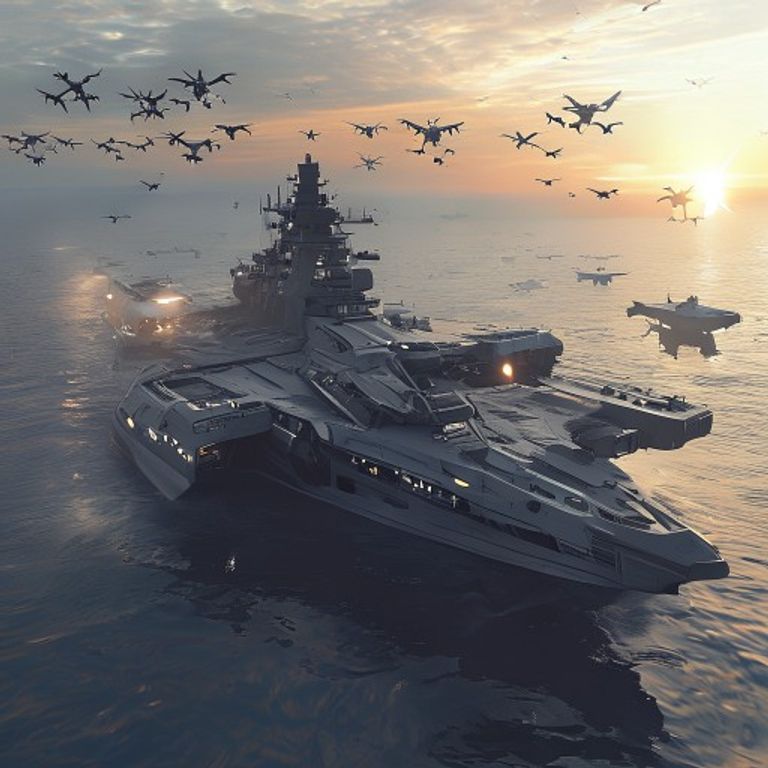
In a move that signals a monumental shift in maritime strategy, the United Kingdom has made the decisive choice to abandon its ambitious Type 83 destroyer program. Instead, the focus is shifting toward the development of a versatile new class of warships known as the Common Combat Vessel (CCV). This strategic pivot, analyzed here at NewsMatrix, represents not just a change in procurement, but a fundamental reassessment of how the Royal Navy will dominate the seas in an era defined by unmanned systems and rapidly evolving threats.
Understanding the Shift: From Type 83 to CCV
For years, the Type 83 destroyer was envisioned as the successor to the venerable Type 45, designed to provide high-end air defense capabilities. However, as the global security landscape shifted and fiscal realities tightened, the Ministry of Defence recognized that a monolithic, specialized platform might not be the most effective response to the challenges of the 2030s and beyond. The introduction of the Common Combat Vessel program reflects a philosophy centered on adaptability, modularity, and, most importantly, the seamless integration of drone technology.
At NewsMatrix, we have been closely monitoring the defense sector, and it is clear that the CCV program is not merely a replacement; it is an evolution. The core mission of these vessels is to act as command-and-control hubs for unmanned systems, essentially functioning as motherships for aerial, surface, and sub-surface drones. By prioritizing this integrated approach, the Royal Navy aims to multiply its force capacity without necessarily increasing the number of traditional, crew-heavy warships.
Key Features of the Common Combat Vessel
While technical specifications are still being finalized, the vision for the CCV fleet centers on several critical capabilities designed to maintain dominance in contested waters:
- Drone Integration Hub: The CCVs will feature advanced modular mission bays, allowing for the rapid deployment and recovery of various drone types, from long-endurance surveillance UAVs to autonomous underwater vehicles (AUVs) for mine countermeasures.
- Enhanced Situational Awareness: By acting as a central node, the CCV will aggregate sensor data from an entire fleet of unmanned platforms, providing commanders with an unprecedented level of battlefield clarity.
- Scalable Lethality: The vessels will be designed with modular weapon slots, enabling the rapid installation of new technologies—such as laser-directed energy weapons or advanced missile systems—as they become available.
- Operational Efficiency: Designed with reduced manning requirements through extensive automation, these ships will address the pressing need to maximize operational output while managing personnel and maintenance costs.
The Strategic Rationale: Navigating Financial and Operational Realities
The decision to pivot away from the Type 83 is heavily influenced by the necessity of balancing high-end naval ambitions with constrained budgets. Developing a new class of destroyer from scratch is an extraordinarily expensive and time-consuming endeavor. By moving toward a common platform design, the Royal Navy hopes to leverage economies of scale and streamline the maintenance supply chain across the fleet.
Furthermore, NewsMatrix notes that the operational environment is becoming increasingly crowded and dangerous. Adversaries are heavily investing in swarming tactics and low-cost anti-ship missile technology. A single, high-value destroyer, while formidable, presents a massive target. A distributed fleet of CCVs, operating in concert with hundreds of disposable or semi-expendable drones, creates a significantly more resilient and complex problem for any adversary to solve.
The Role of Unmanned Systems in Modern Warfare
The shift toward the CCV underscores the reality that the future of naval warfare will be fought in the electromagnetic spectrum and through the lens of autonomous systems. These vessels are being built to survive in environments where traditional communication may be jammed and where speed of decision-making is the ultimate advantage. By acting as the “brains” of a distributed network, the CCV fleet allows human commanders to manage the complexity of swarming drones while keeping the primary combat vessel at a safer distance from the immediate line of fire.
Looking Ahead: The Timeline to the 2030s
The goal is to have at least six of these Common Combat Vessels operational by the early 2030s. This timeline is aggressive but necessary. The rapid pace of technological innovation—particularly in Artificial Intelligence and autonomous guidance—means that design cycles must be shortened significantly. The Royal Navy is embracing a “spiral development” approach, where the foundational ship architecture is built to be easily upgraded, ensuring that the technology on board does not become obsolete the moment the ship enters service.
NewsMatrix will continue to provide in-depth reporting on the progression of this program. The success of the CCV will depend on several factors, including the integration of secure communication links, the ability of the shipboard AI to process vast amounts of sensor data in real-time, and the successful maturation of the drone swarms they are intended to control.
Conclusion: A New Era for the Royal Navy
The cancellation of the Type 83 and the birth of the Common Combat Vessel program is a bold admission that the future requires different tools than the past. While the loss of a specialized destroyer program may be viewed by some as a setback, it is, in reality, a proactive adaptation to the changing nature of maritime power. Through this transition, the UK is positioning the Royal Navy to remain at the cutting edge of global naval power, prioritizing flexibility, technological integration, and fiscal sustainability. Here at NewsMatrix, we recognize that this is not the end of the destroyer, but the beginning of the platform-agnostic, drone-centric future of the sea.
As the early 2030s approach, all eyes will be on the shipyards and laboratories where these vessels are being forged. The CCV may well prove to be the most significant naval procurement decision of the decade, setting the standard for how nations project power in an increasingly automated world.