
 By NewsMatrix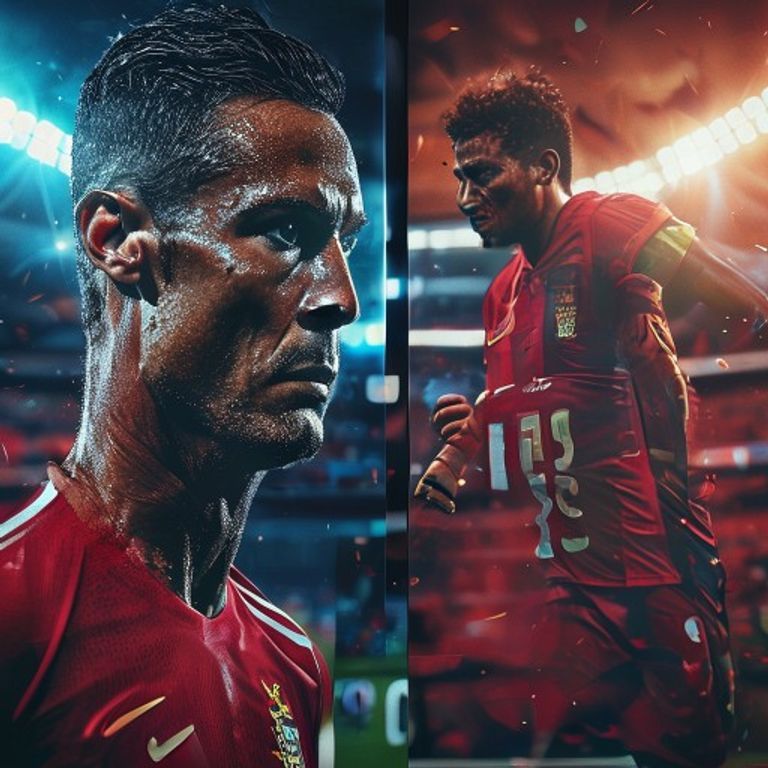
The Ronaldo Dilemma: Is Portugal’s Future Being Held Back by its Greatest Legend?
The beautiful game has a way of turning fairy tales into complex, uncomfortable narratives. For over two decades, Cristiano Ronaldo has been the undisputed protagonist of Portuguese football. His journey from a raw teenager in Madeira to a global icon and arguably the greatest goalscorer in the history of the sport is the stuff of legend. Yet, following Portugal’s latest dramatic victory over Croatia, the national team finds itself at a crossroads that is as much about tactical evolution as it is about the inevitable passage of time. At NewsMatrix, we have been closely monitoring the fallout, and it is clear that the conversation surrounding Ronaldo’s role in the national setup has never been more polarized.
While victory is the ultimate objective, the manner in which it was achieved against a technically gifted Croatia side has raised more questions than it provided answers for the Portuguese faithful. Though Ronaldo found the back of the net—a testament to his undying predatory instincts—the narrative shifted swiftly after Gonçalo Ramos stepped onto the pitch and secured the late winner. This substitution, intended as a tactical adjustment, inadvertently illuminated the glaring contrast between the past and the potential future of the Portuguese attack. It was a moment that forced a reckoning: is Portugal being held hostage by its own greatness?
The Ibrahimovic Intervention: A Provocative Call to Reality
Few figures in world football command the attention that Zlatan Ibrahimovic does. Never one to shy away from an uncomfortable truth or a headline-grabbing opinion, the retired Swedish icon recently added fuel to the fire. In comments that have reverberated throughout European football circles, Ibrahimovic stated bluntly that Portugal cannot realistically win the 2026 World Cup with a 41-year-old Cristiano Ronaldo leading the attack. His argument was not an attack on Ronaldo’s past achievements, but a pragmatic assessment of the modern game’s demands.
Ibrahimovic’s contention is that Ronaldo’s legendary status—the sheer weight of his name, his commercial value, and his aura—is now actively overshadowing his current form and, by extension, the team’s tactical ceiling. At the elite level, particularly in a tournament as grueling as the World Cup, the ability to press, transition, and maintain high intensity for 90 minutes is non-negotiable. Ibrahimovic suggests that while Ronaldo can still finish chances, the system required to facilitate him may be limiting the team’s overall output. For a team as talented as Portugal, stacked with creators like Bruno Fernandes, Bernardo Silva, and Rafael Leão, playing in a structure that essentially revolves around a static, aging target man might be an anchor rather than a sail.
The Ramos Factor: Why the Bench Might Be the Future
The impact of Gonçalo Ramos cannot be overstated. When the young striker came on to score the late winner against Croatia, he did more than just secure three points; he provided a glimpse into what the future of the Seleção could look like. Ramos offers a level of mobility, defensive work rate, and interplay that aligns more closely with the modern, fluid attacking structures seen in the most successful European clubs today.
The debate here at NewsMatrix is not about whether Ronaldo is a bad player; it is about team synergy. Consider the following points that have emerged from recent matches:
- Tactical Flexibility: Young strikers like Ramos allow the team to press from the front, disrupting opposition build-up play, whereas Ronaldo’s current physical limitations make sustained high pressing difficult.
- Dynamic Movement: Modern systems rely on fluidity and constant interchanging of positions. Ronaldo’s tendency to occupy specific zones restricts the movement of creative midfielders who prefer to exploit space in the final third.
- Longevity and Transition: Relying on a player who will be 41 by the next World Cup leaves the team vulnerable. Building a system that relies on his presence now creates a void that will need to be filled abruptly in the future, whereas integrating younger talent now builds continuity.
The Burden of the Icon
The dilemma for the Portuguese coaching staff is arguably the most difficult in international football. How do you tell the greatest player in your nation’s history, who remains a significant threat in front of goal, that his time as an automatic starter has passed? The managerial challenge is twofold: one, maintaining the internal harmony and respect of the squad, and two, executing a tactical vision that maximizes the team’s chances of winning the 2026 World Cup.
Ronaldo is not just a player; he is a brand, a cultural phenomenon, and a locker room leader. Dropping him is not simply a team selection issue; it is a geopolitical event in Portugal. Yet, sentimentality has historically been the enemy of international trophy success. Great teams are built on cold, hard decisions, not on honoring the past at the expense of the present.
What Does the Future Hold?
As we look toward the 2026 World Cup, the pressure on the Portuguese FA and the management team will only increase. Fans are divided. There are those who believe Ronaldo’s presence is essential for his experience, leadership, and the fear he instills in opponents. On the other side are those, like Ibrahimovic, who argue that the game has moved on and that Portugal is currently in a transitional phase where holding onto the past is hindering progress.
NewsMatrix believes the solution may lie in a managed transition. It is possible that Ronaldo still has a vital role to play, perhaps not as the focal point of every game, but as an impact substitute and a leader in the camp. However, for that to happen, the ego and the narrative surrounding the icon must be managed with unprecedented care. The question remains: is Ronaldo willing to accept a diminished role for the sake of the team’s collective success, or will the “Ronaldo Dilemma” continue to dictate the trajectory of Portuguese football until the final whistle is blown on his storied career?
The victory over Croatia was a celebration of resilience, but it was also a warning. Portugal has the talent, the pedigree, and the depth to conquer the world in 2026. The only question is whether they have the courage to make the necessary changes to ensure that their golden generation does not fade away while looking backward at the shadow of their greatest star.