
 By NewsMatrix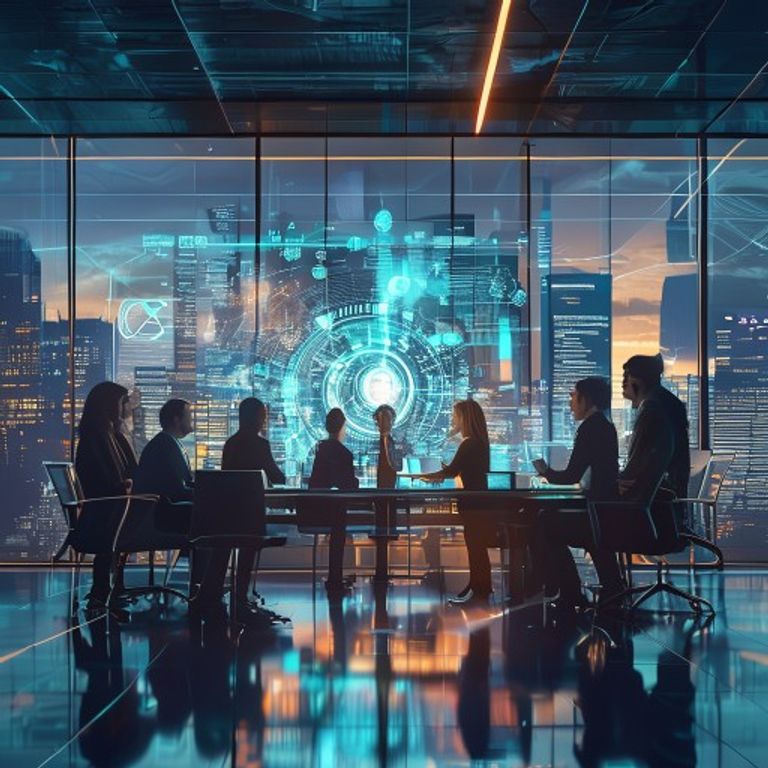
The Dawn of a New Era in Human Productivity
The global landscape of work is currently undergoing a shift so profound that it is being compared to the Industrial Revolution. At NewsMatrix, we have been closely monitoring the rapid integration of artificial intelligence (AI) across various sectors, and the data suggests that we are no longer just looking at a technological update, but a fundamental reimagining of what it means to work. From the automation of repetitive tasks to the generation of complex creative content, AI is reshaping the modern workforce at a pace that was previously unimaginable.
For decades, the conversation surrounding automation was largely confined to blue-collar industries—manufacturing lines, assembly plants, and logistics. However, the emergence of generative AI and sophisticated machine learning models has brought the “AI Revolution” to the desks of white-collar professionals. Today, lawyers, doctors, software engineers, and marketers are finding their daily workflows transformed by intelligent systems. At NewsMatrix, our analysis indicates that this transition is not merely about job replacement, but about the evolution of roles and the emergence of a collaborative human-AI partnership.
Understanding the Current AI Landscape
To grasp the scale of this transformation, one must look at the diverse applications of AI in today’s economy. The current landscape is dominated by three main categories of AI implementation: process automation, cognitive insight, and cognitive engagement. While these categories often overlap, they represent different ways businesses are integrating technology to boost efficiency and output.
The Rise of Generative AI
The most visible catalyst for recent change has been the rise of Generative AI. These systems can create text, images, code, and even music that rivals human output. NewsMatrix research shows that companies are increasingly utilizing these tools to draft reports, generate marketing copy, and even prototype products. This shift has significantly lowered the barrier to entry for complex tasks, allowing workers to focus more on strategy and less on the mechanics of execution.
Automation of Routine Cognitive Tasks
Beyond creative work, AI is excelling at “routine cognitive tasks.” These are tasks that require mental effort but are highly predictable, such as data entry, basic accounting, and legal document review. By automating these processes, organizations are freeing up thousands of man-hours. NewsMatrix contributors have noted that this shift allows employees to redirect their energy toward higher-value activities that require emotional intelligence and nuanced judgment—skills that AI has yet to master.
Impact Across Key Industries
The ripple effects of the AI revolution are being felt across every major industry. While the specific applications differ, the underlying theme remains the same: AI acts as a force multiplier for human capability.
Healthcare and Medical Diagnostics
In the healthcare sector, AI is becoming a vital ally for clinicians. Machine learning algorithms can now analyze medical images—such as X-rays and MRIs—with a level of precision that matches or even exceeds human specialists. NewsMatrix reports have highlighted how AI-driven predictive analytics are helping hospitals manage patient flow and predict outbreaks before they occur. This doesn’t replace doctors; rather, it provides them with more accurate data to make life-saving decisions.
Finance and Risk Management
The financial world has always been data-driven, making it a natural fit for AI. Today, AI models are used for real-time fraud detection, algorithmic trading, and personalized financial planning. By processing vast amounts of market data in milliseconds, these systems can identify trends that would be invisible to the human eye. According to NewsMatrix financial analysts, this has led to more stable markets and more accessible investment opportunities for the general public.
Creative Arts and Media
Perhaps the most controversial area of AI integration is in the creative arts. From AI-generated art to automated video editing, the tools available to creators have expanded exponentially. While some fear the loss of human “soul” in art, many creators are using AI as a digital muse, helping them overcome writer’s block or explore new visual styles. At NewsMatrix, we see this as the beginning of a new “Hybrid Creative” era where technology serves the artist’s vision.
The Human Advantage: Why Soft Skills Matter More Than Ever
As AI takes over technical and analytical tasks, the value of uniquely human skills is skyrocketing. In a world where a machine can write a perfect email or debug code, the ability to empathize, lead, and think critically becomes a premium asset. NewsMatrix has identified several “Human Advantage” skills that will define the successful worker of the future:
- Emotional Intelligence (EQ): The ability to navigate complex social dynamics and manage human emotions is something AI cannot replicate.
- Critical Thinking and Ethics: AI can provide data, but humans must decide what that data means in a moral and ethical context.
- Complex Problem Solving: While AI is great at solving narrow problems, humans excel at connecting dots across disparate fields.
- Adaptability and Lifelong Learning: The pace of change requires a workforce that is willing to constantly unlearn and relearn.
The Great Reskilling: Preparing the Workforce
The transition to an AI-augmented workforce is not without its challenges. The most pressing issue is the “skills gap.” As old roles vanish and new ones emerge, there is an urgent need for massive reskilling programs. NewsMatrix suggests that the responsibility for this transition lies with three primary groups: governments, corporations, and individuals.
The Role of Educational Institutions
Universities and vocational schools must move away from rote memorization and toward teaching “how to learn.” Curriculum updates are needed to include data literacy and AI collaboration as core competencies. NewsMatrix has advocated for a more modular approach to education, where workers can return to school for “micro-credentials” throughout their careers.
Corporate Responsibility and Upskilling
Forward-thinking companies are not just hiring AI experts; they are training their existing workforce to use AI tools. By investing in their employees, these companies reduce the costs associated with turnover and ensure they have a team that understands both the technology and the legacy business processes. NewsMatrix has covered several Fortune 500 companies that have successfully implemented “AI-first” internal training programs.
Ethical Considerations and Potential Pitfalls
While the potential benefits of AI are immense, NewsMatrix remains committed to highlighting the ethical risks associated with this technology. The integration of AI into the workforce brings up serious questions regarding bias, privacy, and economic inequality.
Algorithmic Bias
AI systems are only as good as the data they are trained on. If that data contains historical biases, the AI will perpetuate them. We have seen instances where AI hiring tools discriminated against certain demographics. It is crucial for developers and HR departments to implement rigorous auditing processes to ensure fairness.
The Digital Divide
There is a real risk that the benefits of AI will be concentrated in wealthy nations and among high-skilled workers, leaving others behind. NewsMatrix believes that bridging this digital divide is one of the most important policy challenges of our time. Universal access to high-speed internet and AI education is no longer a luxury—it is a necessity for economic participation.
The Future Office: A Hybrid Environment
Looking ahead, the office of the future will likely look very different. We are moving toward a “Centaur” model of work—a concept where the most effective “entity” is a human working in tandem with an AI. In this environment, the AI handles the data crunching, scheduling, and initial drafting, while the human focuses on final decision-making, creative direction, and relationship management.
NewsMatrix predicts that the traditional 9-to-5 might evolve as productivity increases. If AI can help a worker complete eight hours of tasks in four, the conversation may shift toward shorter work weeks or more flexible arrangements. However, this requires a shift in management philosophy from “hours spent” to “output achieved.”
Conclusion: Embracing the AI Partnership
The integration of artificial intelligence into the modern workforce is an unstoppable force. While it is natural to feel some trepidation about such a massive shift, the historical precedent suggests that technology ultimately creates more opportunities than it destroys. The key to navigating this new era is not to resist the change, but to embrace the partnership between human intuition and machine intelligence.
At NewsMatrix, we will continue to provide the latest insights and analysis on this unfolding story. The future of work is not a competition between man and machine; it is a collaborative journey toward a more efficient, creative, and productive world. By focusing on our uniquely human strengths and leveraging the power of AI, we can build a workforce that is not only more capable but more fulfilling for everyone involved.
As we move forward, the most successful individuals and organizations will be those who view AI as a tool for empowerment. Stay tuned to NewsMatrix for more updates on how technology is changing your world, your career, and your future.