
 By NewsMatrix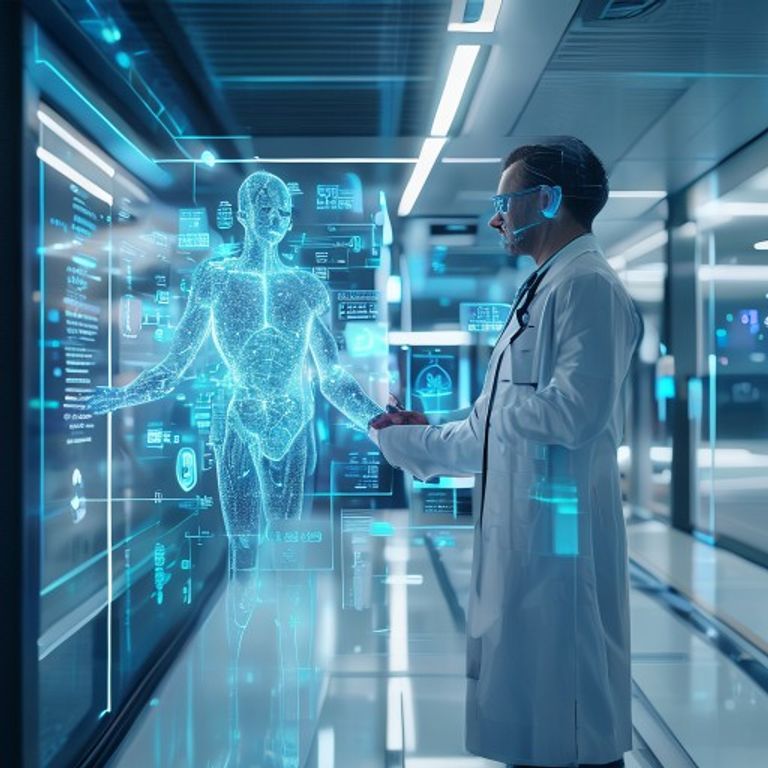
The Intersection of Technology and Life: A New Medical Frontier
The landscape of modern medicine is undergoing a transformation unlike any seen since the discovery of antibiotics. At the heart of this revolution is Artificial Intelligence (AI), a tool that has transitioned from science fiction to a fundamental pillar of clinical practice. Here at NewsMatrix, we have closely monitored the trajectory of digital health, and it is clear that AI is not just an additive feature; it is becoming the central nervous system of healthcare systems worldwide. From the way doctors diagnose complex diseases to the speed at which new vaccines are developed, algorithms are augmenting human capabilities in ways that were previously unimaginable.
As we delve into this digital shift, it is important to understand that AI in healthcare is not about replacing physicians. Instead, it is about data—specifically, the ability to process, analyze, and interpret vast quantities of it at speeds that exceed human biology. Every second, hospitals generate petabytes of data from imaging, electronic health records, and genomic sequencing. NewsMatrix insights suggest that the real challenge is no longer collecting data, but making it actionable. This is where AI steps in, turning raw information into life-saving insights.
Diagnostic Imaging: Seeing Beyond the Human Eye
One of the most mature applications of AI today is in medical imaging. Radiologists and pathologists are increasingly relying on deep learning models to identify patterns that might be too subtle for the naked eye. In screenings for breast cancer, lung nodules, or retinal diseases, AI algorithms have demonstrated an accuracy that often rivals or exceeds that of experienced specialists. These tools serve as a “second set of eyes,” flagging potential abnormalities and ensuring that no detail is overlooked.
Improving Accuracy in Radiology
In traditional radiology, a single doctor might review hundreds of scans in a day. Fatigue is an inevitable human factor. AI, however, does not suffer from exhaustion. By training on millions of labeled images, these systems can detect early-stage tumors or hairline fractures with pinpoint precision. NewsMatrix has tracked several clinical trials where AI-driven software reduced false negatives in lung cancer screenings by nearly 20 percent, a statistic that translates directly into lives saved through early intervention.
Pathology and the Digital Slide
Pathology is also witnessing a digital renaissance. By digitizing tissue slides, AI can analyze cellular structures to identify cancerous cells more quickly than traditional microscopic methods. Furthermore, AI can quantify the density of certain proteins or genetic markers, providing oncologists with a much clearer picture of how a patient might respond to specific therapies. This level of granular detail is the cornerstone of what we now call precision medicine.
The Era of Precision Medicine and Personalized Care
For decades, medicine followed a “one-size-fits-all” approach. If a patient had a certain condition, they were given the standard treatment for that condition. However, every human body is genetically unique. AI is enabling a shift toward personalized care, where treatments are tailored to the individual’s genetic makeup, lifestyle, and environment. NewsMatrix reports that personalized medicine is the fastest-growing sector within the biotech industry, driven largely by machine learning.
- Genomic Analysis: AI algorithms can sift through a patient’s entire genome to identify mutations that might predispose them to certain diseases or affect their drug metabolism.
- Tailored Drug Regimens: By analyzing a patient’s unique profile, AI can help doctors determine the exact dosage and type of medication that will be most effective while minimizing side effects.
- Predictive Risk Modeling: Using historical health data, AI can predict the likelihood of a patient developing chronic conditions like Type 2 diabetes or heart disease years before symptoms appear.
This proactive approach allows for preventive measures that can stop a disease in its tracks. Instead of reacting to illness, the healthcare system is moving toward a model of maintaining wellness, a transition that is both more effective for the patient and more cost-efficient for the provider.
Accelerating Drug Discovery and Development
The traditional process of bringing a new drug to market is famously slow and expensive, often taking over a decade and costing billions of dollars. Much of this time is spent in the “discovery” phase—finding a molecule that can effectively target a specific protein in the body. AI is fundamentally shortening this timeline. By using predictive modeling, researchers can simulate how millions of different chemical compounds will interact with a target protein before they ever step into a physical lab.
From Years to Months
We saw a glimpse of this power during the development of COVID-19 treatments and vaccines. AI platforms were used to screen existing antiviral drugs to see if they could be repurposed to fight the virus. NewsMatrix highlights that what used to take five years of laboratory trial and error can now be narrowed down to a few months of computational analysis. This acceleration is particularly vital for rare diseases, where the small patient population often makes traditional drug development financially unviable.
Protein Folding and the AlphaFold Revolution
The recent breakthrough in protein folding—solving a 50-year-old biological mystery—is perhaps the greatest testament to AI’s potential in healthcare. By accurately predicting the 3D structures of proteins, AI allows scientists to understand the very machinery of life. This knowledge is the key to unlocking treatments for everything from Alzheimer’s to malaria. The data produced by these AI models is now being used by researchers worldwide to design new enzymes and synthetic proteins that could revolutionize biotechnology.
AI in the Operating Room: Robotic-Assisted Surgery
While we are not yet at a point where a robot performs surgery entirely on its own, robotic-assisted surgery is already common. Systems like the Da Vinci surgical robot allow surgeons to perform complex procedures with more precision, flexibility, and control than is possible with conventional techniques. When integrated with AI, these systems become even more powerful.
AI can analyze real-time video feeds during surgery to provide the surgeon with guidance, highlighting critical structures like nerves or blood vessels that must be avoided. Furthermore, machine learning models can analyze data from thousands of previous surgeries to suggest the best surgical paths or techniques. As NewsMatrix has noted in recent tech reviews, the goal of these advancements is to reduce the variability in surgical outcomes, ensuring that every patient receives the highest standard of care regardless of where they are treated.
The Challenges: Ethics, Bias, and Security
Despite the immense promise, the integration of AI into healthcare is not without its hurdles. One of the primary concerns is data privacy. Medical data is highly sensitive, and the use of this data to train AI models raises significant questions about who owns the information and how it is protected. NewsMatrix emphasizes that robust cybersecurity frameworks and transparent data-sharing policies are essential to maintaining public trust.
Addressing Algorithmic Bias
Another critical issue is bias. If an AI model is trained on data that is not representative of the entire population, its conclusions may be biased against certain ethnic or socioeconomic groups. For example, a skin cancer detection algorithm trained primarily on light-skinned individuals may be less accurate for people with darker skin tones. Ensuring that AI training datasets are diverse and inclusive is a top priority for developers and regulators alike.
The “Black Box” Problem
In medicine, understanding “why” is just as important as knowing “what.” Many advanced AI models, particularly deep learning networks, operate as a “black box,” meaning it is difficult to see exactly how they reached a specific conclusion. For a doctor to trust an AI’s recommendation, they need a degree of “explainability.” The field of Explainable AI (XAI) is currently working to make these algorithms more transparent, providing physicians with the reasoning behind the data output.
The Future of Healthcare: A Human-Machine Partnership
As we look toward the future, the narrative is not one of machines versus humans, but of a powerful partnership. AI will handle the data-heavy, repetitive, and analytical tasks, freeing up healthcare professionals to focus on what they do best: providing empathetic, nuanced, and compassionate care. The “human touch” remains irreplaceable in medicine, but it will be supported by a digital foundation that ensures fewer errors and better outcomes.
NewsMatrix believes that the next decade will see AI become as common in the doctor’s office as the stethoscope. We will see smart hospitals that can predict patient deterioration hours before it happens, wearable devices that provide continuous health monitoring, and AI assistants that help patients manage chronic conditions from the comfort of their homes. The democratization of healthcare through AI—making high-level diagnostics available even in remote areas—is perhaps the most exciting prospect of all.
Conclusion: NewsMatrix’s Final Take on the AI Health Shift
In conclusion, Artificial Intelligence is the catalyst for a more efficient, accurate, and personalized healthcare system. While the challenges of ethics and implementation are real, the potential benefits far outweigh the risks. By streamlining diagnostics, accelerating drug discovery, and enabling precision medicine, AI is helping us solve some of the most persistent problems in human health. At NewsMatrix, we will continue to document this journey, providing you with the latest updates on the technologies that are quite literally shaping the future of life itself. The medical revolution is here, and it is powered by intelligence—both human and artificial.