
 By NewsMatrix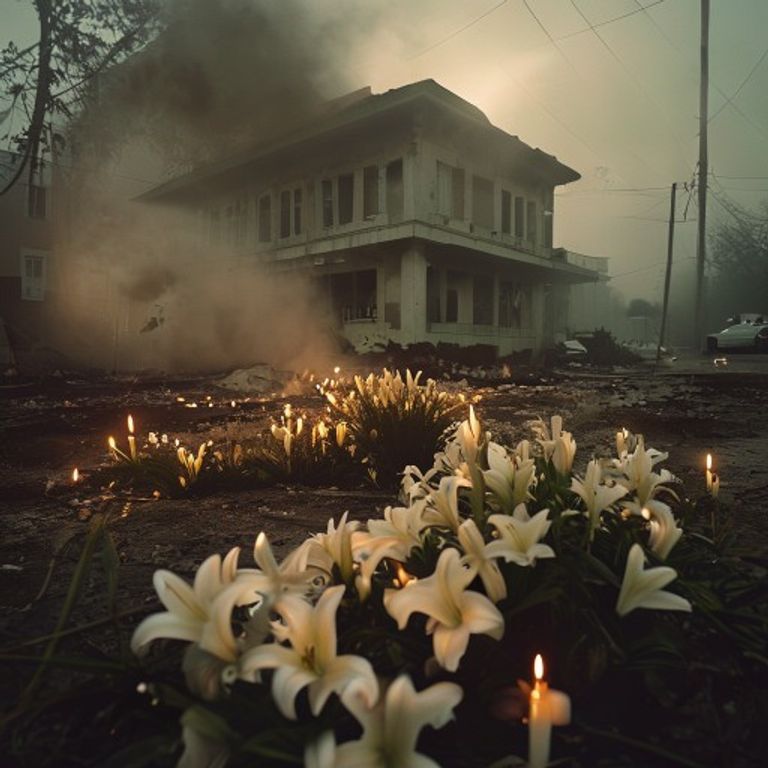
The Night the Lights Went Out in Aliganj
The neighborhood of Aliganj, usually vibrant with the sounds of daily life and the hum of a close-knit community, has been plunged into a silence so profound it is deafening. A devastating fire, which broke out in the early hours of the morning, has not only gutted structures but has torn through the very fabric of several families. At NewsMatrix, we believe that behind every headline is a human story, and today, those stories are written in tears and ash. The fire claimed the lives of several young individuals, each with dreams, responsibilities, and a future that was snatched away in a matter of minutes.
As the smoke cleared and the initial chaos subsided, the true scale of the tragedy began to emerge. It wasn’t just about the property damage or the charred remains of a building; it was about the void left in the hearts of parents, siblings, and friends. The victims were not just statistics; they were the heartbeat of their homes. From a son who was the sole provider for his ailing parents to a young woman whose final words will haunt her loved ones forever, the Aliganj fire is a stark reminder of the fragility of life and the urgent need for systemic change in urban safety standards.
Abdul Rahman: The Pillar of Strength
Among the names that will forever be etched in the memory of this tragedy is Abdul Rahman. At only twenty-four years old, Abdul carried a weight on his shoulders that few his age could fathom. NewsMatrix reporters spoke with neighbors who described him as a young man of extraordinary discipline and devotion. Abdul was the sole breadwinner for his family, which included a father paralyzed by a stroke three years ago and a mother who dedicated her life to being a homemaker.
Abdul worked two jobs, often returning home late at night, only to spend his few waking hours ensuring his father was comfortable and his mother’s needs were met. To him, his family wasn’t a burden; they were his purpose. His friends recall how he would often skip social gatherings to save money for his father’s medication. The fire did more than take his life; it extinguished the only light of hope for a household that had already endured so much. Today, his paralyzed father sits in a room filled with his son’s belongings, unable to fully grasp that the hands that once cared for him are gone forever. His mother’s grief is a silent, agonizing testament to the loss of a son who was her world.
The Final Desperate Plea of Sukhmani Singh
The tragedy of the Aliganj fire is punctuated by moments of sheer terror that are difficult to even imagine. Sukhmani Singh, a bright and ambitious young woman, found herself trapped as the flames raced through the hallways. In her final moments, she did what anyone in such a nightmare would do—she reached out to the people she loved most. NewsMatrix has learned of the harrowing final phone call Sukhmani made to her family.
Through the crackle of the flames and the roar of the heat, Sukhmani’s voice pleaded for help. She wasn’t just calling to say goodbye; she was fighting for her life until the very end. Her family, on the other side of the line, was forced to listen to her desperation, a helplessness that no words can describe. That call has now become a haunting legacy for her parents. It represents the terrifying reality of being trapped with no way out, a victim of a building that had become a deathtime trap. Sukhmani’s dreams of a career in medicine and her infectious laughter are now memories that her family clings to as they navigate a future without her.
Mohammad Shahzan: An Only Son’s Unfinished Story
For the parents of Mohammad Shahzan, the loss is unfathomable. Shahzan was an only son, the focal point of his parents’ aspirations and love. In many traditional households, an only son is seen as the carrier of the family’s legacy, but for Shahzan’s parents, he was simply their joy. He was known in Aliganj for his polite demeanor and his willingness to help anyone in need. NewsMatrix spoke with his childhood friends, who shared stories of a young man who was always the first to volunteer for community work.
The grief in Shahzan’s household is palpable. His room remains exactly as he left it, with his books open and his clothes neatly folded. His parents are in a state of shock, struggling to understand why their only child was taken in such a horrific manner. The loss of an only child brings a specific kind of loneliness—a realization that the family tree has been cut short. The community has rallied around them, but the void left by Shahzan is one that no amount of support can fill. His story is a poignant reminder of the individual lives that are disrupted when safety is compromised.
Aditya Srivastava: A Cry for Rescue
Aditya Srivastava was another young life lost to the Aliganj blaze. Witnesses at the scene reported hearing his cries for help long before the fire reached his floor. Aditya was trapped in a section of the building where the exit was blocked by debris and smoke. He pleaded with rescuers, his voice rising above the din of the sirens and the shouting. Despite the best efforts of those on the ground, the intensity of the fire made it impossible to reach him in time.
Aditya was a student with a bright future ahead of him, known for his keen interest in technology and his helpful nature. His death has sparked a wave of anger and sorrow among his peers. The fact that he was conscious and calling for help makes his passing even more difficult for his family to accept. They are left with the agonizing “what ifs”—what if the fire department had arrived sooner? What if the building had better fire escapes? These questions are at the heart of the NewsMatrix investigation into the incident, as we seek to uncover the lapses that led to such a catastrophic failure of safety protocols.
The Structural Failures: A Pattern of Negligence
As we delve deeper into the Aliganj tragedy, it becomes clear that this was not just an unfortunate accident. It was the result of a series of systemic failures that NewsMatrix has highlighted in previous investigative reports. Many buildings in Aliganj were constructed without adequate fire safety measures. From lack of fire extinguishers to blocked emergency exits and narrow staircases, the environment was a powder keg waiting for a spark.
- Non-existent fire alarms that failed to alert residents in time.
- Illegal extensions and modifications that blocked ventilation and escape routes.
- Lack of regular safety inspections by local authorities.
- The use of flammable materials in internal decorations and partitions.
These are not just technical violations; they are life-threatening oversights. The residents of Aliganj have long complained about the deteriorating state of these buildings, but their pleas often fell on deaf ears. The cost of this negligence is now being paid in human lives. NewsMatrix is committed to following this story until those responsible for these safety lapses are held accountable.
The Psychological Toll on the Community
Beyond the immediate grief of the families, the Aliganj fire has left a deep psychological scar on the entire community. Neighbors who witnessed the fire are struggling with trauma and survivor’s guilt. The sight of the flames and the sounds of the victims’ cries are not easily forgotten. Local mental health experts suggest that the community will need long-term support to process what they have experienced.
Children in the neighborhood, who saw their friends and neighbors perish, are particularly vulnerable. Schools in the area have reported a somber atmosphere, with students struggling to focus. NewsMatrix advocates for a comprehensive mental health response to accompany the physical reconstruction of the area. We must recognize that the healing process involves more than just rebuilding walls; it involves mending broken spirits.
The Path Forward: Justice and Safety
In the wake of this disaster, there must be a shift in how we approach urban development and fire safety. The lives of Abdul, Sukhmani, Shahzan, and Aditya cannot be lost in vain. NewsMatrix calls for an immediate audit of all high-occupancy buildings in the Aliganj area and beyond. There must be zero tolerance for safety violations that put lives at risk.
Furthermore, the families of the victims require more than just condolences. They need financial support, legal aid, and a transparent investigation. The sole breadwinner of a family is gone, an only son is lost, and families are shattered. Compensation must be swift and adequate to help these households navigate their new, harsh reality. NewsMatrix will continue to monitor the distribution of aid and the progress of the official inquiry to ensure that justice is served.
Concluding Thoughts: A Community United in Grief
The Aliganj fire is a dark chapter in our city’s history, but it has also shown the strength of human solidarity. In the hours following the fire, neighbors opened their homes to those who were displaced, and strangers offered food and comfort to the grieving families. This spirit of community is what will eventually help Aliganj heal.
As we remember Abdul Rahman, Sukhmani Singh, Mohammad Shahzan, and Aditya Srivastava, let us honor them by demanding a safer world. Their stories are a call to action—a reminder that we must value human life above profit and convenience. NewsMatrix stands with the families of Aliganj, and we will continue to tell their stories, ensuring that the victims of this tragedy are never forgotten. The fire may have taken their lives, but it cannot take their memory or the impact they had on those who loved them.
To the residents of Aliganj, we offer our deepest sympathies. The road ahead is long and difficult, but you are not alone. As a community, we must ensure that such a tragedy never happens again. We must demand better, do better, and look out for one another. Only then can we truly say that we have learned the lessons of the Aliganj inferno.