
 By NewsMatrix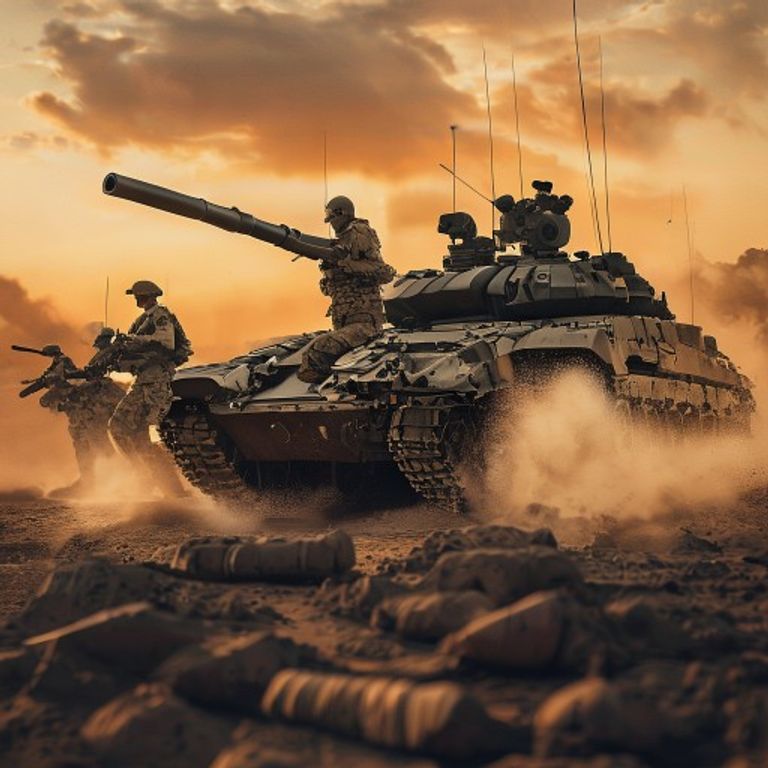
The Evolution of Modern Warfare: An Indian Context
In an era where geopolitical dynamics are shifting rapidly and threats are becoming increasingly asymmetrical and immediate, the structure of military forces must evolve to match the pace of change. NewsMatrix has been closely tracking the recent, monumental transformation within the Indian Army, which is undergoing a comprehensive structural overhaul designed to redefine its operational readiness. By shifting from traditional, rigid formations toward a more agile model centered on Integrated Battle Groups (IBGs) and a specialized Fire Support Group, the Indian Army is signaling a transition toward a leaner, faster, and more lethal force capable of decisive, rapid-response operations.
This paradigm shift is not merely an internal reorganization; it is a fundamental rethinking of how the Indian Army perceives battlefield management, logistical support, and command hierarchies in a high-intensity combat environment. As NewsMatrix analysts have observed, this move is crucial for maintaining deterrence and operational supremacy in a complex, multi-front security landscape.
Understanding the Integrated Battle Group (IBG) Model
At the heart of this reform lies the concept of the Integrated Battle Group. Traditionally, the Indian Army operated under the ‘Cold Start’ doctrine or similar divisional structures, which, while robust, often faced challenges in rapid mobilization during time-sensitive crises. The IBGs are designed to overcome these hurdles.
An IBG is essentially a brigade-sized, self-sufficient, and modular combat formation. It brings together:
- Infantry units for ground holding and tactical maneuvers.
- Armour (tanks) to provide shock action and rapid movement.
- Artillery for overwhelming fire support.
- Logistics and engineers, fully integrated into the formation for sustained combat capability.
By bringing these disparate elements under the command of a single officer, the Indian Army removes layers of bureaucracy and communication delays that plague conventional formations. The primary goal is ‘synergy at the point of action.’ Instead of waiting for cross-departmental clearances during a critical window of engagement, the IBG commander has the mandate and the assets directly at their disposal to execute mission objectives immediately.
The Role of the Fire Support Group
Complementing the IBGs is the newly established Fire Support Group. This specialized unit acts as a force multiplier. In modern warfare, the ability to concentrate fire power quickly and accurately is what decides the outcome of engagements. The Fire Support Group centralizes advanced artillery, rocket, and missile assets, ensuring that IBGs receive precise, high-volume fire support without needing to coordinate separately with corps-level artillery assets in the heat of battle.
Proven Effectiveness: Lessons from the 17 Mountain Strike Corps
The transformation is not theoretical. NewsMatrix notes that the Indian Army has rigorously tested these models under the 17 Mountain Strike Corps. This deployment has provided invaluable data, proving that the structural changes significantly reduce the time required for mobilization—a critical factor in modern military doctrine.
The exercises demonstrated that by streamlining the command structure, the Army could move troops and equipment to forward positions with unprecedented speed. Furthermore, the operational autonomy granted to field commanders has fostered a culture of decentralized decision-making, allowing units to adapt to real-time changes on the battlefield without waiting for centralized instructions from higher headquarters. This agility is precisely what is required to counter rapidly changing threats along the borders.
Why This Reform Matters for India’s Security
The strategic environment surrounding India is increasingly volatile. From the mountainous frontiers in the north to the potential for cross-border skirmishes elsewhere, the Indian Army requires a force that can respond instantaneously to provocations. The traditional, cumbersome divisional structure, while powerful, was often perceived as too slow to ‘hit hard’ before a conflict could escalate into a prolonged stalemate.
NewsMatrix emphasizes several key strategic advantages of this overhaul:
- Enhanced Agility: Modular IBGs can be rapidly reconfigured based on the terrain and the specific threat, making the Army more adaptable to diverse combat theaters.
- Decisive Speed: Shorter mobilization times mean that India can achieve operational goals before the adversary can react or international diplomatic pressure can intervene.
- Empowered Leadership: Consolidating assets under one commander reduces the friction of inter-departmental coordination, fostering better tactical leadership.
- Future-Ready Lethality: The integration of technology and logistics ensures that the Indian Army remains a technologically advanced force, prepared for the digital-first battlefield of tomorrow.
The Technological Integration
This restructuring is supported by ongoing efforts to integrate advanced technologies, including battlefield management systems, real-time intelligence, surveillance, and reconnaissance (ISR) tools. A commander of an IBG not only commands the physical combat power of tanks and soldiers but is also better equipped with digitized information feeds, allowing for superior situational awareness. This data-driven approach is essential for modern warfare, where seconds matter.
Challenges and the Path Forward
While the benefits of the Integrated Battle Group model are clear, implementation of such a massive shift is not without its challenges. The Indian Army must address potential logistical bottlenecks in sustaining smaller, dispersed units over a prolonged period. Furthermore, training protocols must be fundamentally re-engineered to prepare commanders for the complexities of managing integrated arms at the brigade level rather than the traditional divisional level.
NewsMatrix understands that the transition involves extensive retraining of personnel, upgrades to communication infrastructure, and a shift in institutional mindset. However, the military leadership’s commitment to this transformation reflects a clear understanding that the cost of inaction far outweighs the complexities of reform.
Conclusion: Building a Future-Ready Force
The creation of the five Integrated Battle Groups and the dedicated Fire Support Group marks a historic turning point for the Indian Army. It is a bold, forward-looking strategy that recognizes the necessity of speed, integration, and decentralized command in 21st-century warfare.
As India continues to solidify its status as a major regional and global power, its military apparatus must possess the capability to defend national interests decisively. With these reforms, the Indian Army is successfully transforming itself into a more agile, lethal, and combat-ready force. NewsMatrix will continue to monitor these developments, as they represent the backbone of India’s evolving military doctrine and its commitment to ensuring peace and security through a position of strength.
The path forward is one of continuous improvement, and the successful testing of the IBGs provides the necessary confidence that the Indian Army is not just preparing for the wars of yesterday, but is actively shaping its posture for the challenges of tomorrow.
‘,post_keywords: