
 By NewsMatrix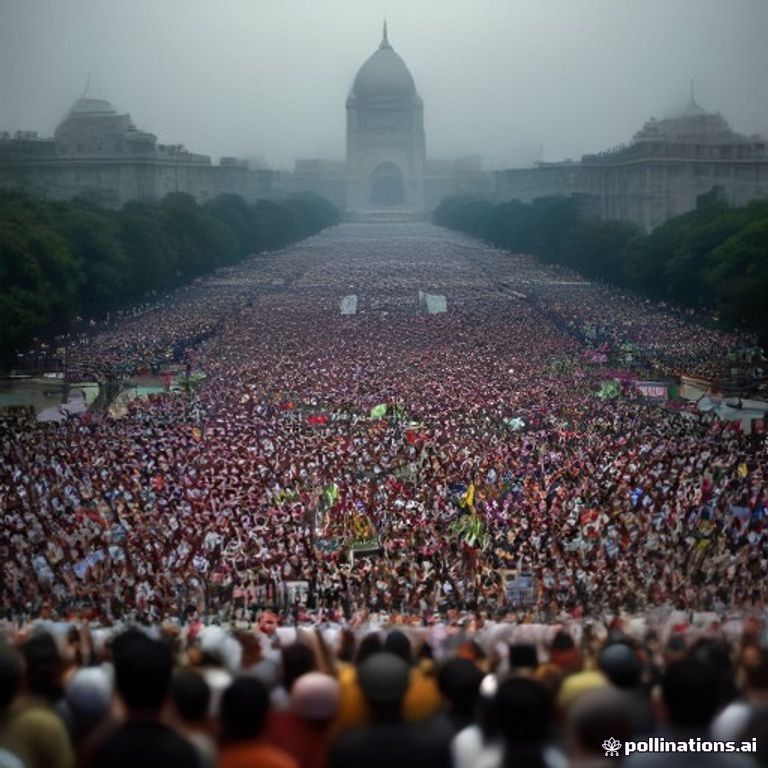
Shifting Sands of Dissent: New Delhi’s Evolving Protest Landscape and Electoral Roll Controversies
New Delhi, India – The very heart of India’s democratic expression is undergoing a significant transformation, as the capital redefines its designated spaces for public assembly and protest. In a move that signals a considerable recalibration of how dissent is voiced and managed in one of the world’s largest democracies, the iconic Jantar Mantar has been effectively removed from the roster of primary protest sites. This pivotal shift comes at a time when the nation’s political temperature is already elevated, fueled by widespread protests against the Election Commission of India (ECI) over alleged irregularities in the Special Intensive Revision (SIR) of electoral rolls. The implications for citizen mobilization and the visibility of public grievances in the capital are profound, marking a new chapter in the history of Delhi protest venues.
For decades, Jantar Mantar, nestled amidst the bustling heart of Lutyens’ Delhi, served as an unofficial yet universally recognized ground zero for protests, sit-ins, and demonstrations of all scales. Its proximity to Parliament House and various ministries made it an ideal location for activists, civil society groups, and political parties to voice their concerns directly to the government and capture national attention. From environmental campaigns to demands for social justice, from anti-corruption crusades to farmers’ agitations, Jantar Mantar bore witness to the vibrant tapestry of Indian democracy in action. Its informal nature, however, also presented challenges, including traffic congestion, security concerns, and prolonged disruptions for local residents and businesses. The decision to phase out Jantar Mantar as a designated protest zone reflects a broader effort by authorities to centralize and regulate such gatherings, aiming to balance the constitutional right to protest with the imperatives of public order and urban management.
The Rise of Ramlila Maidan and New Designated Zones
With Jantar Mantar’s diminished role, the spotlight now firmly shifts to Ramlila Maidan, an expansive public ground steeped in its own rich political history. Ramlila Maidan is not new to the theatre of Indian protests; it has hosted some of the most significant mass movements in recent memory. The most notable perhaps was the anti-corruption movement led by Anna Hazare in 2011, which captivated the nation and demonstrated the immense power of organized public dissent. More recently, it served as a crucial site for farmers’ protests, underscoring its capacity to accommodate large crowds and sustain prolonged agitations. This historical context imbues Ramlila Maidan with a unique resonance, suggesting that while the physical location changes, the spirit of robust public debate and protest in Delhi remains undiminished, merely finding a new, larger stage.
Beyond Ramlila Maidan, two other venues have been officially designated to accommodate protests: Burari Ground in north Delhi and CBD Ground in east Delhi. These locations, while offering ample space, are considerably more peripheral compared to Jantar Mantar’s central location. Burari Ground, a large open space, has previously been used for various large gatherings, including protest camps, during the extensive farmers’ protests. Its relatively remote location from the city center might present logistical challenges for protestors aiming for maximum visibility and impact. Similarly, CBD Ground in east Delhi, while providing a designated space, is also not in the immediate vicinity of major government institutions. The decentralization of protest venues across different parts of the capital could be interpreted as an attempt to manage and disperse public gatherings, potentially affecting the immediacy and intensity of their message delivery to the power corridors.
Allegations of Irregularities in Electoral Rolls: A Catalyst for Dissent
The reordering of Delhi’s protest landscape is particularly poignant given the current wave of protests targeting the Election Commission of India. The demonstrations stem from serious allegations of irregularities in the Special Intensive Revision (SIR) of electoral rolls. The SIR is a crucial periodic exercise undertaken by the ECI to update voter lists, ensuring they are accurate, complete, and free from errors. This involves adding eligible new voters, deleting names of deceased or shifted voters, and making corrections to existing entries. It is a cornerstone of free and fair elections, ensuring that every eligible citizen has the right to vote and that no ineligible person can cast a ballot.
However, activists and opposition parties have raised alarms, claiming that the recent SIR process has been marred by significant anomalies. Specific allegations include:
- Arbitrary Deletions: Numerous instances where names of legitimate voters have allegedly been deleted from the rolls without proper verification or intimation, particularly affecting certain demographic groups.
- Lack of Transparency: Concerns regarding the opacity of the revision process, with insufficient public access to data and decision-making criteria for deletions and additions.
- Procedural Lapses: Claims of non-adherence to established ECI guidelines during the revision, leading to discrepancies and a lack of accountability.
- Political Motivation: Accusations from some quarters that the alleged irregularities are politically motivated, intended to disenfranchise specific voter segments ahead of crucial elections.
These allegations strike at the very foundation of India’s democratic process, eroding public trust in the electoral system. The protestors are demanding immediate intervention from the ECI, thorough investigations into the alleged irregularities, restoration of genuinely deleted names, and greater transparency in future electoral roll revisions. The intensity of these protests underscores the deep concern among citizens about the integrity of their voting rights.
Historical Precedents and the Right to Protest
India’s history is replete with instances where public protests have been instrumental in shaping national policy and societal change. The right to peacefully assemble and protest is a fundamental aspect of the Indian Constitution, enshrined under Article 19(1)(b), which guarantees freedom of speech and expression. However, this right is not absolute and can be subject to reasonable restrictions in the interest of public order, morality, or national security. The Supreme Court of India has, on various occasions, affirmed the importance of the right to protest while also emphasizing the need for protests to be peaceful and not to cause undue public nuisance.
The shift from Jantar Mantar to more regulated and peripheral sites raises questions about the practical exercise of this fundamental right. While authorities argue for better management and minimizing disruption, critics contend that such moves could inadvertently stifle spontaneous dissent and make it harder for smaller groups to gain visibility. The debate often revolves around finding a judicious balance between maintaining public order and facilitating democratic expression. The choice of venue significantly impacts the reach and impact of a protest, influencing media coverage, public awareness, and the ability to directly address policymakers. Ramlila Maidan, with its sheer size, allows for massive gatherings, but its distance from the immediate corridors of power might alter the dynamic of direct confrontation that was characteristic of Jantar Mantar.
The Future of Dissent in India’s Capital
The combined developments – the redefinition of protest spaces and the ongoing controversies surrounding electoral rolls – paint a complex picture of the state of democratic expression in India. On one hand, the designation of larger, more organized venues like Ramlila Maidan acknowledges the need for spaces for mass movements. On the other hand, the move away from the highly visible and accessible Jantar Mantar, coupled with allegations against the very machinery of democratic representation, suggests a tightening of control over public discourse. As India heads towards future elections, the integrity of the electoral process and the ability of citizens to peacefully voice their concerns will remain paramount.
The future landscape of protest in Delhi will likely be characterized by this new spatial arrangement. Activists and organizations will need to adapt their strategies, considering the logistical implications of larger, more distant venues. The emphasis will perhaps shift towards leveraging social media and other digital platforms to amplify messages, complementing physical demonstrations. Ultimately, the success of these new Delhi protest venues in facilitating meaningful dialogue and ensuring accountability will be a litmus test for the robustness of India’s democratic institutions and its commitment to safeguarding the fundamental right to dissent in an evolving urban environment.
NewsMatrix will continue to monitor these developments closely, providing in-depth analysis of their impact on India’s political and social fabric.