
 By NewsMatrix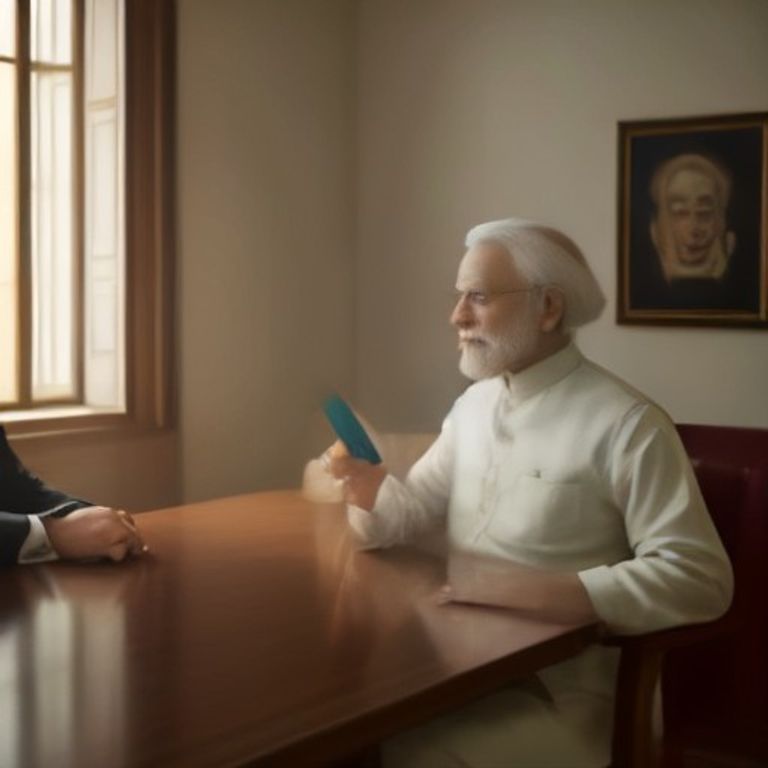
SAD Backs Women’s Reservation Bill, Urges Fair Delimitation Amidst BJP Alliance Speculation
Chandigarh/New Delhi: In a significant political development, the Shiromani Akali Dal (SAD) has publicly affirmed its staunch support for the swift enactment of the Women’s Reservation Bill. This renewed emphasis comes with a crucial caveat: the party insists on the necessity of fair delimitation to guarantee equitable representation for all states. The advocacy follows a high-profile meeting between SAD president Sukhbir Singh Badal and Prime Minister Narendra Modi, a rendezvous that has ignited a firestorm of speculation regarding a potential electoral partnership between the SAD and the Bharatiya Janata Party (BJP). This rumored alliance gains particular traction given the declining political influence both parties have experienced in Punjab’s tumultuous political landscape, suggesting a strategic move to reclaim lost ground ahead of crucial elections.
The convergence of these two issues – the push for women’s empowerment through legislative means and the intricate dance of political alliances – underscores the complex dynamics at play in contemporary Indian politics. The Women’s Reservation Bill, a long-pending legislative proposal aimed at reserving one-third of seats for women in the Lok Sabha and state assemblies, holds profound implications for gender parity in governance. SAD’s endorsement, while welcomed by proponents of the bill, highlights a deeper concern about the methodology of its implementation, specifically concerning the redrawing of constituency boundaries, or delimitation. This article delves into SAD’s conditional support, the historical context of the Women’s Reservation Bill, the political calculations behind the Badal-Modi meeting, and the potential ramifications of a renewed SAD-BJP alliance for Punjab and national politics.
The Women’s Reservation Bill: A Historical Perspective
The concept of reserving seats for women in legislative bodies is not new to India’s political discourse. The Women’s Reservation Bill, officially known as The Constitution (One Hundred and Eighth Amendment) Bill, 2008, has been a subject of intense debate and political maneuvering for nearly three decades. First introduced in 1996, the bill aims to amend the Constitution of India to reserve 33% of all seats in the Lok Sabha (the lower house of India’s Parliament) and in all state legislative assemblies for women. This reservation would also apply to seats reserved for Scheduled Castes and Scheduled Tribes within the 33% quota.
The rationale behind the bill is rooted in the belief that increased representation of women in policymaking bodies will lead to more inclusive governance, better reflection of women’s issues, and a stronger, more equitable democracy. Despite widespread support from women’s rights organizations and many political parties, the bill has repeatedly failed to pass, primarily due to lack of consensus on certain provisions, particularly concerning sub-quotas for Backward Classes within the women’s reservation and the method of rotation of reserved constituencies. Critics have often cited concerns about the potential for ‘proxy’ representation, the need for broader electoral reforms, and the impact on the existing political hierarchy.
However, recent political developments have seen a renewed push for the bill, with various parties expressing their commitment. The SAD’s latest statement contributes to this momentum, adding its voice to the chorus demanding legislative action. Yet, their emphasis on ‘fair delimitation’ adds a critical layer of complexity, indicating that while the principle of women’s reservation is accepted, the practicalities of its execution remain a point of contention and negotiation for regional parties like SAD.
SAD’s Stance: Support with a Condition
The Shiromani Akali Dal’s unequivocal support for the Women’s Reservation Bill signals a strategic alignment with a popular national sentiment. However, their insistence on ‘fair delimitation’ is a crucial condition that reflects the party’s deep-seated concerns regarding regional representation and political equity. Delimitation, in the Indian context, refers to the act or process of fixing limits or boundaries of territorial constituencies in a country or a province having a legislative body. Its primary objective is to ensure that each constituency has a roughly equal population, thereby maintaining the principle of ‘one person, one vote’ and fair representation.
For SAD, the concern about delimitation is particularly acute. The party argues that any redrawing of constituency boundaries must be done judiciously, taking into account the unique demographic and socio-political realities of states like Punjab. There is a prevalent fear among some regional parties that a hasty or unfairly conducted delimitation exercise, especially one based on outdated population figures or politically motivated criteria, could disproportionately reduce the representation of certain states or communities in the national legislature. This could potentially dilute the political voice of states that have successfully managed population control, penalizing them for their progress.
Sukhbir Singh Badal’s articulation of this condition underscores SAD’s commitment to safeguarding Punjab’s interests. The party believes that equitable state representation is paramount to India’s federal structure and that the Women’s Reservation Bill, while progressive, must not be implemented in a manner that inadvertently disenfranchises certain regions. This stance positions SAD as a proponent of women’s empowerment while simultaneously advocating for the protection of regional autonomy and political balance, appealing to a broader base of regional identity and state rights within the national framework.
The Badal-Modi Confluence: Alliance Whispers
The recent meeting between SAD president Sukhbir Singh Badal and Prime Minister Narendra Modi has become a focal point of intense political speculation, breathing new life into rumors of a potential pre-electoral alliance between the two former allies. The SAD and BJP shared a long-standing alliance, one of India’s oldest, which lasted for over two decades. This partnership, built on a blend of regional and national interests, saw both parties share power in Punjab and at the Centre at various times. However, the alliance dissolved in September 2020 over the controversial farm laws, leading to a significant shift in Punjab’s political landscape.
Since the breakup, both SAD and BJP have faced considerable challenges in Punjab. SAD, a formidable regional force, has seen its electoral fortunes dwindle, losing ground to the Aam Aadmi Party (AAP) and the Congress. The BJP, traditionally a junior partner in Punjab, has struggled to establish a dominant independent presence in the state, despite its national hegemony. The ‘grand old party’ of Punjab politics, SAD, has been grappling with internal strife and a perceived disconnect with younger voters, while the BJP has faced an uphill battle in shaking off the ‘anti-farmer’ tag following the farm law protests, particularly in an agrarian state like Punjab.
Against this backdrop, the meeting between Badal and Modi is viewed by political analysts as a strategic exploratory move by both parties. For SAD, a rapprochement with the BJP could provide access to national resources, a broader electoral machinery, and a potential re-consolidation of the traditional Hindu-Sikh vote bank that their alliance once commanded. For the BJP, aligning with SAD could offer a much-needed regional anchor in Punjab, a state where it has struggled to gain traction independently. The timing, ahead of the general elections, is crucial, suggesting a calculated effort to explore mutual benefits and a potential pathway to regaining political relevance in a key border state.
Punjab’s Shifting Sands: The Need for Revival
The political landscape of Punjab has undergone a dramatic transformation in recent years. Traditionally dominated by the SAD-BJP alliance and the Indian National Congress, the state witnessed a seismic shift with the meteoric rise of the Aam Aadmi Party (AAP), which swept to power in the 2022 assembly elections. This unexpected outcome left both SAD and the Congress reeling, forcing them to re-evaluate their strategies and political positioning.
For the Shiromani Akali Dal, the decline in influence has been particularly poignant. Once the undisputed voice of Sikh politics and a powerful regional entity, the party has faced accusations of dynastic politics, corruption, and a failure to address the contemporary aspirations of Punjab’s youth. Its traditional rural base has been eroded, and its urban support, once bolstered by the alliance with the BJP, has also faltered. Rebuilding its base and re-establishing its credibility are paramount for SAD to survive as a significant political force. A potential alliance with the BJP could provide a much-needed lifeline, offering a renewed narrative and a stronger platform to contest upcoming elections.
Similarly, the BJP recognizes the strategic importance of Punjab, not only for its electoral numbers but also for its geopolitical significance. As a border state, Punjab’s stability and governance are crucial for national security. The party’s efforts to establish itself independently have met with limited success. Re-engaging with SAD, a party with deep roots in the state’s social and political fabric, could offer the BJP a more viable path to expanding its footprint and influence in a region where it has historically played a secondary role. The synergy of a revived alliance could potentially challenge the AAP’s dominance and offer voters a strong alternative, bringing back the two-party or two-alliance system that characterized Punjab politics for decades.
Implications of a Potential Alliance
A renewed alliance between the Shiromani Akali Dal and the Bharatiya Janata Party would send significant ripples through the Indian political spectrum, particularly in Punjab. The implications are multi-faceted, touching upon electoral strategies, policy formulations, and the broader narrative of national politics. For Punjab, such an alliance would immediately alter the electoral arithmetic, potentially consolidating the anti-AAP and anti-Congress votes. The combined strength of SAD’s rural and Panthic base with BJP’s urban and Hindu vote bank could pose a formidable challenge to the incumbent AAP government and the Congress, which is also striving for a comeback.
Beyond electoral gains, an alliance could lead to a coordinated approach on key state issues. Historically, the SAD-BJP partnership focused on issues of governance, economic development, and cultural preservation in Punjab. A rekindled alliance might see them working together on policies related to agriculture, industrial growth, and resolving outstanding issues with the central government. The experience of shared governance could also bring a degree of stability to a state that has witnessed considerable political flux.
However, the path to re-alliance is fraught with challenges. Both parties would need to address the reasons for their previous separation, particularly the lingering resentment over the farm laws among a significant section of Punjab’s electorate. Rebuilding trust and articulating a clear, unified vision that resonates with the voters will be crucial. Furthermore, the division of seats and portfolios, if an alliance were to materialize, would require careful negotiation to avoid internal discord. The perception of ‘compromise’ for political gain could also be a hurdle, requiring both parties to present a compelling narrative that justifies their reunion to their respective traditional voter bases.
From a national perspective, a SAD-BJP alliance would strengthen the National Democratic Alliance (NDA) coalition, adding a historically significant regional party from a crucial state. This would be a boost for the BJP, particularly as it seeks to expand its alliances and consolidate its position across diverse regions of India. The development would also be closely watched by other regional parties, as it could set a precedent for strategic realignments in the run-up to the general elections, influencing the broader dynamics of coalition politics in India.
Conclusion
The Shiromani Akali Dal’s emphatic support for the Women’s Reservation Bill, coupled with its demand for fair delimitation, places it at a critical juncture in India’s ongoing political evolution. This principled stand on legislative reform, prioritizing both gender equity and regional representation, is intrinsically linked to the broader political maneuvers unfolding in Punjab. The recent meeting between Sukhbir Singh Badal and Prime Minister Narendra Modi is more than just a courtesy call; it represents a serious exploration of a potential reunion between two parties eager to rejuvenate their electoral fortunes in a state where their influence has waned. The whispers of a SAD-BJP alliance are not merely speculative; they reflect the strategic imperatives driving both parties to navigate a complex political landscape.
As India moves towards an era of greater female political participation, the modalities of implementing such transformative legislation become paramount. SAD’s focus on fair delimitation ensures that the push for gender equality does not inadvertently undermine the delicate balance of federal representation. Simultaneously, the potential re-forging of the SAD-BJP alliance signals a pragmatic approach to political survival and resurgence in Punjab. The coming months will undoubtedly reveal whether this convergence of legislative advocacy and strategic alliance building will indeed reshape the political future of Punjab and have a cascading effect on national politics, setting a new precedent for how regional and national parties navigate the dual challenges of electoral competition and policy implementation.