
 By NewsMatrix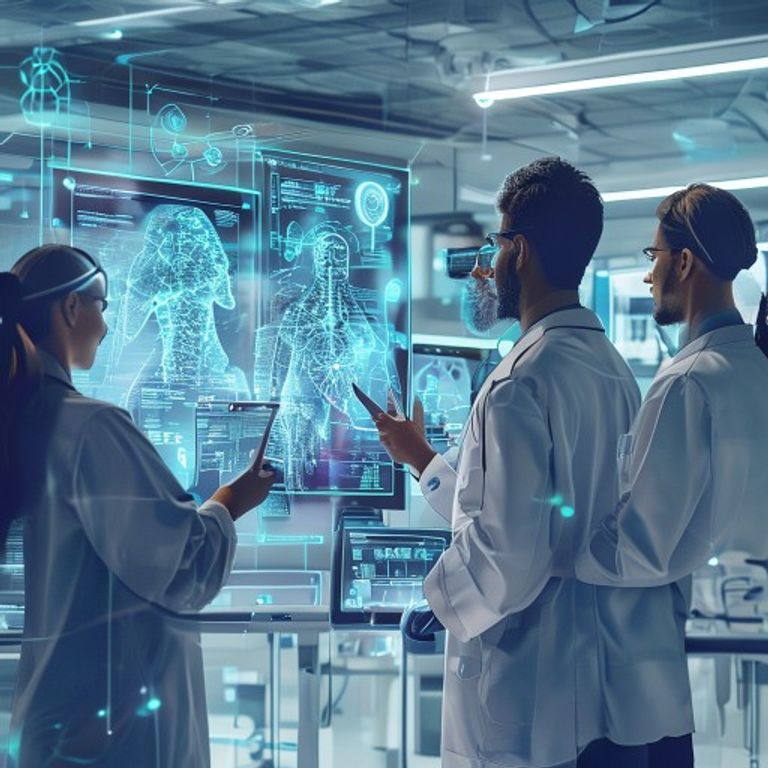
In an era defined by rapid technological advancement, the integration of Artificial Intelligence (AI) into the healthcare sector stands out as one of the most promising and potentially transformative developments. From enhancing diagnostic accuracy to accelerating drug discovery and personalizing patient care, the influence of AI in Healthcare is rapidly expanding, reshaping the landscape of modern medicine and offering unprecedented opportunities to improve global health outcomes.
The Dawn of a New Medical Era
For centuries, medical progress has relied on human ingenuity, observation, and painstaking research. While these pillars remain crucial, AI is introducing a new dimension of analytical power and efficiency. Machine learning algorithms can process vast amounts of data – from patient records and imaging scans to genetic information and research papers – at speeds and scales impossible for humans. This capability is not merely about automation; it’s about discovering patterns, insights, and correlations that can lead to more precise diagnoses, more effective treatments, and more proactive healthcare strategies.
Early Diagnostics and Predictive Analytics
One of the most immediate and impactful applications of AI in healthcare is in the realm of diagnostics. AI-powered systems are demonstrating remarkable proficiency in analyzing medical images such as X-rays, MRIs, CT scans, and pathology slides. Algorithms trained on millions of images can identify subtle anomalies that might be missed by the human eye, leading to earlier detection of diseases like cancer, diabetic retinopathy, and neurological disorders. For instance, AI models have shown capabilities in detecting early signs of breast cancer in mammograms with accuracy comparable to, and in some cases surpassing, experienced radiologists.
- Imaging Analysis: AI excels at detecting microscopic changes in medical images, crucial for early disease identification.
- Risk Prediction: Machine learning models can predict a patient’s risk of developing certain conditions based on genetic data, lifestyle factors, and medical history.
- Disease Outbreak Forecasting: AI algorithms can analyze public health data, travel patterns, and environmental factors to predict and track disease outbreaks, aiding in containment efforts.
Beyond current diagnoses, predictive analytics, fueled by AI, allows healthcare providers to anticipate health issues before they become critical. By analyzing historical patient data, demographic information, and even real-time physiological monitoring, AI can identify individuals at high risk for developing chronic diseases, suffering from adverse drug reactions, or experiencing acute medical events. This shift from reactive to proactive care has the potential to save countless lives and significantly reduce healthcare costs.
Precision Medicine and Personalized Treatment Plans
The concept of “one-size-fits-all” medicine is steadily giving way to precision medicine, an approach tailored to the individual characteristics of each patient. AI is a pivotal enabler of this shift. By integrating a patient’s genetic makeup, lifestyle, environment, and specific disease characteristics, AI algorithms can help physicians develop highly personalized treatment plans. This includes recommending the most effective drugs and dosages, identifying patients who will respond best to particular therapies, and even designing bespoke surgical interventions.
Genomic sequencing, once a costly and time-consuming endeavor, is now becoming more accessible, and AI is essential for making sense of the vast amounts of data it produces. AI tools can analyze genomic variants to understand disease susceptibility, predict drug responses, and identify novel therapeutic targets. For patients with complex conditions like cancer, AI can help oncologists select therapies that are most likely to be effective against a tumor’s unique genetic profile, minimizing side effects and improving outcomes.
Accelerating Drug Discovery and Development
The process of discovering and bringing a new drug to market is notoriously long, expensive, and fraught with failure. It can take over a decade and cost billions of dollars, with a high attrition rate at every stage. AI is revolutionizing drug discovery by streamlining several key phases:
- Target Identification: AI can analyze biological data to identify new disease targets and understand the underlying mechanisms of diseases.
- Molecule Screening: Machine learning algorithms can quickly screen vast libraries of chemical compounds, predicting their potential efficacy and toxicity, drastically reducing the time and resources spent on experimental testing.
- Lead Optimization: AI helps in refining promising compounds to improve their properties and reduce side effects.
- Clinical Trial Design: AI can optimize clinical trial design, identify suitable patient cohorts, and even predict the likelihood of trial success, making the entire process more efficient.
Several pharmaceutical companies and biotech startups are already leveraging AI to identify potential drug candidates for various diseases, from rare genetic disorders to common chronic conditions, significantly shortening the path from lab to patient.
Enhancing Operational Efficiency and Patient Management
Beyond clinical applications, AI is also transforming the operational backbone of healthcare systems. Hospitals and clinics generate immense amounts of administrative data, and AI can help manage this complexity more effectively.
- Workflow Optimization: AI can optimize appointment scheduling, resource allocation (e.g., operating rooms, equipment), and staff deployment, reducing wait times and improving patient flow.
- Administrative Tasks: AI-powered virtual assistants can handle routine patient inquiries, facilitate online bookings, and manage medical records, freeing up human staff for more critical tasks.
- Supply Chain Management: AI can predict demand for medical supplies, optimize inventory levels, and manage logistics, ensuring that necessary equipment and medications are always available.
- Revenue Cycle Management: AI tools can improve billing accuracy, reduce claim denials, and identify potential fraud, enhancing the financial health of healthcare institutions.
These operational efficiencies translate into better resource utilization, reduced costs, and ultimately, improved patient experience and access to care.
Robotics and AI in Surgery
Robotics, often powered by AI, is another area seeing rapid advancements. Surgical robots, guided by human surgeons and enhanced by AI, can perform intricate procedures with greater precision, stability, and control than human hands alone. This leads to minimally invasive surgeries, smaller incisions, reduced blood loss, faster recovery times, and decreased risk of complications.
AI algorithms can assist surgeons by providing real-time data, overlaying anatomical information during procedures, and even learning from past surgeries to suggest optimal approaches. This synergistic relationship between human expertise and AI precision is pushing the boundaries of what is surgically possible.
Addressing Global Health Challenges
The potential of AI in healthcare extends far beyond the confines of developed nations. In regions with limited access to medical professionals or specialized equipment, AI tools can act as force multipliers. For example, AI-powered diagnostic apps can assist community health workers in remote areas to screen for diseases like tuberculosis or malaria using basic imaging equipment and mobile phones. Telemedicine platforms, often augmented by AI, allow patients in underserved areas to consult with specialists remotely, bridging geographical gaps in healthcare access.
Furthermore, AI can analyze epidemiological data to identify hotspots for disease transmission, predict the spread of infectious diseases, and help allocate scarce resources more effectively during public health crises. This global reach makes AI a powerful tool in striving for health equity worldwide.
Ethical Considerations and Challenges
Despite its immense promise, the widespread adoption of AI in healthcare is not without its challenges and ethical considerations. Data privacy and security are paramount, as AI systems often rely on sensitive patient information. Robust regulatory frameworks are needed to ensure data protection and prevent misuse.
Another concern is algorithmic bias. If AI models are trained on unrepresentative or biased datasets, they can perpetuate and even amplify existing health disparities, leading to inequitable outcomes for certain demographic groups. Ensuring fairness, transparency, and accountability in AI algorithms is critical.
Furthermore, the legal and ethical implications of AI making critical medical decisions, even with human oversight, raise questions about responsibility and liability. The “black box” nature of some advanced AI models, where it’s difficult to understand how they arrive at a particular decision, also poses a challenge to trust and explainability in clinical settings. The integration process itself requires significant investment in infrastructure, training for healthcare professionals, and a clear understanding of AI’s limitations.
The Human Element: AI as an Assistant, Not a Replacement
It is crucial to understand that AI is intended to augment, not replace, human healthcare professionals. While AI can analyze data, identify patterns, and offer predictions with unparalleled speed, it lacks the empathy, emotional intelligence, and holistic understanding of a human doctor. The nuanced art of patient communication, the ability to comfort and reassure, and the ethical judgment required in complex medical scenarios remain firmly within the human domain.
Instead, AI acts as a powerful assistant, providing clinicians with better tools, more comprehensive information, and freeing them from tedious administrative tasks, allowing them to focus more on direct patient care, complex problem-solving, and the compassionate aspects of medicine. The future of healthcare lies in a collaborative ecosystem where humans and AI work in synergy, each leveraging their unique strengths to achieve the best possible outcomes for patients.
Conclusion: A Healthier Future Driven by Intelligence
The journey of integrating AI in Healthcare is still in its early stages, but its trajectory is undeniably upward. From revolutionizing diagnostics and drug discovery to personalizing treatments and streamlining operations, AI is poised to deliver a new era of medical breakthroughs and efficiencies. While significant challenges regarding ethics, regulation, and integration remain, the ongoing advancements in AI technology, coupled with the unwavering dedication of medical professionals and researchers, promise a future where healthcare is more accessible, more precise, and ultimately, more effective for everyone. As AI continues to evolve, its collaborative potential with human expertise will undoubtedly lead us towards a healthier, more intelligent future for global healthcare.