
 By NewsMatrix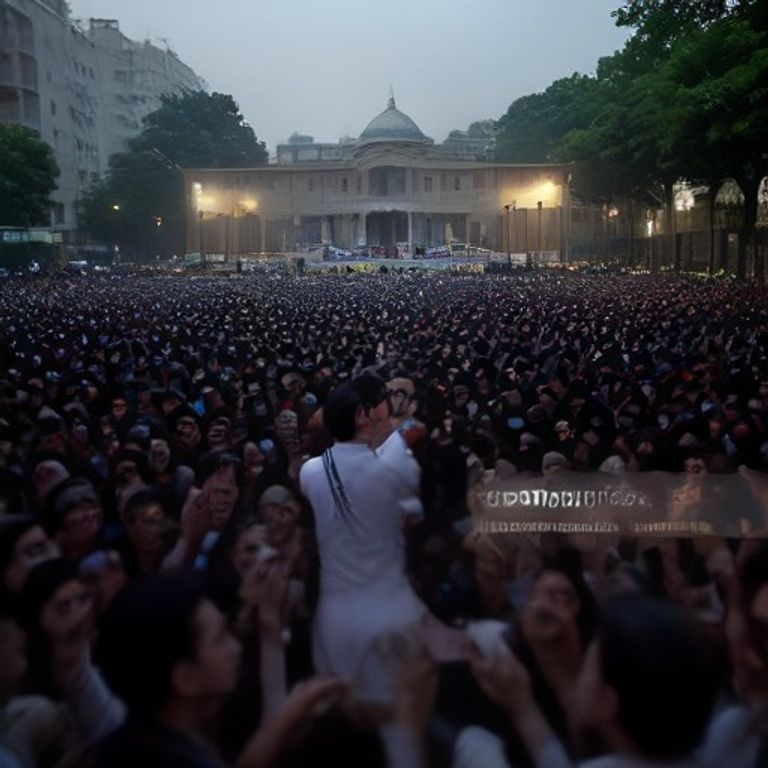
Rahul Gandhi Protest Escalates Political Tensions Over Alleged Student Pellet Gun Injury FIR
The political landscape in India was recently jolted by a high-profile Rahul Gandhi protest outside a police station, marking a significant escalation in the ongoing rhetoric between the ruling Bharatiya Janata Party (BJP) and the opposition Indian National Congress. The protest, spearheaded by Congress leader Rahul Gandhi, was initiated in demand of a First Information Report (FIR) concerning alleged pellet gun injuries sustained by a student, an incident that has quickly become a flashpoint for broader discussions on accountability, law enforcement, porosity, and political maneuvering. Gandhi’s resolute stance, maintained until an FIR was reportedly filed, drew swift condemnation from the BJP, which asserted that due process was already underway. This dramatic confrontation not only underscores the deep ideological fissures within Indian politics but also brings to the fore critical questions about the accessibility of justice and the role of opposition in holding power accountable.
Background of the Alleged Incident
The genesis of this political uproar lies in an incident involving a student who reportedly suffered injuries from a pellet gun. While specific details about the student’s identity, the precise circumstances of the injury, and the location were not immediately made public in the initial reports, the gravity of the allegations quickly propelled the matter into the national spotlight. Pellet gun injuries, particularly those sustained by civilians during protests or law enforcement actions, have historically been a contentious issue, raising concerns about the proportionality of force and the potential for severe, often permanent, harm. The unverified reports of the student’s injuries, whatever their exact nature, served as the catalyst for Mr. Gandhi and the Congress party to take a public and confrontational stand. The incident, irrespective of its full factual clarity at the time of the protest, tapped into existing public anxieties regarding civil liberties and the treatment of citizens, especially students, in politically charged environments. The narrative quickly shifted from the incident itself to the political response it elicited, highlighting how such events are often instrumentalized within India’s vibrant, albeit often acrimonious, political discourse. The demand for an FIR, a crucial first step in any criminal investigation in India, became the central focus, symbolizing the broader call for transparency and official acknowledgment of the alleged wrongdoing.
Rahul Gandhi’s Unwavering Stand
Rahul Gandhi’s decision to personally lead a protest outside a police station was a deliberate and high-stakes political gambit. Surrounded by party workers and media personnel, the Congress leader articulated his demands with unyielding clarity: an FIR must be registered detailing the alleged pellet gun injuries to the student. His presence at the police station, enduring the public gaze and the political implications, was a powerful visual statement designed to amplify the issue and exert direct pressure on the authorities. Gandhi not only sought the registration of the FIR but also launched a direct and scathing attack on the Union Home Minister, accusing the minister of being “scared of justice.” This accusation significantly broadened the scope of the protest, transforming it from a localized demand for an FIR into a broader critique of the government’s perceived reluctance to address grievances and ensure equitable justice. For Gandhi and the Congress, the protest was an embodiment of their role as the primary opposition force, challenging the government on issues of citizen safety and accountability. The former Congress president remained steadfast, refusing to withdraw his demonstration until his demands were met, a tactic that underscored the seriousness with which the party viewed the alleged incident and the subsequent official response. This prolonged standoff served to draw sustained media attention, keeping the issue firmly in the public discourse and forcing a governmental response, whether through action or counter-argument. The optics of a prominent opposition leader protesting directly at a law enforcement facility resonated deeply, particularly with segments of the population who often feel marginalized or unheard.
BJP’s Swift Rebuke and Counter-Narrative
The Bharatiya Janata Party’s reaction to Rahul Gandhi’s protest was immediate and sharply critical, reflecting the intense political rivalry between India’s two largest parties. BJP spokespersons and leaders swiftly moved to counter the Congress narrative, dismissing Gandhi’s protest as a politically motivated stunt rather than a genuine pursuit of justice. The core of the BJP’s defense rested on the assertion that an FIR related to the alleged incident had already been registered, rendering Gandhi’s protest redundant and misleading. They emphasized that proper legal procedures were being followed and that a committee had already been constituted to investigate the matter thoroughly. This counter-narrative aimed to portray the government as responsive and diligent, actively engaged in addressing the situation through established channels, thereby undermining the premise of Gandhi’s protest. BJP leaders accused Gandhi of grandstanding and attempting to politicize a sensitive issue for electoral gain, suggesting that his actions were designed to create chaos and garner media attention rather than facilitate a fair investigation. They highlighted the professionalism of the police force and the integrity of the investigative process, implicitly criticizing Gandhi for attempting to bypass or discredit these institutions through public demonstrations. The BJP’s response was a strategic maneuver to control the narrative, framing Gandhi’s actions as an unwarranted interference in legal proceedings and a disservice to the objective pursuit of truth. They underscored their commitment to law and order and fair investigation, seeking to reassure the public that justice would be served through official means, not through political theatrics.
Broader Political and Procedural Implications
The incident and the subsequent political skirmish transcend the immediate concerns of a single FIR; they encapsulate the broader challenges of governance, opposition politics, and the administration of justice in a large, diverse democracy like India. The demand for an FIR, while a fundamental right, can often become entangled in political considerations, especially when high-profile individuals or sensitive events are involved. Critics often argue that political interference, from either the ruling or opposition parties, can compromise the impartiality of investigations. This episode reignites the perennial debate on the independence of law enforcement agencies and their susceptibility to political pressure. For the Congress, the protest was an opportunity to demonstrate its commitment to citizen rights and to project an image of active opposition, fighting for the common person against a powerful establishment. For the BJP, it was a moment to defend its administrative record and to accuse the opposition of disruptive politics. The establishment of an investigation committee, as cited by the BJP, is a common practice in complex cases, intended to ensure a thorough and unbiased inquiry. However, the efficacy and impartiality of such committees are frequently scrutinised by the public and opposition parties. The public discourse following such events often highlights a tension between the need for swift justice and the imperative of due process, with political leaders often positioning themselves on one side or the other depending on their agenda. The use of protest as a tool to accelerate legal processes, or to highlight perceived inaction, remains a potent, albeit sometimes controversial, feature of Indian democracy.
The Precedent and Future Trajectories
This specific Rahul Gandhi protest also fits into a larger pattern of political activism and public demonstrations that have characterized Indian politics for decades. Leaders across the political spectrum have historically resorted to protests, rallies, and dharnas (sit-ins) to draw attention to grievances, mobilize public opinion, and exert pressure on the government. Such actions are deeply embedded in the democratic fabric of the nation, serving as a vital mechanism for expressing dissent and demanding accountability. However, the nature and context of these protests continue to evolve, with social media playing an increasingly significant role in shaping narratives and disseminating information rapidly. The incident serves as a stark reminder of the volatile nature of political discourse in India, where even seemingly localized events can quickly escalate into national debates with far-reaching implications. The outcome of the investigation into the student’s alleged injuries, and the subsequent legal proceedings, will undoubtedly be closely watched by both political parties and the public. Beyond the immediate legal resolution, the political ramifications for both Rahul Gandhi and the BJP are substantial. Gandhi’s protest could either bolster his image as a fierce advocate for justice or be dismissed as another instance of political opportunism, depending on how the public perceives the facts and the subsequent developments. For the BJP, managing the optics of such an incident, especially concerning alleged police action and student welfare, is crucial for maintaining public trust and demonstrating effective governance. This episode is likely to fuel further debates on police reforms, the handling of public protests, and the delicate balance between maintaining law and order and protecting civil liberties.
Conclusion
The Rahul Gandhi protest outside the police station, demanding an FIR for a student’s alleged pellet gun injuries, stands as a vivid illustration of the high-stakes political drama that frequently unfolds in India. What began as a specific demand for legal action quickly transformed into a broader confrontation between the Congress and the BJP, each vying to control the narrative and assert their moral and political authority. While the BJP emphasized the ongoing legal process and the formation of an investigation committee, Rahul Gandhi’s unwavering protest, underpinned by accusations against the Home Minister, brought the issue of justice and accountability squarely into the public discourse. This incident not only highlighted the intense rivalry between the two major political forces but also underscored the complex interplay between law enforcement, political activism, and public perception in India. As investigations proceed and political rhetoric continues, the episode serves as a powerful reminder of the persistent challenges in achieving transparent governance and ensuring equitable justice for all citizens, irrespective of their political affiliations or social standing. The long-term implications of this protest for both the Congress party’s strategy and the BJP’s governance will undoubtedly be a subject of continued observation and analysis within India’s dynamic political landscape.