
 By NewsMatrix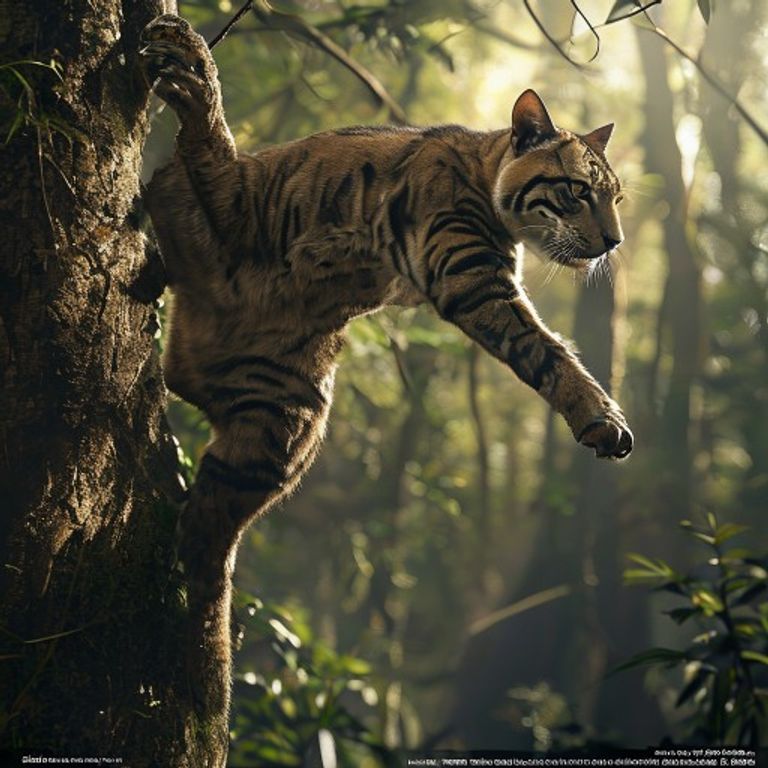
In the vast tapestry of life on Earth, few creatures captivate the human imagination quite like the cat. From the revered lions of the savannah to the purring companions in our homes, felines embody grace, power, and an enigmatic independence. Yet, tracing the lineage of these magnificent predators leads us back through millions of years, to a creature that, while perhaps less imposing than a tiger, holds an unparalleled position in the history of all cats: Proailurus. This ancient mammal, thriving approximately 30 million years ago, is universally recognized by paleontologists as the earliest true cat, the foundational ancestor from which every modern feline, wild or domestic, eventually sprang.
Discovered primarily in the fossil-rich deposits of Europe, Proailurus offers a pivotal insight into the very genesis of the feline family. Weighing between seven to ten kilograms, roughly equivalent to a large domestic cat or a small wild cat like a serval, Proailurus was a creature perfectly adapted to its arboreal existence. Its agility in the trees was legendary, a crucial survival trait in the dense forests of the Oligocene epoch. This article delves into the fascinating world of Proailurus, exploring its physical characteristics, its primeval habitat, and the profound evolutionary journey it initiated, whose echoes resonate vibrantly in the sleek form and sharp instincts of every feline today.
The Dawn of the Feline Dynasty: Proailurus’s World
A Glimpse into the Oligocene Epoch
To truly appreciate Proailurus, one must first transport back in time 30 million years to the Oligocene epoch. This was a period of significant environmental change, characterized by cooling global temperatures and the expansion of grasslands, though Proailurus itself inhabited the still-prevalent dense forests of Europe. The continent was a mosaic of woodlands and evolving ecosystems, a stark contrast to the modern landscape. The climate was generally warmer and wetter than today, fostering lush vegetation and a rich biodiversity that included early primates, rodents, and other burgeoning mammalian groups. It was within this dynamic environment that Proailurus established itself as a formidable, albeit modest-sized, predator.
Competition for resources and territory was fierce. Proailurus shared its world with a diverse array of other carnivores, including early canids (dog-like ancestors), nimravids (saber-toothed “false cats” that evolved convergently with true cats but belonged to a separate lineage), and various mustelids. Its survival depended heavily on its specialized adaptations, particularly its mastery of the arboreal domain. Unlike many ground-dwelling predators, Proailurus found refuge and hunting grounds high above, giving it a unique ecological niche that allowed its lineage to persist and eventually flourish.
Anatomy of the Ancestor
The fossil record, though fragmented, paints a vivid picture of Proailurus. Its skeletal structure reveals a robust yet agile build, indicative of a life spent navigating complex arboreal environments. The most striking features include its short, sturdy limbs and a relatively long tail, which would have served as a vital counterbalance, much like in modern tree-dwelling felines such as the clouded leopard or margay. This elongated tail provided stability as it moved through branches, leaped between trees, and pursued prey in three dimensions.
Its claws, while not fully retractable like those of most modern cats, showed an early stage of retraction, a crucial evolutionary step. This semi-retractable feature would have allowed for better grip on bark while climbing and sharper claws for seizing prey, yet also offered some protection from wear when walking on the ground. Its skull, although smaller and less specialized than those of later cats, exhibited key feline characteristics, particularly in its dentition. Proailurus possessed early forms of the carnassial teeth – specialized molars and premolars that shear past each other like scissors – a hallmark of carnivorous mammals, essential for slicing meat. This dental configuration confirmed its predatory lifestyle and its clear divergence from more generalized omnivores.
Furthermore, the structure of its inner ear indicated a highly developed sense of balance, another critical adaptation for an agile tree climber. Its strong jaw muscles and relatively large eye sockets suggested excellent vision and the power to deliver a decisive bite. In essence, Proailurus was a perfectly engineered predator of its time, a testament to natural selection honing its features for survival in a arboreal niche.
Lifestyle and Survival
The life of Proailurus was undoubtedly one of constant vigilance and opportunistic hunting. As an arboreal ambush predator, it would have spent much of its time patiently waiting among the foliage, relying on its keen senses of sight and hearing to detect unsuspecting prey. Its diet likely consisted of the smaller mammals, birds, and reptiles that also inhabited the Oligocene forests. Rodents, early primates, and various ground-dwelling creatures that ventured too close to the trees would have been fair game for the swift and silent hunter.
Its climbing prowess was not merely for escape or vantage points; it was an integral part of its hunting strategy. From an elevated position, Proailurus could launch surprise attacks, dropping onto prey from above or pursuing them through the canopy. This three-dimensional hunting capability would have given it a significant advantage in its ecosystem. While direct evidence of its social structure is scarce, inferences from modern solitary felines suggest Proailurus was likely a solitary animal, coming together only to mate and raise its young. Like many contemporary cats, it would have been territorial, marking its domain to ward off rivals and ensure a sufficient hunting ground.
The Evolutionary Leap: Proailurus’s Progeny
Branching Out: From One Ancestor to Diverse Species
The true significance of Proailurus lies not just in its existence, but in its unparalleled role as the ancestral foundation for the entire Felidae family. From this single, relatively modest tree-dweller, an extraordinary evolutionary radiation occurred, leading to the breathtaking diversity of cats we know today. Proailurus represents the basal lineage, the very root of the feline family tree. Its descendants, notably the genus Pseudaelurus which emerged during the Miocene epoch, further diversified and spread across continents, refining the feline body plan and adapting to new environments.
Over millions of years, the descendants of Proailurus underwent a crucial evolutionary split, giving rise to the two major subfamilies of true cats: the Felinae, which includes small to medium-sized cats like domestic cats, pumas, lynxes, and cheetahs; and the Pantherinae, encompassing the “big cats” capable of roaring, such as lions, tigers, jaguars, and leopards. This divergence marked a pivotal moment, as different lineages began to specialize for various ecological niches, leading to the incredible variety in size, hunting strategies, and habitats observed in modern felines.
Adaptations for Every Niche
The evolutionary journey from Proailurus to modern felines is a masterclass in natural selection. Each branch of the family tree developed unique adaptations tailored to its specific environment and prey:
- Big Cats (Pantherinae): These magnificent predators evolved massive, powerful builds capable of tackling large herbivores. The roar of a lion, the solitary power of a tiger in dense forests, the arboreal strength of a leopard, and the aquatic prowess of a jaguar all showcase distinct evolutionary paths from a common ancestor. Their robust bone structures, strong jaws, and specialized musculature allow them to dominate their respective ecosystems.
- Small Cats (Felinae): This subfamily exhibits an even greater range of diversity, adapting to virtually every terrestrial habitat on Earth. The cheetah developed unparalleled speed for open plains hunting, its non-retractable claws providing traction like running spikes. The lynx, with its broad paws and dense fur, became a master of snowy landscapes. The serval, with its exceptionally long legs and large ears, is an expert hunter of small prey in African grasslands. Even the domestic cat, Felis catus, retains the hunting instincts and agile body plan that harks back to its ancient predecessors, showcasing a successful adaptation to a symbiotic relationship with humans. The fishing cat, with partially webbed feet, demonstrates a unique adaptation to semi-aquatic life.
Each of these adaptations—from the specific bone structures to sensory enhancements and hunting behaviors—can be traced back to the fundamental blueprint laid down by Proailurus. The genetic instructions for these traits, continuously refined by natural selection, were initially present in rudimentary forms within the earliest true cat.
The Genetic Footprint: Echoes in Modern Cats
Despite the vast differences in size, habitat, and specialized behaviors, all felines share an unmistakable “catness,” a set of core characteristics that are direct echoes of Proailurus. This includes their inherent predatory prowess, their acute senses (especially sight and hearing), their meticulous grooming habits, and their characteristic stealth and agility. The way a domestic cat stalks a toy, the intense focus in its eyes, the way it uses its tail for balance—these are not random behaviors but refined versions of strategies honed over millions of years, inherited from ancestors like Proailurus.
Even social structures, though varied (solitary tigers versus pride-dwelling lions), likely have their roots in basic territorial and reproductive behaviors present in the earliest felines. The very DNA of every cat today carries a fragment of Proailurus’s legacy, a testament to the success of its original design and its pivotal role in launching an entire lineage of some of the most successful predators on the planet.
Paleontological Discoveries and Scientific Understanding
Unearthing the Past
The story of Proailurus is pieced together through meticulous paleontological work. Key fossil discoveries, particularly from locations like Quercy in France, have provided critical fragments of bone and teeth. These precious remains, often incomplete, are carefully analyzed by paleontologists. The initial classification of early carnivores was complex, as many different lineages evolved similar features due to convergent evolution. Distinguishing true cats from nimravids or other extinct carnivore families required detailed comparative anatomy, focusing on specific dental and skeletal markers that define the Felidae family.
Early researchers like Henri Filhol made significant contributions in the 19th century, with subsequent generations refining our understanding. The use of advanced imaging techniques, detailed morphological comparisons, and more recently, molecular clock studies (which estimate divergence times based on genetic mutations) have further solidified Proailurus’s position at the base of the feline family tree. These scientific endeavors transform isolated bones into a comprehensive narrative of evolutionary history.
Refining the Feline Family Tree
Our understanding of feline evolution is not static; it is a continuously evolving field. New fossil discoveries in different parts of the world, combined with advancements in genetic analysis, constantly refine the intricate branching patterns of the feline family tree. For instance, the exact timing and geographic origins of certain splits within Felinae and Pantherinae are subjects of ongoing research. Debates continue regarding the relationships between various extinct genera and their modern counterparts.
Nevertheless, the foundational role of Proailurus remains undisputed. It serves as a critical reference point for understanding the earliest defining characteristics of cats before they embarked on their incredible journey of global diversification. Each new find, each new study, adds another layer of detail to the compelling narrative of how a modest tree-dwelling predator 30 million years ago gave rise to the awe-inspiring felines that roam our planet today.
Conclusion
From the depths of the Oligocene epoch emerges the compelling figure of Proailurus, a creature whose significance far outweighs its modest size. Recognized as the earliest true cat, this agile tree climber from approximately 30 million years ago stands as the direct ancestor of every domestic cat purring contentedly on a lap and every magnificent wild cat commanding its territory. Its robust build, semi-retractable claws, and specialized dentition were the foundational innovations that set the Felidae family on its path to global dominance as apex predators.
The evolutionary journey from Proailurus to the more than 40 distinct species of felines alive today is a testament to the power of natural selection and adaptive radiation. Whether it’s the blistering speed of a cheetah, the stealthy power of a tiger, or the intricate social structure of a lion pride, the genetic and behavioral blueprint can be traced back to this primeval ancestor. Proailurus embodies the very essence of feline ancestry, a silent patriarch whose ancient spirit reverberates through the millennia. Its legacy is not just a chapter in paleontological textbooks but a living reality, an indelible mark on the characteristics and behaviors that define the captivating world of cats, reminding us of the profound connections that bind all life across the vast stretches of geological time.