
 By NewsMatrix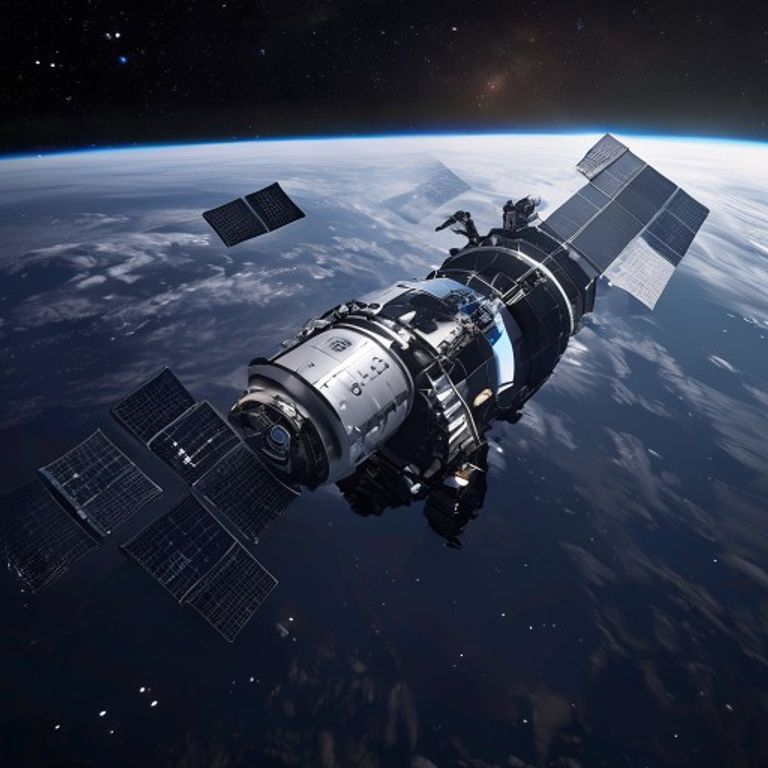
The final frontier is no longer just for government agencies or speculative science fiction; it is rapidly becoming the next critical theater for the global technology industry. At the forefront of this extraterrestrial expansion is Nvidia, a titan of artificial intelligence and high-performance computing, which has officially set its sights on orbital infrastructure. With the announcement of Space-1, its inaugural orbital data center project, Nvidia is signaling a profound shift in how we conceive of edge computing: moving from the edge of the network to the edge of the atmosphere.
The Evolution of Orbital Infrastructure
For decades, satellites were primarily used for communication, Earth observation, and scientific telemetry. They were essentially relay stations or passive sensors. However, the rise of the commercial space industry, spurred by pioneers like SpaceX, has driven down the cost of launching payloads into orbit, fundamentally changing the economics of space-based assets. NewsMatrix has been closely monitoring this transition, noting how satellite constellations are moving beyond simple connectivity to become fully realized cloud computing nodes.
Nvidia’s entry into this domain with Space-1 is not merely a hardware play; it is an aggressive push to establish the software infrastructure that will define the space economy. By bringing high-performance computing (HPC) and AI processing directly into orbit, Nvidia aims to solve one of the most persistent bottlenecks in space exploration: latency. Currently, data collected by satellites must be transmitted back to Earth for heavy processing, a process hampered by bandwidth constraints and transmission delays. With Space-1, Nvidia intends to process that data in situ, turning raw satellite telemetry into actionable insights in real time.
Engineering for the Void
Developing hardware for space is an entirely different beast than designing a data center in a controlled terrestrial environment. The vacuum of space, extreme temperature fluctuations, radiation bombardment, and the high-vibration environment of a launch represent a trifecta of engineering challenges that would destroy standard commercial-grade hardware. NewsMatrix understands that this is why Nvidia is currently recruiting a System Software Principal Architect to lead the charge on this platform.
The ideal candidate for this role will not just be an expert in software architecture; they will need to be a pioneer in fault-tolerant, resilient computing. Space-1 requires software that can maintain integrity while operating in an environment where maintenance is impossible and hardware failures are catastrophic. The scope of this work includes:
- Developing custom kernels and drivers capable of operating within high-radiation environments.
- Creating advanced error-correction and self-healing algorithms that can recover from single-event upsets caused by solar radiation.
- Optimizing AI workloads to run efficiently on low-power, space-hardened silicon.
- Designing remote update protocols that can survive the intermittent and unpredictable connectivity of low Earth orbit (LEO).
The Synergy of AI and Space
Why now? The convergence of AI capabilities and the proliferation of LEO satellites have reached an inflection point. Applications ranging from climate change monitoring and agricultural analytics to autonomous asset management and secure communication require the kind of speed that only local processing can provide. NewsMatrix reports that as more companies like Google and SpaceX expand their own satellite networks, the demand for sophisticated, intelligent edge hardware is skyrocketing. Nvidia aims to become the foundational layer for this ecosystem, essentially building the “Nvidia Inside” of the orbital age.
By integrating their world-class AI stacks directly into the orbital platform, Nvidia is enabling satellites to make autonomous decisions. Instead of waiting for instructions from a ground station, a Space-1 enabled system could detect a forest fire, identify the threat, and redirect imaging sensors or alert emergency services within seconds. This level of autonomy is the holy grail of modern space operations.
A Competitive Landscape
Nvidia is not acting in a vacuum. The space industry is witnessing an influx of investment from every major cloud and tech player. NewsMatrix has documented how SpaceX’s Starlink is already revolutionizing global connectivity, while Google continues to explore space-based infrastructure for its own enterprise cloud services. However, Nvidia’s strategy is unique. While competitors are often focused on the platform or the service connectivity, Nvidia is focusing on the ‘brain’ of the satellite.
By providing the computing architecture, Nvidia avoids the ‘hardware-versus-software’ trap. They are positioning themselves as the infrastructure provider for everyone else. Whether it is a government-funded mission or a commercial venture, the ability to leverage a standardized, high-performance computing environment in space will be an irresistible value proposition for the aerospace industry.
The Future of NewsMatrix and Tech Reporting
As we watch the development of Space-1, it becomes clear that we are witnessing the birth of a new computing era. At NewsMatrix, we remain committed to tracking these monumental shifts. The transition from ground-based data centers to orbital ‘compute clusters’ will eventually change how we interact with global data, how we protect the environment, and how we explore the solar system.
The hiring of a System Software Principal Architect for this project is just the tip of the spear. As Space-1 matures, we can expect to see an entire ecosystem of software developers, systems engineers, and AI researchers moving into the aerospace sector, effectively merging the cultures of Silicon Valley and the space industry. The road ahead will be paved with technical hurdles, but if history is any indication, Nvidia is more than equipped to handle the gravity of the situation.
For those watching the tech industry, the lesson is clear: keep your eyes on the stars. The next massive revolution in AI isn’t just happening in a basement server rack; it is happening a few hundred miles above our heads, in the cold, unforgiving silence of space.