
 By NewsMatrix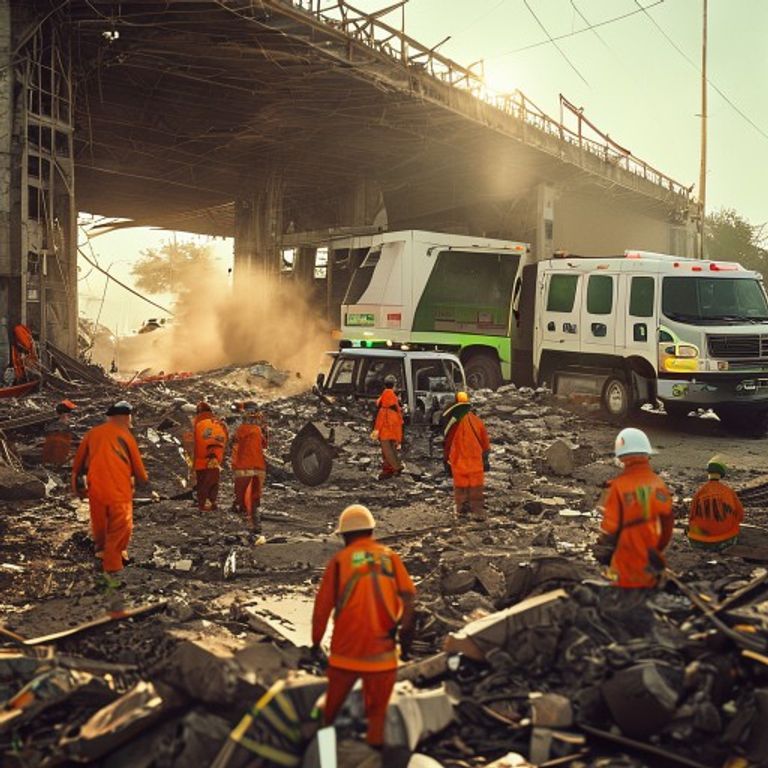
Catastrophe in Taratala: Warehouse Collapse Sparks Massive Emergency Response
The industrial landscape of Taratala in west Kolkata was gripped by panic and chaos on Wednesday afternoon following the sudden collapse of a roof at an under-construction warehouse. The incident, which occurred during peak working hours, has left several laborers trapped beneath a mountain of concrete and twisted metal. As the sun began to set over the city, the air was filled with the sounds of sirens and the frantic shouts of rescue workers, signaling the start of what is likely to be a long and grueling night for the emergency services. Here at NewsMatrix, we are tracking every development as the situation unfolds on the ground.
The warehouse, located in one of the city’s busiest industrial belts, was in its final stages of structural completion when the disaster struck. Witnesses reported a deafening roar that echoed through the surrounding streets, followed by a thick cloud of dust that obscured the site for several minutes. Early reports suggest that dozens of workers were on-site at the time, many of whom were working directly under the section that gave way. The scale of the collapse has shocked local residents and industrial workers, who have long considered the Taratala area a hub of rapid but relatively stable development.
Immediate Rescue Efforts and Successes
In the immediate aftermath of the collapse, local workers and bystanders were the first to rush toward the debris, risking their lives to pull those who were partially visible from the rubble. Their quick thinking and bravery paved the way for professional units to take over the operation. Within minutes, the Kolkata Police and the West Bengal Fire and Emergency Services arrived at the scene, cordoning off the area to manage the surging crowds and allow heavy machinery to enter.
The first hour of the operation saw significant breakthroughs. Four individuals, all of whom are believed to be construction workers, were successfully pulled from the debris. These survivors were immediately rushed to the nearest medical facility, where they are currently receiving treatment for various degrees of injuries. Medical sources indicate that while some have suffered fractures and blunt force trauma, they are currently stable. However, the joy of these successful rescues is tempered by the knowledge that many more remain unaccounted for, buried deep within the structural failure.
Multi-Agency Coordination: Police, Army, and Disaster Management
Recognizing the severity of the structural collapse and the technical challenges involved in clearing such heavy debris, the state government has mobilized a massive multi-agency task force. This is not a standard rescue operation; the precarious nature of the remaining structure requires specialized knowledge and equipment. NewsMatrix has observed the seamless coordination between the following entities:
- The Kolkata Police: Managing the perimeter, traffic flow in the Taratala area, and assisting in manual debris removal.
- Disaster Management Group (DMG): Utilizing thermal imaging cameras and acoustic sensors to detect signs of life beneath the concrete slabs.
- The Indian Army: Called in for their expertise in engineering and heavy-duty logistics, the Army is providing the technical muscle needed to move massive steel girders without causing further collapses.
- National Disaster Response Force (NDRF): Deploying specialized canine units to sniff out survivors and using hydraulic cutters to penetrate reinforced concrete.
The presence of the Army underscores the gravity of the situation. Their experience in handling structural failures in urban environments is being put to the test as they work alongside state agencies to stabilize the site. The primary goal is to create “safe zones” within the rubble where rescuers can crawl through to reach trapped victims without the risk of the remaining roof sections falling on them.
Government Action and the Establishment of Control Rooms
The West Bengal state government has responded with urgency to the Taratala tragedy. Senior officials, including ministers from the state cabinet, have arrived at the site to oversee the operations. To ensure that information flows accurately and that resources are directed where they are most needed, the government has established dedicated control rooms. These centers are tasked with coordinating between hospitals, the rescue site, and the families of the victims.
The state government has issued a statement assuring the public that no effort will be spared in the rescue mission. “Our primary focus is the preservation of life,” a government spokesperson said. “The control rooms will remain operational 24/7 until the last person is accounted for. We are also in constant contact with the developers and contractors to obtain the site blueprints, which are crucial for the rescue teams to understand the layout of the collapsed area.”
The Challenge of Urban Search and Rescue
Rescuing people from an under-construction site is significantly more complex than standard building collapses. Because the structure was incomplete, the typical “voids” that rescuers look for are often absent or unstable. The wet concrete, combined with unsecured steel reinforcements, creates a “pancake effect” where layers of material settle directly on top of each other, leaving very little room for survival.
The rescue teams are currently using heavy-duty cranes and JCB excavators, but the process is painstakingly slow. Every piece of debris moved must be carefully balanced to prevent a secondary collapse. NewsMatrix reporters on the ground have noted that rescuers are often forced to switch to manual tools—hammers, chisels, and hand-saws—when they suspect they are close to a victim, to avoid causing further injury with heavy machinery.
Safety Concerns and the Path to Investigation
While the focus remains squarely on the rescue, questions are already beginning to surface regarding the safety standards maintained at the Taratala site. Industrial construction in Kolkata is governed by strict building codes, yet incidents like this suggest gaps in either the quality of materials used or the structural design itself. Local labor unions have raised concerns about the pressure on contractors to meet tight deadlines, which can sometimes lead to the bypassing of critical safety protocols.
An official inquiry is expected to be launched once the rescue operation concludes. Investigators will likely look into several factors, including:
- The quality of the cement and steel used in the roof’s construction.
- Whether the structural load-bearing capacity was accurately calculated.
- The weather conditions at the time of the collapse and whether they played a role in compromising the site’s integrity.
- The presence of a qualified structural engineer on-site during the pouring of the concrete.
For the families of the workers, these investigations are a secondary concern. Their immediate focus is on the updates provided by the control rooms. Many have gathered at the site, their faces etched with anxiety, waiting for any news of their loved ones. Local NGOs and community groups have stepped in to provide water and food for both the waiting families and the exhausted rescue workers.
Looking Ahead: Recovery and Accountability
As the night progresses, floodlights have been erected to allow the rescue operation to continue without pause. The Taratala area, usually bustling with the sounds of manufacturing, is now dominated by the mechanical hum of generators and the rhythmic thud of jackhammers. The coming hours are critical. In disaster management, the “Golden Hour” has long passed, but the “Window of Survival” remains open for those who may have found air pockets within the debris.
NewsMatrix will continue to provide live updates as more information becomes available. The resilience of the rescue teams—working through heat, dust, and physical exhaustion—is a testament to the city’s spirit. However, this incident serves as a grim reminder of the risks faced by the thousands of workers who build the infrastructure of our growing metropolis. As the debris is cleared, the search for answers will become just as intensive as the search for survivors.
In the wake of this disaster, there is a growing call for a city-wide audit of all under-construction industrial warehouses. Ensuring that such a tragedy does not repeat itself is the only way to truly honor those who have been affected by today’s events. For now, the city waits with bated breath, hoping for more miracles in the heart of Taratala.