
 By NewsMatrix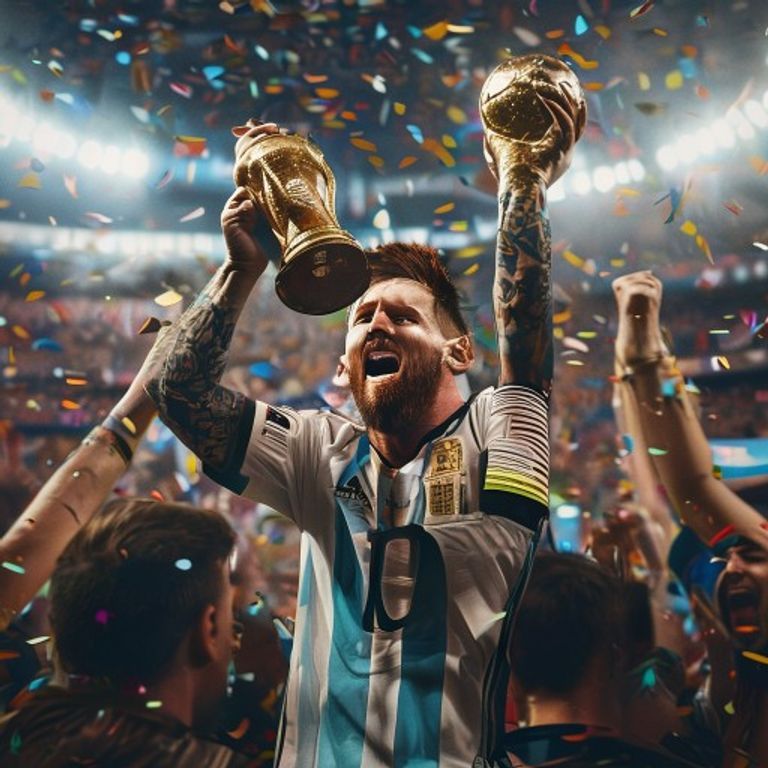
Lionel Messi’s National Triumph: From Frustration to Immortal Glory
Lionel Messi, a name synonymous with footballing genius, has finally etched his indelible mark on the international stage, culminating in a series of breathtaking triumphs with the Argentine national team. For years, the narrative of Messi’s international career was tinged with a peculiar paradox: unparalleled club success juxtaposed with a heartbreaking inability to lift a major trophy for his beloved Argentina. This era of near misses and personal anguish created a shadow, even for a player widely considered the greatest of all time. However, the last few years have witnessed a dramatic redefinition, as Messi led his nation to ultimate glory, securing major titles that had long eluded him. His arduous journey, fraught with personal frustration and immense public pressure, mirrors the iconic status achieved by Diego Maradona in Argentine football history, but through a distinctly modern lens. Under the astute guidance of manager Lionel Scaloni, a cohesive and formidable team was forged, one that played not just around Messi, but unequivocally for Messi. This collective effort, combined with Messi’s unwavering determination, has irrevocably reshaped and amplified Messi’s National Triumph, cementing his legacy for a new generation of fans globally.
The Weight of Expectation: A Decade of Near Misses
For over a decade, the weight of a nation’s expectations rested squarely on Messi’s shoulders. Despite his breathtaking individual brilliance, which saw him shatter records and win multiple Ballon d’Or awards with Barcelona, the coveted international silverware remained elusive. Argentina reached four major finals with Messi at the helm, and each ended in agonizing defeat. The first was the 2007 Copa América final against arch-rivals Brazil. Then came the heart-wrenching 2014 FIFA World Cup final loss to Germany, decided by an extra-time goal. This was followed by back-to-back Copa América final defeats to Chile in 2015 and 2016, both decided by penalty shootouts. These setbacks were not just sporting losses; they were national tragedies, amplified by the perceived failure of their greatest son to deliver the ultimate prize.
The emotional toll on Messi was palpable. After the 2016 Copa América final defeat, he announced his temporary retirement from international football, a decision that sent shockwaves across the football world. “For me, the national team is over,” he declared, overwhelmed by the frustration of constantly falling short. The criticism from sections of the Argentine media and public was often harsh, drawing unfavorable comparisons to Diego Maradona, who had famously almost single-handedly delivered the World Cup in 1986. This period represented the nadir of Messi’s international career, a time when even his unparalleled talent seemed insufficient to break Argentina’s major trophy drought.
The Scaloni Revolution: Building a Team for the King
The turning point for Argentina and Messi came with the appointment of Lionel Scaloni as head coach. Initially viewed as an interim solution with limited senior coaching experience, Scaloni embarked on a quiet but profound transformation of the national team. He meticulously blended experienced veterans with exciting young talents, fostering a collective spirit and a tactical approach that maximized Messi’s influence without making the team overly reliant on him to carry every burden. Scaloni’s genius lay in creating a robust defensive structure and a dynamic midfield that allowed Messi the freedom to operate in dangerous areas, knowing his teammates would cover and support him.
This evolving team dynamic culminated in the 2021 Copa América, hosted in Brazil. This tournament, played under challenging circumstances due to the global pandemic, became Messi’s moment of redemption. He was the tournament’s top scorer and best player, demonstrating not just his enduring skill but also a newfound ferocity and leadership. The final, against hosts Brazil at the iconic Maracanã Stadium, was a tense affair. Angel Di María’s sublime chip sealed a 1-0 victory, ending Argentina’s 28-year wait for a major international title. The images of Messi celebrating with his teammates, tears of joy streaming down his face, were etched into the memories of fans worldwide. It was an emotional release for Messi and a pivotal moment for the team, instilling a belief that had long been absent.
The Ultimate Glory: FIFA World Cup 2022
The Copa América victory served as a crucial stepping stone, building momentum and confidence for the grandest stage of all: the FIFA World Cup 2022 in Qatar. The narrative surrounding Messi was clear – this was likely his last chance to win the coveted trophy, the only significant prize missing from his extraordinary career. The tournament began with a shocking defeat to Saudi Arabia, a result that could have derailed lesser teams. However, under Scaloni’s leadership and Messi’s calm resolve, Argentina responded with remarkable resilience. Messi led by example, delivering crucial goals and assists, particularly in tense knockout matches.
The team around him, carefully constructed by Scaloni, truly played for their captain. Goalkeeper Emiliano Martínez emerged as a penalty shootout hero. Midfielders like Enzo Fernández and Rodrigo De Paul provided tireless energy and defensive solidity, while forwards like Julián Álvarez and Angel Di María offered pace and clinical finishing. Each player understood their role in the collective ambition to see Messi lift the World Cup. Messi himself delivered one of the most iconic individual World Cup performances, scoring seven goals and providing three assists, displaying a blend of artistry, leadership, and unwavering determination.
The final against France was an instant classic, a pulsating encounter that swung back and forth, culminating in a dramatic 3-3 draw after extra time. Messi scored two goals, demonstrating his big-game temperament. The match was ultimately decided by a penalty shootout, where Argentina’s composure, spurred by Martínez’s heroics, proved decisive. The sight of Messi, finally, at the age of 35, lifting the FIFA World Cup trophy, adorned in a bisht, was a moment of pure euphoria for millions. It transcended football, becoming a story of perseverance, destiny, and the ultimate triumph of an athlete over years of personal and collective frustration. This was indeed the zenith of Messi’s National Triumph.
Echoes of Maradona: Forging a Unique Legacy
For decades, any discussion of Argentine football greatness inevitably invoked the name of Diego Maradona. His almost mythical status, cemented by the 1986 World Cup triumph, cast a long shadow over every subsequent Argentine footballer, including Messi. Maradona was seen as the charismatic leader who carried his nation to glory, often through sheer force of will and individual brilliance. While Messi’s journey shares the theme of overcoming adversity to achieve national glory, his path has been distinctly different.
Maradona’s World Cup win was largely a solo masterpiece, while Messi’s triumphs, particularly the World Cup 2022, were the result of a meticulously built team effort, albeit with Messi as the undisputed maestro. Messi’s longevity, his sustained excellence over two decades, and now his collection of both club and international football’s most prestigious trophies, arguably place him in a unique echelon. He is no longer merely “the next Maradona” or a player forever compared to the legend; he is Lionel Messi, a singular entity whose achievements have forged his own unparalleled legacy, respected globally for his humility and persistence as much as his genius.
Redefining a Generation’s Perception and Legacy
The significance of Messi’s recent national team triumphs extends far beyond the trophies themselves. For a generation of fans, particularly those outside of Argentina, Messi was primarily known as the Barcelona phenomenon, the wizard of club football. His international struggles, while well-documented, often meant that his claim to being the undisputed greatest of all time was incomplete in the eyes of some critics. With the Copa América and especially the World Cup in his grasp, that narrative has definitively shifted.
His journey serves as an inspiration, showcasing that even the most talented individuals face immense challenges and setbacks, but perseverance can lead to the ultimate reward. For young fans, seeing Messi finally achieve his lifelong dream validates the belief that hard work and dedication can overcome any obstacle. His emotional celebrations, his leadership on the field, and the sheer joy he brought to millions have deepened his connection with the global football community. The image of Messi lifting the World Cup has redefined his legacy, ensuring he is remembered not just as a prodigious talent, but as a complete champion who conquered all, ultimately achieving his most cherished dream for his nation.
Conclusion
Lionel Messi’s journey to international glory is a testament to perseverance, talent, and the power of collective spirit. His Messi’s National Triumph transcends mere sporting achievement; it is a narrative of redemption, of fulfilling a destiny that once seemed tantalizingly out of reach. From the depths of despair after multiple final losses to the ecstatic heights of lifting the Copa América and the FIFA World Cup, Messi’s story is an unparalleled saga in modern sports. Under Lionel Scaloni’s astute management, Argentina transformed into a formidable unit, united by a singular purpose: to see their captain crowned. This shared ambition not only brought glory to a football-mad nation but also profoundly redefined Messi’s legacy, placing him firmly in the pantheon of football gods, not merely alongside, but perhaps even beyond, the legendary Diego Maradona in the hearts of a new generation. His struggle and ultimate victory have cemented his place not just as a player of extraordinary skill, but as an icon of unwavering spirit, proving that even the greatest can face and conquer their greatest challenges. The roar of the crowds, the tears of joy, and the indelible images of Messi holding aloft the most coveted trophies will forever symbolize the culmination of a dream that spanned decades, finally realized by the man who truly earned it.