
 By NewsMatrix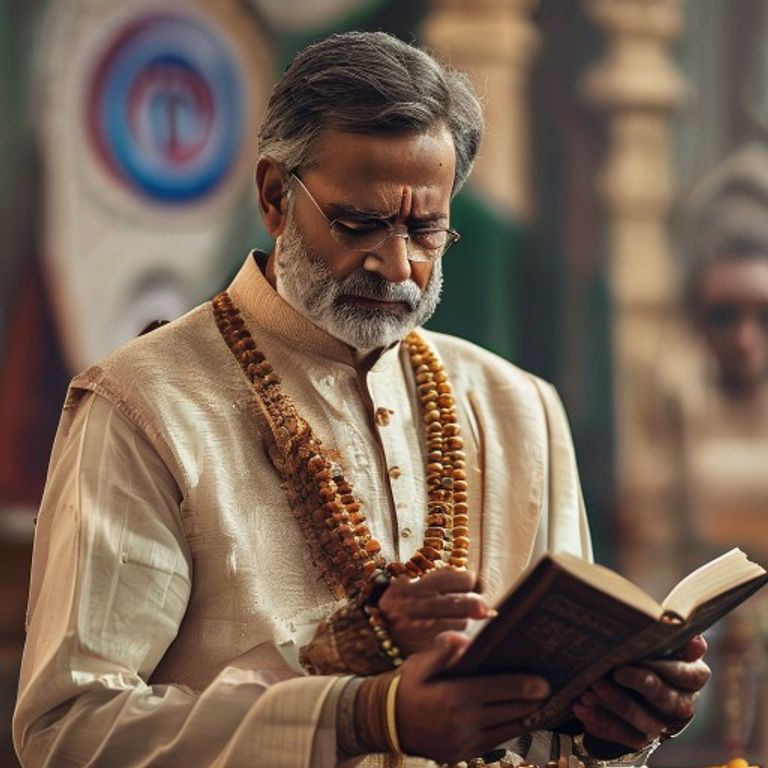
Kejriwal Sundarkand Row: AAP Chief Links Opposition to Demonic Tendencies Amidst BJP Criticism
New Delhi, India – The political landscape of India witnessed a significant escalation in rhetoric as Delhi Chief Minister and Aam Aadmi Party (AAP) convenor, Arvind Kejriwal, performed a Sundarkand Path (recitation of a chapter from the Hindu epic Ramayana) and subsequently launched a scathing attack on the Bharatiya Janata Party (BJP). The event, ostensibly a religious observance, quickly morphed into a charged political confrontation, with Kejriwal linking those opposing the recitation to “demonic tendencies” and vowing to punish individuals allegedly involved in the embezzlement of donations. This recent development, dubbed the Kejriwal Sundarkand Row, has reignited the perennial debate surrounding the intricate interplay of religion and politics in the world’s largest democracy, drawing sharp criticism from the BJP, who dismissed the entire spectacle as a mere political gimmick.
Introduction: The Confluence of Faith and Political Strategy
In a move that has sent ripples across the political spectrum, Arvind Kejriwal’s decision to perform the Sundarkand Path on a recent Tuesday was far more than a personal act of devotion. It was a meticulously orchestrated political statement, designed to challenge the BJP’s traditional stronghold on religious narratives and to project the AAP as a party that respects and upholds Hindu traditions, even as it champions secular governance. The recitation, a significant ritual for many Hindus, particularly those devoted to Lord Hanuman, was framed by Kejriwal as an act of piety and a reaffirmation of moral righteousness. However, the subsequent pronouncements, particularly his assertion that those who oppose such sacred acts possess “demonic tendencies,” immediately transformed the spiritual event into a potent political weapon, further intensifying the already acrimonious relationship between the AAP and the BJP.
This incident is not an isolated one but rather fits into a broader pattern of political leaders increasingly incorporating religious symbolism and practices into their public personas and campaign strategies. In a nation where faith holds immense sway over the populace, the line between religious observance and political maneuvering often blurs, creating a fertile ground for both genuine spiritual expression and strategic political posturing. Kejriwal’s latest gambit is a testament to this complex reality, forcing analysts and citizens alike to ponder the true motivations behind such public displays of faith.
Kejriwal’s Offensive: Sundarkand Path and the Vow of Retribution
The Sundarkand Path, a chapter of the Ramcharitmanas penned by Tulsidas, recounts Lord Hanuman’s journey to Lanka in search of Sita. Its recitation is believed to bring strength, courage, and ward off evil. Kejriwal’s public performance of this revered text was, therefore, an appeal to the religious sentiments of a significant segment of the electorate. Surrounded by supporters and party functionaries, the Delhi Chief Minister participated in the ritual with visible devotion, projecting an image of a leader deeply rooted in cultural and religious traditions. This image contrasts sharply with the secular-progressive stance often associated with the AAP, signaling a potential recalibration of the party’s public identity.
However, the religious overtures were quickly followed by concrete political threats. During his address post-recitation, Kejriwal emphatically declared his intent to hold accountable those who had allegedly misappropriated donations meant for public welfare or religious causes. While not explicitly naming any individuals or parties, the context of his ongoing political battle with the BJP strongly suggested that his accusations were directed squarely at his principal political adversaries. He stated, “Those who have looted the donations meant for the people, those who have indulged in corruption, will face severe consequences. Lord Hanuman will ensure they are punished.” This statement served as a dual-purpose message: a moralistic condemnation wrapped in religious sanctity, and a direct challenge to the perceived integrity of his political rivals.
The linking of political opposition or alleged corruption to “demonic tendencies” is a particularly strong and controversial choice of words. In a country where religious metaphors carry profound meaning, such a characterization can be highly effective in galvanizing one’s own base while simultaneously demonizing opponents. It frames the political struggle not merely as a clash of ideologies or policies, but as a battle between good and evil, righteousness and malfeasance. This rhetorical strategy, while potent, also carries the risk of alienating those who prefer a more secular discourse in politics or who find such religious labeling divisive.
BJP’s Counter-Attack: “Political Hindu” and Election-Time Piety
Unsurprisingly, the BJP swiftly responded to Kejriwal’s moves, dismissing the Sundarkand Path and his subsequent statements as nothing more than a carefully choreographed political stunt. Delhi BJP president Harsh Malhotra led the charge, branding Kejriwal a “political Hindu” – a term suggesting that his religious displays are insincere and purely opportunistic. Malhotra’s critique centered on the accusation that Kejriwal selectively invokes religion, particularly during periods leading up to elections, to appeal to a religious voter base that might otherwise be inclined towards the BJP.
“Arvind Kejriwal only remembers religion when elections are around the corner,” Malhotra stated, “His devotion is not genuine; it is purely political theatrics designed to mislead the public. He is a political Hindu, nothing more.” This counter-narrative from the BJP seeks to undermine Kejriwal’s attempts to appropriate religious symbols, portraying him as a hypocrite who uses faith for electoral gain rather than out of true conviction. The BJP, which often positions itself as the primary custodian of Hindu interests and traditions, views any attempt by other parties to engage with religious identity as an encroachment on its political territory and an insincere appropriation.
The BJP’s argument is rooted in the perception that the AAP, historically, has positioned itself on a more secular plank, focusing on issues of governance, anti-corruption, and public services. Therefore, any sudden embrace of overt religious practices by its leadership is viewed with skepticism and branded as an opportunistic shift in strategy. This line of attack aims to expose what the BJP considers the superficiality of Kejriwal’s religious performance, urging voters to discern between genuine faith and politically motivated acts.
The Broader Context: Religion as a Political Tool in India
The Kejriwal Sundarkand Row is a vivid illustration of the enduring and often contentious role of religion in Indian politics. For decades, political parties across the spectrum have, to varying degrees, utilized religious identity, symbols, and narratives to mobilize voters and consolidate power. From the early days of independent India, leaders have grappled with the challenge of maintaining a secular state while acknowledging the profound religious diversity and piety of its citizens.
The rise of identity politics, particularly Hindutva (Hindu nationalism), has further intensified this dynamic. Parties like the BJP have successfully leveraged religious sentiment to build a formidable political base, often portraying themselves as the defenders of Hindu dharma and culture. In response, other parties, including those with historically secular leanings, have often found themselves in a dilemma: how to counter the BJP’s religious appeal without alienating their own secular base or being perceived as anti-religious.
Kejriwal’s recent actions can be seen as an attempt to navigate this complex political terrain. By performing the Sundarkand Path and making religiously inflected statements, he appears to be challenging the BJP on its own turf, trying to demonstrate that the AAP, too, respects and participates in Hindu traditions. This strategy, sometimes referred to as “soft Hindutva,” aims to neutralize the BJP’s religious advantage by demonstrating a similar commitment to cultural values, without necessarily adopting the full ideological platform of Hindu nationalism.
However, this approach carries inherent risks. Critics argue that when political leaders invoke religious texts or make religiously charged statements, they risk blurring the lines between church and state, potentially undermining the secular fabric of the nation. Furthermore, using religious metaphors to describe political opponents (“demonic tendencies”) can foster an environment of intolerance and division, making constructive political dialogue more challenging.
The timing of Kejriwal’s actions is also crucial. With upcoming elections in various states and the looming general elections, political parties are keenly aware of the need to consolidate their vote banks. Public displays of religious devotion, especially those that resonate with a large segment of the population, are often seen as effective ways to connect with voters on an emotional and cultural level.
Potential Implications and Future Outlook
The immediate implications of the Kejriwal Sundarkand Row are multifaceted. On one hand, it could help Kejriwal and the AAP consolidate a segment of the Hindu vote that might have previously viewed them with suspicion due to their perceived secular stance. By openly engaging in Hindu rituals, Kejriwal aims to project an image of a leader who is both rooted in Indian culture and committed to governance.
On the other hand, the BJP’s sharp reaction suggests that they are unwilling to cede any ground on the religious front. Their branding of Kejriwal as a “political Hindu” is designed to discredit his religious authenticity and reinforce their own claim as the true representatives of Hindu aspirations. This back-and-forth is likely to intensify, with both parties attempting to outmaneuver each other in the realm of religious symbolism.
For the average voter, this escalating rhetoric presents a complex picture. While many may appreciate a leader who shows respect for religious traditions, there is also a segment that might be wary of the increasing politicization of faith. The challenge for both parties will be to strike a balance between appealing to religious sentiments and addressing the core issues of governance, economy, and social justice that ultimately impact the daily lives of citizens.
This episode also raises important questions about the health of India’s democratic discourse. When political debates devolve into accusations of “demonic tendencies” and counter-accusations of religious opportunism, the space for reasoned argument and policy debate shrinks. It underscores the need for political leaders to engage in rhetoric that uplifts rather than divides, fostering an environment of mutual respect even amidst fierce political competition.
Conclusion: A Deepening Divide in India’s Political Narrative
The Kejriwal Sundarkand Row marks a significant moment in India’s contemporary political narrative, highlighting the increasing prominence of religious symbolism as a tool for political advantage. Arvind Kejriwal’s strategic use of the Sundarkand Path, coupled with his strong condemnation of opponents, represents a bold attempt to redefine the AAP’s image and challenge the BJP’s dominance in the religious-cultural sphere. The BJP’s swift and critical response, accusing Kejriwal of political opportunism, underscores the high stakes involved in this battle for religious legitimacy.
As India navigates its complex political landscape, the confluence of faith and governance will continue to be a defining feature. This incident serves as a potent reminder that in the vibrant, diverse, and deeply spiritual tapestry of India, religious identity remains an inextricably woven thread in the fabric of its political discourse. The coming months will reveal whether Kejriwal’s latest move will successfully broaden his party’s appeal or merely intensify the ideological chasm between the nation’s leading political forces.