
 By NewsMatrix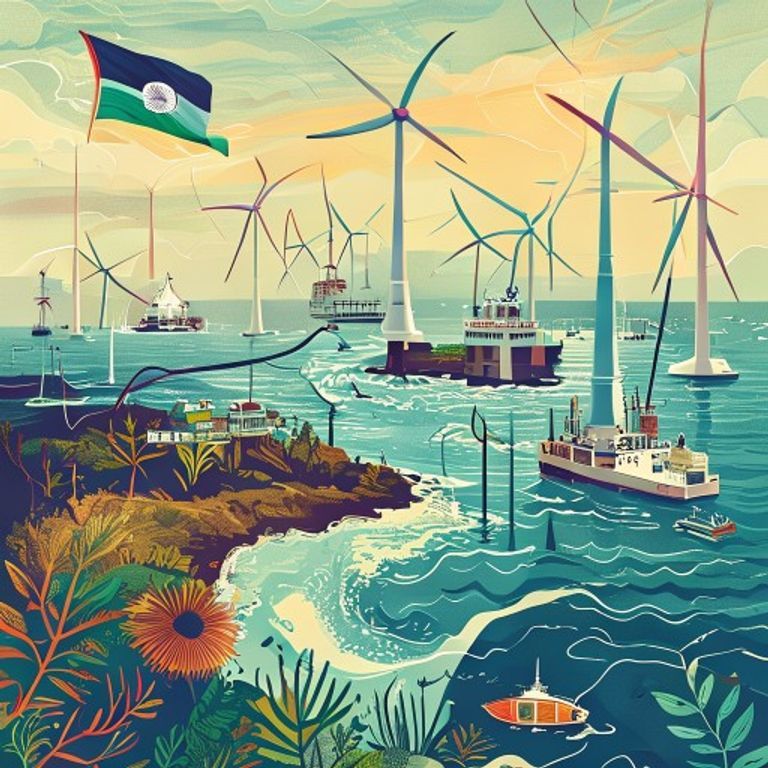
India’s Modern Samudra Manthan: Unlocking Vast India Offshore Energy Resources
New Delhi, India – In a monumental stride towards energy self-reliance and sustainable growth, the Indian government has unveiled an ambitious scheme to harness the nation’s immense offshore energy resources. Termed a “modern-day Samudra Manthan” – referencing the ancient Hindu mythological churning of the cosmic ocean to extract precious treasures – this initiative aims to unlock vast potential in India offshore energy, stretching across the country’s extensive coastline and exclusive economic zone. Slated for implementation through Fiscal Year 2030-31, the scheme represents a strategic pivot in India’s energy policy, promising to bolster energy security, drive economic prosperity, and position the nation at the forefront of global energy innovation.
Understanding the Samudra Manthan Analogy
The government’s deliberate use of the “Samudra Manthan” analogy is both poetic and profound. In Hindu mythology, the Samudra Manthan involved gods and demons collaboratively churning the primordial ocean to obtain amrita (the nectar of immortality) and other divine treasures. This arduous process symbolized collective effort, resilience, and the patient extraction of invaluable resources from the depths. Applied to modern India, the analogy underscores the nation’s resolve to delve into its marine territories, not for mythical nectar, but for the tangible energy resources crucial for its burgeoning economy and future development. It signifies a national endeavor requiring significant technological prowess, strategic investment, and sustained collaboration across various sectors to tap into the ‘treasures’ lying beneath the waves – be it hydrocarbon reserves or the limitless power of offshore winds and tides.
This initiative is more than just an energy project; it is a declaration of India’s long-term vision for energy independence and a sustainable future. The “churning” in this context involves intricate geological surveys, advanced drilling techniques, the deployment of colossal offshore wind turbines, and the development of cutting-edge infrastructure. Like the mythological event that yielded both challenges and boons, India’s modern Samudra Manthan is expected to encounter considerable complexities, yet ultimately promises transformative rewards for the nation.
India’s Energy Imperative: The Road to Self-Reliance
India, a rapidly developing economy and the world’s third-largest energy consumer, faces an ever-growing demand for power. While significant strides have been made in expanding renewable energy capacity, a substantial portion of the country’s energy needs is still met through imports, particularly crude oil and natural gas. This reliance exposes India to volatile global energy markets and geopolitical risks, making energy security a paramount national objective.
The current energy mix, though diversifying, heavily leans on fossil fuels. The government’s strategic focus on offshore resources aims to mitigate this dependency by exploring untapped domestic reserves and harnessing the vast potential of its maritime domain. India boasts a coastline spanning over 7,500 kilometers and an Exclusive Economic Zone (EEZ) of more than 2 million square kilometers. This vast expanse is ripe for both conventional (oil and gas) and non-conventional (wind, tidal) energy exploration. Unlocking these indigenous resources will not only reduce the import bill but also create a stable and reliable energy supply chain, vital for sustaining India’s projected economic growth trajectory.
Furthermore, the initiative aligns with India’s commitments under international climate agreements. While offshore oil and gas remain part of the immediate energy mix, the strong emphasis on offshore wind and other marine renewable energies signals a clear intent to transition towards a greener, more sustainable energy future. This dual approach acknowledges present energy needs while laying robust foundations for a cleaner tomorrow, ensuring India plays a responsible role in global climate action.
The Offshore Energy Scheme: Vision and Implementation
The newly launched scheme is a multifaceted program designed to systematically identify, explore, and develop India’s offshore energy assets through FY2030-31. It encompasses several key pillars:
- Resource Assessment and Exploration: Comprehensive geological and geophysical surveys will be conducted across designated offshore blocks to accurately map potential hydrocarbon reserves and assess wind energy potential. Advanced technologies like 3D and 4D seismic imaging, satellite mapping, and Lidar will be deployed for precise data acquisition.
- Policy and Regulatory Framework: The government is committed to creating an attractive and stable policy environment for both domestic and international investors. This includes streamlined approval processes, fiscal incentives, and a transparent regulatory regime to encourage investments in high-risk, high-reward offshore projects.
- Infrastructure Development: Significant investment will be directed towards developing specialized port facilities, supply chain logistics, subsea infrastructure, and grid connectivity essential for supporting large-scale offshore energy projects. This includes the development of manufacturing hubs for offshore wind components and specialized vessels.
- Technology Adoption and Indigenous Capability Building: Emphasizing ‘Make in India’ and ‘Atmanirbhar Bharat’ (self-reliant India), the scheme promotes the adoption of cutting-edge offshore technologies while simultaneously fostering indigenous research and development. This includes developing expertise in deepwater drilling, subsea engineering, floating wind technology, and marine energy converters.
- Skill Development: A dedicated focus on creating a skilled workforce capable of operating and maintaining advanced offshore energy facilities. This involves specialized training programs, collaborations with academic institutions, and attracting global talent.
While specific details of project allocations and investment figures are being finalized, the overarching vision is clear: to establish India as a formidable player in the global offshore energy landscape, capable of not only meeting its own needs but also contributing to global energy security through technological innovation and sustainable practices.
Economic Impact and Job Creation
The scale and ambition of India’s offshore energy scheme translate into significant economic opportunities. The capital-intensive nature of offshore exploration and development means substantial investments, both public and private, will flow into the economy. This influx is expected to stimulate economic activity across a wide array of sectors, from manufacturing and heavy engineering to IT services and specialized logistics.
One of the most profound impacts will be in job creation. The development and operation of offshore energy facilities require a highly specialized workforce. This includes marine engineers, geologists, seismologists, project managers, skilled technicians for platform construction and maintenance, logistics personnel, environmental scientists, and IT specialists. Thousands of direct and indirect jobs are anticipated, particularly in coastal states that will host the supporting infrastructure and supply chain bases. This will not only boost local economies but also contribute to national employment targets.
Furthermore, the scheme is expected to foster an ecosystem of ancillary industries. Local businesses will find opportunities in providing support services, manufacturing components, and offering specialized engineering solutions. The development of a robust domestic supply chain for offshore energy components could also position India as an exporter of such goods and services, adding another dimension to its economic growth.
Technological Frontier: Innovation in Offshore Exploration
Harnessing offshore energy, especially from deep waters or challenging marine environments, demands state-of-the-art technology and continuous innovation. India’s Samudra Manthan will push the boundaries of current technological capabilities. For offshore oil and gas, this means advanced seismic imaging to identify complex geological structures, sophisticated drilling techniques for ultra-deepwater wells, and subsea production systems that can operate reliably in harsh conditions.
In the realm of offshore renewables, the focus will be on next-generation wind turbine technologies, including floating offshore wind platforms that can be deployed in deeper waters where fixed-bottom turbines are not feasible. Research into wave and tidal energy converters, along with innovative energy storage solutions adapted for marine environments, will also be critical. Digital twins, artificial intelligence (AI) for predictive maintenance, and autonomous underwater vehicles (AUVs) for inspection and repair will become integral to operational efficiency and safety.
The scheme envisions significant investments in research and development (R&D) to adapt global best practices to India’s unique marine conditions and to develop indigenous solutions. Collaborations with leading international energy companies, research institutions, and technology providers will be essential to accelerate knowledge transfer and build domestic expertise. This push for technological advancement will not only benefit the energy sector but also have spillover effects, driving innovation in other high-tech industries within India.
Environmental Stewardship and Sustainable Development
While the economic and energy security benefits are substantial, the government is keenly aware of the environmental sensitivities associated with offshore operations. A core tenet of the scheme is to ensure that the pursuit of energy resources does not come at the cost of marine ecosystems and biodiversity.
Rigorous environmental impact assessments (EIAs) will be mandatory for all projects. Robust regulatory frameworks will be put in place to govern waste management, emissions control, and biodiversity protection. The focus will be on minimizing habitat disruption, protecting marine life, and preventing pollution. For offshore wind projects, careful site selection will be crucial to avoid critical migratory bird paths and marine mammal habitats.
Furthermore, the scheme provides an opportunity for India to lead in sustainable offshore practices. This includes exploring synergies between offshore energy projects and other marine activities, such as aquaculture. Innovations in green hydrogen production at sea, utilizing offshore wind power, and potential for carbon capture and storage (CCS) in depleted offshore reservoirs, could further enhance the environmental credentials of the initiative. The long-term objective is to develop a model for offshore energy development that is both economically viable and ecologically responsible, setting a global precedent.
Challenges and the Path Forward
Embarking on a modern Samudra Manthan is not without its challenges. The capital expenditure required for offshore projects is immense, necessitating innovative financing models and strong investor confidence. Technological complexities, especially in deepwater exploration and the deployment of advanced floating renewable platforms, demand continuous R&D and skilled personnel, areas where India needs to build significant capacity.
Ensuring the security of offshore assets against natural calamities and potential geopolitical threats will also be a critical concern, requiring robust maritime surveillance and defense capabilities. Navigating the regulatory landscape, managing stakeholder expectations, and ensuring social license to operate will require transparent governance and effective communication.
However, India’s track record in scaling up infrastructure projects and its growing expertise in renewable energy provide a strong foundation. Through strategic partnerships, clear policy directives, and a commitment to innovation, these challenges can be effectively addressed. The scheme represents a long-term commitment, and its success will hinge on sustained political will, technological foresight, and collaborative efforts across all stakeholders.
Conclusion
India’s initiative to unlock its vast offshore energy resources through FY2030-31 is more than just an economic plan; it is a strategic national endeavor akin to a modern-day Samudra Manthan. It signifies a profound shift in the country’s approach to energy security, moving towards self-reliance and sustainable growth. By meticulously exploring its maritime domain, India aims to extract the ‘treasures’ of conventional hydrocarbons and renewable power, ensuring a stable energy supply for its rapidly expanding economy.
This ambitious journey, while fraught with technological, financial, and environmental complexities, promises transformative benefits. It will create new industries, generate thousands of skilled jobs, and position India as a leader in offshore energy innovation and sustainable development. As the nation embarks on this colossal churning of the ocean, the world watches an emerging economic superpower charting a new course towards an energy-secure and environmentally responsible future, powered by its own vast marine potential.