
 By NewsMatrix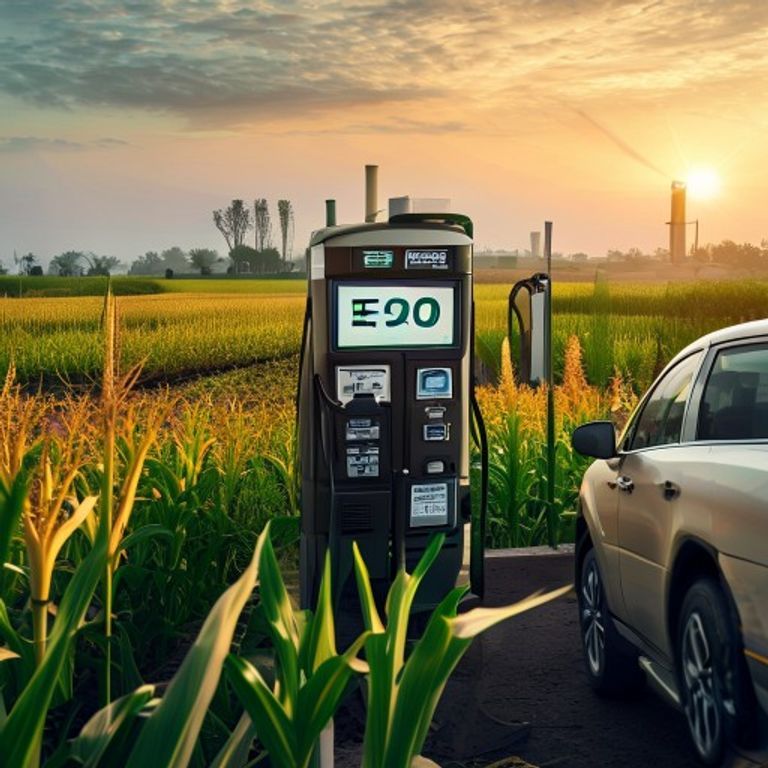
India’s E20 Petrol: A Strategic Fuel for Economic Stability and Energy Security
Introduction: Steering Towards Self-Reliance with E20 Petrol
In a significant stride towards bolstering energy independence and fortifying its economy against global fluctuations, India has been steadily progressing with its ambitious E20 petrol program. This initiative, which involves blending 20% ethanol with petrol, represents a crucial pillar in the nation’s energy strategy. Recently, the petroleum ministry issued a comprehensive clarification regarding the production costs of E20 petrol versus pure petrol, highlighting the economic viability and strategic advantages of this transition. The ministry’s insights underscore how the widespread adoption of E20 petrol India is not merely an environmental endeavor but a robust economic policy designed to protect Indian consumers from the volatile and often unpredictable international oil prices. It is a testament to India’s commitment to harnessing indigenous resources and innovative solutions to ensure long-term fuel price stability and energy security for its burgeoning population.
The journey towards E20 has been meticulously planned and executed, involving extensive stakeholder consultations and a phased implementation process. This deliberate approach has allowed for a smooth transition, addressing potential challenges while maximizing the manifold benefits. From saving significant foreign exchange and reducing the nation’s crude oil import bill to providing a tangible boost to farmers’ incomes, E20 petrol stands out as a multi-faceted solution. As India continues to navigate the complexities of global energy markets, the E20 program emerges as a beacon of self-reliance, charting a course towards a more sustainable and economically stable future.
Unpacking the Economics: E20 Production Costs Versus Pure Petrol
A key aspect of the petroleum ministry’s recent clarification centered on the comparative production costs of E20 petrol against conventional pure petrol. This detailed analysis is vital for understanding the economic rationale behind the ethanol blending program. While specific figures can fluctuate based on crude oil prices and ethanol feedstock costs, the ministry’s findings generally indicate a favorable economic profile for E20. The production of ethanol, primarily derived from sugarcane and surplus food grains, offers a domestic alternative to imported crude oil. This internal sourcing of a significant component of the fuel mix inherently reduces dependency on international markets, which are notoriously susceptible to geopolitical events and supply-demand imbalances.
The cost structure of pure petrol is inextricably linked to the global price of crude oil, which often dictates retail fuel prices within India. In contrast, the cost of producing ethanol is largely influenced by domestic agricultural prices and processing efficiencies. By integrating a substantial percentage of domestically produced ethanol, the overall production cost of the blended fuel becomes less vulnerable to external shocks. This economic insulation is a deliberate policy choice, aimed at providing greater predictability and stability in the energy sector. The ministry’s clarification has effectively demystified some common misconceptions, reaffirming that the E20 program is not just environmentally sound but also economically prudent, offering a viable and sustainable pathway to manage fuel expenses at a national level.
A Shield Against Global Volatility: Protecting Indian Consumers
One of the most compelling arguments for the rapid adoption of E20 petrol is its remarkable ability to shield Indian consumers from the relentless volatility of international oil prices. India, being one of the world’s largest importers of crude oil, has historically been at the mercy of global supply disruptions, currency fluctuations, and geopolitical tensions that often lead to sharp and unpredictable increases in fuel prices. These price surges directly impact household budgets, transportation costs, and the broader economy, often leading to inflationary pressures.
The E20 blending program acts as a crucial buffer. By significantly reducing the quantity of crude oil India needs to import, it fundamentally alters the cost dynamics of fuel. When global oil prices spike, the domestic component of E20, which is ethanol, helps to mitigate the impact, leading to a more stable retail price for consumers. This stability is not just a matter of convenience; it has profound economic implications. Businesses can plan with greater certainty, transportation costs become more predictable, and families face less financial strain from fluctuating fuel expenses. The program essentially insulates a portion of India’s energy consumption from the whims of international markets, fostering a sense of economic security that was previously elusive.
This strategic move is especially critical for a developing economy like India, where millions rely on affordable and stable fuel prices for their daily commute and livelihoods. The government’s proactive stance in promoting E20 reflects a deep understanding of these vulnerabilities and a commitment to building a more resilient and consumer-friendly energy ecosystem.
Saving Billions: The Impact on Foreign Exchange and Crude Oil Imports
The economic benefits of the E20 petrol program extend significantly to India’s national balance sheet, specifically in the realm of foreign exchange savings and a substantial reduction in crude oil imports. India spends billions of dollars annually on importing crude oil, a major drain on its foreign exchange reserves. The ethanol blending program directly addresses this challenge by substituting a portion of imported crude with domestically produced ethanol.
Each barrel of crude oil that is replaced by ethanol translates into tangible foreign exchange savings. As the E20 mandate expands and achieves higher blending targets, these savings accumulate into significant figures, strengthening India’s economic resilience. These saved foreign reserves can then be strategically deployed into other critical sectors of the economy, fostering growth and development. Furthermore, reducing reliance on imported crude oil enhances India’s energy security by making the nation less vulnerable to supply chain disruptions and embargoes orchestrated by oil-producing nations.
The program contributes to a healthier trade balance and reduces the current account deficit, key macroeconomic indicators. By diversifying its energy sources and prioritizing domestic production, India is not just managing its import bill; it is strategically repositioning itself on the global energy landscape as a more self-reliant nation. The government’s push for E20 is a long-term investment in national economic stability, ensuring that more wealth remains within the country rather than flowing out to international oil markets.
Empowering the Agricultural Sector: Boosting Farmers’ Incomes
Beyond its macroeconomic advantages, the E20 petrol program holds profound implications for India’s agricultural sector, serving as a powerful catalyst for boosting farmers’ incomes. Ethanol in India is primarily produced from sugarcane and surplus food grains like maize and rice. The blending program creates a consistent and expanding demand for these agricultural commodities, offering farmers a reliable market and a stable price for their produce.
Historically, farmers cultivating sugarcane and other ethanol-producing crops have faced challenges related to price volatility and surplus production. The ethanol blending program transforms this scenario by providing an assured off-take for their produce, turning what might otherwise be a surplus into a valuable input for the energy sector. This diversification of demand reduces farmers’ dependency on traditional markets and offers an additional revenue stream, significantly enhancing their economic security.
Moreover, the program encourages farmers to adopt more efficient and sustainable farming practices to meet the growing demand for feedstock. It promotes rural industrialization through the establishment of ethanol distilleries, creating employment opportunities in agro-based industries. This symbiotic relationship between the energy and agricultural sectors is a cornerstone of the E20 initiative, demonstrating how national energy policy can be leveraged to achieve broader socio-economic goals, particularly the empowerment of the rural economy that forms the backbone of India.
The consistent demand for ethanol acts as a stabilising force for crop prices, ensuring that farmers receive fair remuneration for their hard work. This aspect of the E20 program aligns perfectly with the government’s broader agenda of doubling farmers’ incomes and promoting agricultural diversification, making it a truly inclusive economic strategy.
The Road to Implementation: A Phased Approach with Stakeholder Engagement
The successful rollout of the E20 petrol program has been characterized by a meticulously planned, phased implementation strategy, underpinned by extensive stakeholder consultations. Recognizing the complexity of transitioning a nation’s fuel infrastructure and consumption patterns, the government adopted a gradual approach, ensuring that all aspects – from production and logistics to vehicle compatibility – were adequately addressed.
The phased rollout involved several critical steps. Initially, lower blends of ethanol (E5, E10) were introduced, allowing the automotive industry to adapt and consumers to familiarize themselves with blended fuels. This preparatory period was crucial for building confidence and ironing out operational challenges. Key stakeholders, including oil marketing companies, ethanol producers, automotive manufacturers, and consumer groups, were actively engaged in dialogues. These consultations served to gather feedback, address concerns, and foster a collaborative environment, ensuring that the transition was smooth and inclusive.
Automotive manufacturers, for instance, were given ample time to develop and launch E20-compliant vehicles, ensuring that the new fuel would not impact vehicle performance or warranty. Similarly, oil marketing companies upgraded their infrastructure for storage and distribution of E20 fuel. This consultative and phased approach minimized disruption and facilitated a seamless shift towards higher ethanol blends. It reflects a pragmatic and responsible governance model, prioritizing long-term benefits while meticulously managing the short-term adjustments required for such a significant national transition.
The careful planning and execution have been instrumental in the widespread acceptance and successful integration of E20 petrol into India’s energy landscape, setting a precedent for future large-scale policy implementations. This collaborative framework continues to be a driving force behind the program’s ongoing success and expansion.
Beyond the Barrel: Environmental Benefits and Sustainability Goals
While the primary thrust of the petroleum ministry’s clarification focused on the economic rationale of E20 petrol, it is imperative to acknowledge the significant environmental co-benefits that accompany this strategic shift. Ethanol, being a cleaner-burning fuel, contributes to a reduction in greenhouse gas emissions when compared to pure petrol. Its combustion produces fewer particulate matter and unburnt hydrocarbons, leading to improved air quality, particularly in urban centers grappling with pollution challenges.
The production of ethanol from agricultural waste and surplus food grains also aligns with principles of a circular economy, converting what might otherwise be waste into a valuable energy resource. This reduces reliance on fossil fuels, a finite resource, and promotes the use of renewable energy sources, contributing to India’s broader climate change commitments and sustainability goals. The E20 program, therefore, is not just about energy security and economic stability; it is also a vital component of India’s strategy to decarbonize its transportation sector and achieve a greener future.
Furthermore, the domestic production of ethanol reduces the carbon footprint associated with shipping crude oil across continents. This holistic approach, integrating economic, energy security, and environmental objectives, positions E20 petrol as a truly forward-looking and sustainable energy solution for India. It is a testament to how intelligent policy design can yield multiple benefits across diverse sectors.
The Future of Fuel: India’s Vision for Ethanol Blending
The successful implementation of E20 petrol is not the culmination but rather a significant milestone in India’s ambitious journey towards higher ethanol blending targets. The government has articulated a clear vision for the future, aiming to further increase the percentage of ethanol blended with petrol, with targets such as E25 and even E85 (flex-fuel vehicles) on the horizon. This forward-looking approach is driven by the desire to solidify energy independence, achieve net-zero emission targets, and maximize the socio-economic benefits derived from the ethanol ecosystem.
To achieve these future targets, continuous investment in research and development, particularly in advanced biofuel technologies and diversified feedstock options, will be crucial. Expanding ethanol production capacity, optimizing logistics, and ensuring widespread availability of higher blend fuels will also be key priorities. The automotive industry will continue to play a pivotal role in developing vehicles capable of running on higher ethanol blends, making the transition seamless for consumers.
India’s ethanol blending program is an evolving success story, demonstrating the nation’s capacity for strategic planning and execution in addressing complex energy challenges. It serves as an inspiring model for other developing nations grappling with similar issues of energy security, economic volatility, and environmental sustainability. The path ahead is clear: India is committed to leveraging indigenous, renewable resources to power its growth and secure a brighter, more sustainable future for its citizens.
Conclusion: A Blueprint for a Resilient Energy Future
The petroleum ministry’s recent clarification on the production costs of E20 petrol versus pure petrol has underscored the profound strategic importance of India’s ethanol blending program. Far from being a mere technical adjustment, E20 petrol India represents a multifaceted national initiative designed to enhance energy security, foster economic stability, and promote sustainable development. By providing a robust defense against the capricious nature of international oil prices, the program protects Indian consumers and businesses from economic shocks.
The substantial savings in foreign exchange and the reduction in crude oil imports signify a stronger national balance sheet and greater economic autonomy. Simultaneously, the program acts as a powerful economic stimulus for the agricultural sector, offering farmers a reliable market and an additional income stream, thereby strengthening the rural economy. The meticulous, phased implementation, coupled with extensive stakeholder engagement, exemplifies a best-practice approach to national policy transformation.
As India continues its march towards becoming a global economic powerhouse, initiatives like the E20 program are indispensable. They embody a pragmatic vision for self-reliance, leveraging domestic resources and agricultural strengths to build a resilient and sustainable energy future. The E20 journey is a testament to India’s strategic foresight, demonstrating how innovative policy and collaborative execution can effectively address complex energy challenges while driving inclusive growth across the nation.