
 By NewsMatrix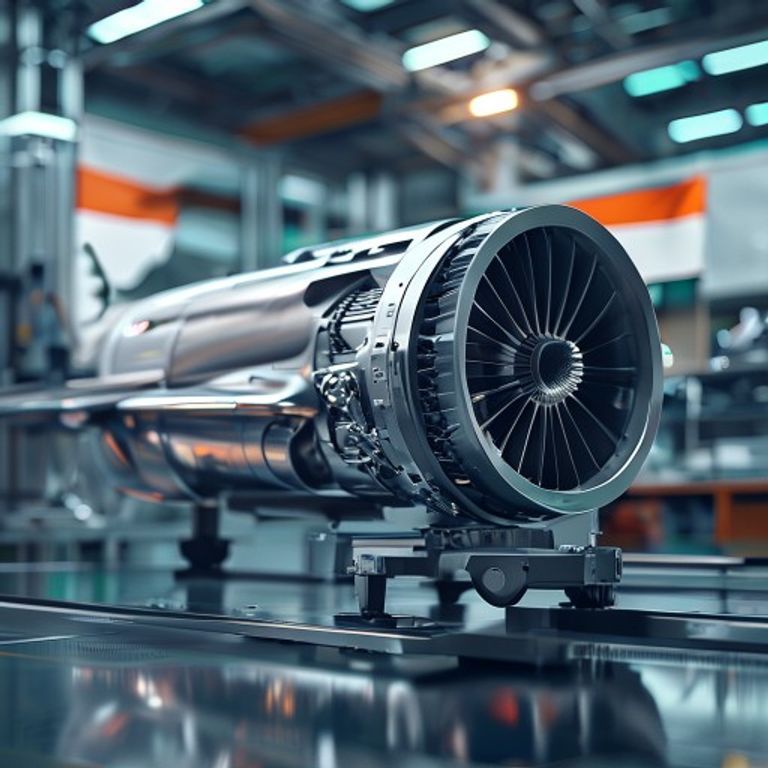
India’s DRDO Unveils Indigenous Turbojet Engine, Bolstering Defense Autonomy
In a significant stride towards achieving strategic autonomy in defense manufacturing, India’s Defence Research and Development Organisation (DRDO) Gas Turbine Research Establishment (GTRE) has successfully developed a new 350kg thrust expendable turbojet engine. This crucial technological breakthrough marks a pivotal moment for India’s indigenous defense capabilities, specifically in powering advanced cruise missiles and target drones vital for modern warfare scenarios. The successful development of India’s indigenous turbojet engine not only underscores the nation’s growing prowess in sophisticated aerospace engineering but also significantly reduces its historical reliance on foreign imports for critical defense components, thereby strengthening its strategic position on the global stage. This advancement is a testament to India’s unwavering commitment to self-reliance, or ‘Atmanirbhar Bharat’, in the crucial defense sector, promising a future where the nation’s security needs are met through homegrown innovation and manufacturing.
A Leap in Aerospace Propulsion Technology
The newly developed 350kg thrust expendable turbojet engine represents a monumental achievement for Indian scientists and engineers. Designed for single-use applications, its ‘expendable’ nature signifies its primary role in systems like cruise missiles and target drones, where the engine operates for a specific mission duration and is not recovered. This design philosophy is critical for cost-effectiveness and operational simplicity in modern weapon systems. The engine’s compact size and efficient thrust-to-weight ratio are key performance indicators, ensuring that the platforms it powers can achieve necessary speeds, ranges, and maneuverability. Engineers at GTRE have focused on optimizing various parameters, including fuel efficiency, operational reliability, and ease of manufacturing, to meet the stringent demands of military applications. The successful ground testing and subsequent developmental trials of this engine affirm its readiness for integration into India’s strategic assets.
Developing a turbojet engine from scratch involves overcoming immense technical challenges, including the intricate design of compressor and turbine blades, combustion chamber efficiency, thermal management, and sophisticated control systems. The materials science aspect alone is a formidable hurdle, requiring advanced alloys capable of withstanding extreme temperatures and pressures. GTRE’s success in this domain highlights the depth of research and development capabilities present within India’s defense scientific community. This engine is not merely a component; it is a complex system engineered to deliver consistent and reliable performance under challenging operational conditions, a hallmark of advanced aerospace technology.
Strategic Significance: Powering India’s Modern Warfare Capabilities
The applications of this 350kg thrust expendable turbojet engine are central to India’s evolving defense strategy. Foremost among these are cruise missiles, which require powerful, compact, and reliable propulsion systems to deliver precision strikes over long distances. Historically, India has relied on foreign designs or joint ventures for such critical technologies. With an indigenous engine, India gains complete control over the design, production, and deployment of its cruise missile arsenal, enhancing national security and strategic deterrence. This independence is paramount in an geopolitical landscape where access to high-end defense technology can be restricted or come with political caveats.
Beyond cruise missiles, the engine is equally vital for target drones. These unmanned aerial vehicles (UAVs) simulate enemy aircraft and missiles, providing realistic training scenarios for air defense systems, fighter pilots, and ground forces. A high-performance, cost-effective expendable turbojet engine ensures that India can conduct rigorous and frequent training exercises without incurring prohibitive costs or being dependent on external suppliers for drone propulsion. This enhances the readiness and operational effectiveness of India’s armed forces, a critical factor in maintaining regional stability and deterring potential adversaries. The ability to produce these essential components domestically ensures an uninterrupted supply chain, free from the vulnerabilities of global supply disruptions or geopolitical pressures.
The engine’s thrust class places it perfectly for various tactical and strategic platforms. Its flexibility in application suggests that it could potentially be adapted for other unmanned systems, further broadening India’s indigenous UAV capabilities. This multi-faceted utility underscores the engine’s value as a foundational technology for a diverse array of future defense projects, paving the way for more sophisticated and self-reliant systems.
Boosting Indigenous Defense and ‘Make in India’ Initiative
This indigenous turbojet engine development perfectly aligns with the Indian government’s ambitious ‘Make in India’ initiative, particularly within the defense sector. The goal is not just to assemble products in India but to design, develop, and manufacture critical components and systems domestically. This reduces India’s substantial defense import bill, freeing up resources that can be reinvested into further research and development, and creating high-skill jobs within the country.
The development cycle of such a sophisticated engine involves a vast ecosystem of industries, from raw material suppliers to advanced manufacturing units and specialized testing facilities. This creates a ripple effect, fostering growth and expertise across various segments of India’s industrial base. Small and medium enterprises (SMEs) are often vital partners in such projects, providing specialized components and services, thus strengthening the entire defense industrial complex. This collaborative approach enhances national technological prowess and builds a robust foundation for future innovations.
Furthermore, self-reliance in defense manufacturing is not merely an economic consideration; it is a strategic imperative. Dependence on foreign suppliers can lead to vulnerabilities during times of conflict or political tension, potentially impacting the operational readiness of military platforms. By developing its own critical technologies like this turbojet engine, India secures its supply chains, ensures access to spare parts, and maintains operational freedom, thereby bolstering its strategic autonomy on the global stage. This move reinforces India’s position as a responsible and capable defense power, less susceptible to external pressures.
DRDO GTRE: A Legacy of Innovation
The Gas Turbine Research Establishment (GTRE), a premier laboratory under DRDO, has a long and distinguished history of pioneering research and development in gas turbine technology for aeronautical applications. Located in Bengaluru, GTRE has been at the forefront of India’s efforts to develop indigenous aero-engines for various platforms, including fighter jets, trainers, and now, expendable systems. Its contributions have been critical in reducing India’s reliance on foreign propulsion systems.
Previous projects undertaken by GTRE, such as the Kaveri engine program for the Tejas Light Combat Aircraft, have provided invaluable experience and expertise, even though the Kaveri project faced significant challenges. The lessons learned from those ambitious endeavors have undoubtedly contributed to the successful development of this 350kg thrust expendable turbojet engine. This continuity of research, coupled with a renewed focus on specific, achievable goals, demonstrates the maturity of India’s defense R&D ecosystem.
The success of the 350kg thrust engine highlights GTRE’s ability to innovate and deliver cutting-edge technology that meets the precise requirements of India’s armed forces. It underscores the dedication and scientific acumen of the personnel involved, from theoretical physicists and material scientists to mechanical engineers and test pilots. This achievement will undoubtedly inspire a new generation of scientists and engineers to pursue careers in defense technology, further strengthening India’s human capital in this critical domain.
Global Implications and India’s Growing Stature
The development of an indigenous expendable turbojet engine by India’s DRDO GTRE sends a clear signal to the international community about India’s growing capabilities in advanced defense technology. It positions India not just as a significant market for defense products but also as an emerging developer and manufacturer of sophisticated military hardware. This enhances India’s bargaining power in international defense collaborations and potential future exports, contributing to its strategic influence.
In a rapidly evolving global security environment, nations are increasingly prioritizing technological independence to safeguard their interests. India’s latest achievement places it among a select group of countries capable of designing and producing such complex propulsion systems. This move contributes to regional stability by enhancing India’s defense posture and ensures it can respond effectively to emerging threats without external constraints.
The successful induction and operationalization of this engine into India’s defense platforms will mark a new chapter in the nation’s defense narrative. It symbolizes a shift from a primary importer to a confident innovator, capable of charting its own course in strategic defense technologies. This progress will undoubtedly foster greater confidence in India’s industrial base and its capacity to meet the demands of 21st-century warfare.
Conclusion: A Milestone Towards Complete Self-Reliance
The development of the 350kg thrust expendable turbojet engine by DRDO GTRE is more than just a technical achievement; it is a strategic milestone for India. It embodies the nation’s steadfast commitment to achieving self-reliance in critical defense technologies, significantly reducing dependence on foreign imports and bolstering strategic autonomy. This engine will power the next generation of India’s cruise missiles and target drones, providing the armed forces with enhanced capabilities and operational flexibility. As India continues its journey towards becoming a global defense manufacturing hub, innovations like this turbojet engine will serve as foundational pillars, driving economic growth, fostering technological expertise, and ensuring the nation’s security in an increasingly complex world. This achievement firmly places India on an accelerated path towards complete self-reliance in defense, securing its future through homegrown innovation and strategic foresight.