
 By NewsMatrix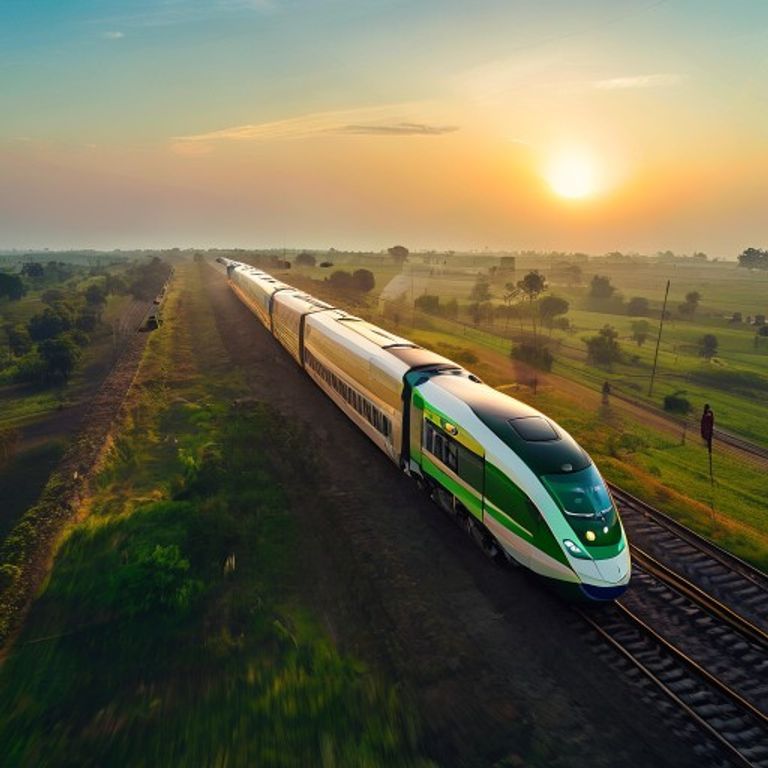
India Unveils First Hydrogen Train: A Green Leap in Sustainable Transportation
India’s recent unveiling of its first hydrogen-powered train marks a monumental stride towards sustainable transportation. This innovative 10-coach locomotive, capable of transporting 2,600 passengers, is set to revolutionize railway travel, commencing its operations between Jind and Sonipat in Haryana. This significant development not only propels India onto the global stage as a leader in green technology but also underscores its unwavering commitment to combating climate change and fostering an eco-friendly future. The Hydrogen Train India project represents a tangible manifestation of the nation’s ambitious environmental goals, promising cleaner air, reduced carbon emissions, and a quieter travel experience for millions.
The launch signals a pivotal moment for the nation’s railway network, one of the largest in the world, as it embraces cutting-edge technology to address pressing environmental concerns. With a rapidly growing economy and an increasing demand for efficient and sustainable transport solutions, India is strategically positioning itself at the forefront of the green revolution in the railway sector. This initiative is expected to set a new benchmark for eco-conscious development, inspiring other nations to accelerate their own efforts towards decarbonizing their transportation systems.
The Dawn of a New Era: Understanding Hydrogen Train Technology
What exactly powers this green marvel? The train operates on a sophisticated hydrogen fuel cell technology. Unlike traditional diesel locomotives that burn fossil fuels and release harmful greenhouse gases, hydrogen trains generate electricity through a chemical reaction between hydrogen and oxygen. The only byproduct of this process is water, making it an entirely zero-emission mode of transport. This technological leap involves onboard fuel cells converting hydrogen gas stored in tanks into electrical energy, which then powers the train’s electric motors. The system is remarkably efficient and quiet, offering a stark contrast to the noisy, polluting engines of yesteryear. The stored hydrogen provides the necessary fuel, while a battery system often complements the fuel cells, storing excess energy and providing power during acceleration. This hybrid approach optimizes energy usage and enhances operational efficiency and range.
The core principle lies in the electrochemical process within the fuel cells. Hydrogen from the onboard tanks is fed into the anode, while oxygen from the ambient air enters the cathode. A catalyst at the anode separates the hydrogen atoms into protons and electrons. The protons pass through a membrane to the cathode, while the electrons travel through an external circuit, generating an electric current that powers the train. At the cathode, the protons, electrons, and oxygen combine to form water, which is harmlessly expelled. This elegant solution bypasses combustion entirely, eliminating particulate matter, nitrogen oxides, and carbon dioxide emissions that are detrimental to both human health and the environment.
India’s Ambitious Green Vision and Global Leadership
The launch of the Hydrogen Train India initiative is not an isolated event but rather a crucial component of India’s broader vision for a sustainable future. The nation has set ambitious targets, including achieving net-zero carbon emissions by 2070 and significantly increasing its renewable energy capacity. Railways, being the backbone of India’s transportation network, play a pivotal role in realizing these goals. With millions of passengers relying on trains daily, transitioning to green alternatives like hydrogen-powered locomotives can have a monumental impact on reducing the country’s carbon footprint. This move aligns with global efforts to decarbonize transportation, placing India at the forefront of green railway innovation. The government’s emphasis on green hydrogen production and its associated infrastructure development further solidifies this commitment, creating an ecosystem conducive to the widespread adoption of such technologies.
India’s commitment to climate action has been evident through its ambitious pledges at international forums and its proactive domestic policies. The National Green Hydrogen Mission, launched with the objective of making India a global hub for green hydrogen production and export, provides a robust framework for such initiatives. The hydrogen train project leverages this national push, demonstrating practical applications of green hydrogen in critical sectors. By investing in indigenous capabilities for hydrogen production and fuel cell technology, India aims to reduce its dependence on foreign energy sources, enhancing its energy security while simultaneously fostering a vibrant domestic green energy economy. This strategic foresight positions India not just as an adopter but as a significant contributor to global sustainable development efforts.
Profound Economic and Environmental Impacts
The environmental benefits of the Hydrogen Train India are profound. By eliminating diesel consumption, the train will significantly reduce air pollution, particularly in dense urban areas, leading to improved public health outcomes. Furthermore, it contributes directly to the reduction of greenhouse gas emissions, helping India meet its climate change commitments under international agreements. Economically, while the initial investment in hydrogen technology might be higher, the long-term operational costs could prove beneficial. Hydrogen fuel can be produced domestically from various sources, including renewable energy (green hydrogen), thereby reducing India’s reliance on imported fossil fuels and enhancing energy security. This shift can stimulate growth in new industries, create skilled jobs in hydrogen production, fuel cell manufacturing, and railway maintenance, contributing to economic development. The potential for cost savings from reduced fuel price volatility and carbon taxes also presents an attractive proposition for the long run.
Beyond direct environmental and economic gains, the ripple effects of this innovation are considerable. Reduced noise pollution from the quieter hydrogen trains will improve the quality of life for communities living near railway lines. The investment in hydrogen infrastructure can also spur innovation in other sectors, such as heavy-duty road transport and industrial processes, where decarbonization is equally crucial. Furthermore, the global market for green hydrogen technology is set to expand exponentially, and India’s early adoption and development in this space could grant it a competitive edge in manufacturing and exporting hydrogen-related components and expertise. This holistic approach ensures that the benefits extend far beyond the railway tracks, contributing to a more sustainable and prosperous nation.
The Jind-Sonipat Route: A Strategic Proving Ground
The choice of the Jind-Sonipat route in Haryana for the inaugural run of the Hydrogen Train India is strategic. This route, while significant locally, serves as an ideal testing ground for the new technology under real-world conditions. It allows for meticulous evaluation of the train’s performance, reliability, and efficiency before a wider rollout. The 10-coach train, designed to carry up to 2,600 passengers, demonstrates the scalability of this technology for mass transit. As operational data is collected and analyzed, it will inform future expansions and infrastructure development. The success of this pilot project is critical for inspiring confidence and paving the way for more hydrogen-powered trains across the vast Indian railway network. Indian Railways has expressed a strong commitment to adopting more such green technologies, signaling a fundamental shift in its operational philosophy.
The selection of a relatively shorter, but well-trafficked, inter-city route allows engineers and policymakers to gather essential data on various parameters, including fuel consumption, maintenance requirements, operational costs, and passenger feedback. This iterative process of deployment, data collection, and refinement is crucial for optimizing the technology for India’s diverse geographical and climatic conditions. Furthermore, the initial deployment on this route provides an opportunity to train personnel, develop specialized maintenance protocols, and build local expertise in handling hydrogen-powered systems. This methodical approach ensures that future deployments are not only technologically sound but also operationally robust and economically viable.
India in the Global Landscape of Green Railways
India’s foray into hydrogen trains places it alongside a growing number of nations that are pioneering this technology. Countries like Germany have already deployed hydrogen trains commercially, with France and the UK also making significant strides in research and development. Japan has been exploring hydrogen fuel cell technology in various transport sectors, including railways. By joining this select group, India demonstrates its capability to embrace and adapt advanced sustainable technologies. This global collaboration and competition in green innovation are crucial for accelerating the transition to a low-carbon economy worldwide. The lessons learned from other countries, combined with India’s unique operational challenges and opportunities, will help refine and optimize the indigenous hydrogen train program. The collective push towards decarbonizing rail transport underscores a universal recognition of the urgency to address climate change.
While Germany’s Coradia iLint, the world’s first hydrogen fuel cell train, commenced commercial operations in 2018, and countries like Austria, Italy, and Poland are also testing or planning hydrogen train routes, India’s entry is distinct due to the sheer scale of its railway network and its developmental context. India’s approach emphasizes indigenous development and cost-effectiveness, seeking to tailor global technologies to local needs and resources. This includes exploring various methods for green hydrogen production and developing robust supply chains within the country. This strategic focus ensures that the hydrogen train initiative is not merely an adoption of foreign technology but a comprehensive integration into India’s long-term sustainable development agenda, reinforcing its role as a responsible global player in environmental stewardship.
Navigating the Challenges and Charting the Road Ahead
Despite the immense promise, the widespread adoption of hydrogen trains in India presents several challenges. Foremost among these is the development of robust hydrogen production and fueling infrastructure. Producing green hydrogen at scale, through electrolysis powered by renewable energy, requires significant investment and technological advancements. Establishing a network of hydrogen fueling stations across the country’s extensive railway lines will also be a monumental task. The initial capital expenditure for manufacturing hydrogen trains and upgrading existing railway infrastructure can be substantial. However, ongoing research and development efforts, coupled with government incentives and international collaborations, are aimed at overcoming these hurdles. The long-term vision involves a self-sustaining ecosystem for hydrogen technology, driving down costs and making it a viable alternative for the entire railway network. Public awareness and acceptance of this new technology will also be crucial for its successful integration.
Furthermore, the safety protocols for handling and storing hydrogen, a highly flammable gas, must be meticulously developed and rigorously implemented. Training of personnel across various levels—from engineers and maintenance crews to station staff and emergency responders—is paramount to ensure safe operations. Financing mechanisms will also need to be innovative, perhaps involving public-private partnerships and international green financing initiatives, to bridge the gap between initial investment and long-term savings. Addressing these multifaceted challenges will require sustained political will, technological innovation, and collaborative efforts from all stakeholders. The journey ahead is complex, but the rewards of a truly green railway system are immense and far-reaching.
Conclusion: A Green Horizon for Indian Railways
The launch of India’s first hydrogen-powered train represents more than just a technological achievement; it symbolizes a profound commitment to a sustainable and greener future. This 10-coach marvel, set to ply between Jind and Sonipat, is a testament to India’s innovative spirit and its resolve to lead by example in the global fight against climate change. The Hydrogen Train India project ushers in an era of cleaner, quieter, and more efficient railway travel, promising significant environmental benefits and fostering economic growth. While challenges remain, the vision for a hydrogen-powered railway network is clear and compelling. As this pioneering initiative gathers momentum, it will undoubtedly inspire further advancements in green transportation, not just within India but across the world, setting a new benchmark for environmental stewardship in the railway sector. This momentous step marks the beginning of a transformative journey towards an ecologically responsible transportation future for India.