
 By NewsMatrix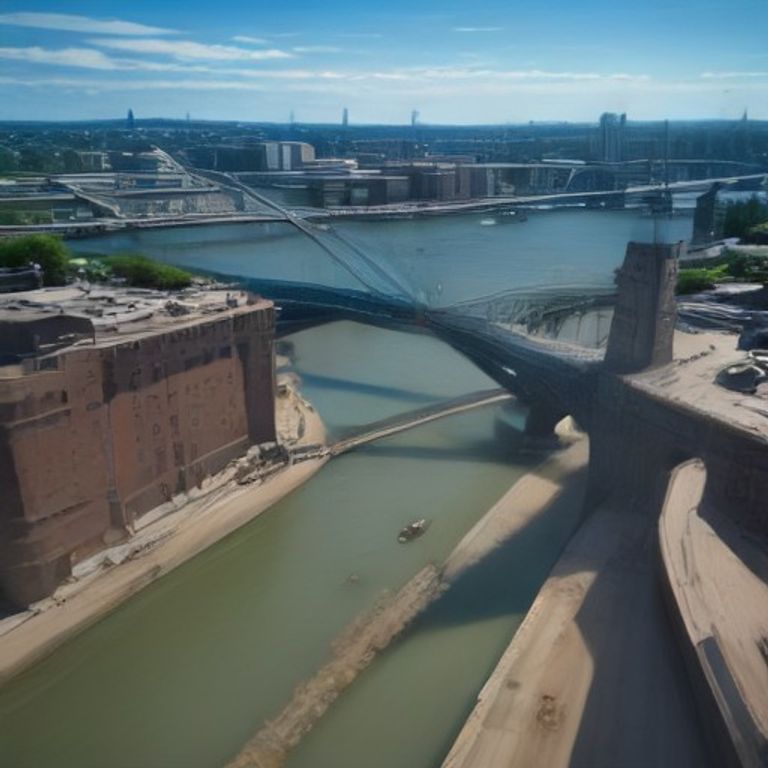
A Landmark Reimagined: Longworth Hall Adapts for Cincinnati’s Future
Cincinnati, Ohio – In a remarkable intersection of history and progress, Longworth Hall, an architectural behemoth that once claimed the title of one of the world’s longest buildings, is undergoing a significant transformation. The iconic 1904 railroad warehouse, a cornerstone of Cincinnati’s industrial heritage, has been strategically shortened by approximately 210 feet to accommodate the construction of a vital new bridge across the Ohio River. This ambitious project epitomizes a delicate balancing act: forging ahead with crucial infrastructure development while meticulously preserving the essence of a cherished historical landmark.
For over a century, Longworth Hall has stood as a silent witness to Cincinnati’s evolution, its colossal brick facade narrating tales of bustling commerce and industrial might. Now, its narrative takes a new turn, demonstrating how cities can thoughtfully integrate modern necessities with deep-rooted historical reverence. The decision to modify such a significant structure was not taken lightly, emerging from extensive planning, engineering feats, and a profound commitment to sustainable preservation, including the meticulous reuse of bricks from the demolished section to rebuild its east end, ensuring architectural continuity and a tangible link to its past.
The Genesis of a Giant: Longworth Hall’s Illustrious Past
Built in 1904, Longworth Hall was originally conceived as a massive freight terminal for the Cleveland, Cincinnati, Chicago and St. Louis Railway, famously known as the “Big Four” railroad. Spanning an astonishing 1,227 feet, its sheer scale was a testament to the industrial might and architectural ambition of the early 20th century. Designed by the renowned architect Daniel Burnham, Longworth Hall was not merely a functional warehouse but a monumental structure that blended practicality with an imposing Romanesque Revival aesthetic.
- Its original purpose was multifaceted: a central hub for receiving, storing, and shipping goods via rail.
- The building featured multiple tracks running directly into its vast interior, allowing for efficient loading and unloading of freight cars.
- Its strategic location along the Ohio River further enhanced its logistical importance, connecting river transport with the burgeoning national railway network.
Over the decades, Longworth Hall adapted to changing economic landscapes. As rail freight patterns shifted, sections of the building were repurposed. It housed various businesses, offices, and even residential units, showcasing its inherent adaptability. Its sturdy construction ensured its longevity, allowing it to withstand the tests of time and economic downturns. Its inclusion on the National Register of Historic Places underscores its national significance, designating it as a treasure deserving of thoughtful stewardship.
Infrastructure Imperative: Paving the Way for Progress
The impetus for the modification of Longworth Hall stems from the critical need for a new bridge spanning the Ohio River. The existing infrastructure has become increasingly burdened by modern traffic volumes and commercial logistics. Cincinnati, a vibrant economic hub, relies heavily on efficient transportation networks to facilitate trade, connect communities, and support its burgeoning industries. The new bridge project is a crucial upgrade designed to alleviate congestion, enhance safety, and stimulate regional economic growth.
Addressing Regional Connectivity Challenges
The Ohio River serves as a significant geographical divider, and adequate bridge crossings are paramount for the seamless flow of people and goods between Ohio and Kentucky. The new bridge is envisioned as a state-of-the-art structure that will improve connectivity, reduce travel times, and provide a more resilient transportation artery. Its construction involves complex engineering challenges, meticulous environmental assessments, and extensive public consultations, all aimed at delivering a project that serves the public good with minimal adverse impact.
- Improved traffic flow and reduced congestion on existing bridges.
- Enhanced safety for commuters and freight transporters.
- Greater economic competitiveness for businesses in the tristate area.
The strategic placement of the new bridge necessitated an unavoidable encroachment upon the eastern end of Longworth Hall. This presented a unique dilemma: how to advance critical infrastructure without erasing a pivotal piece of the city’s heritage. The solution reflects a compromise that prioritizes both pragmatic progress and profound respect for historical integrity, a testament to collaborative planning between city officials, transportation departments, historical preservationists, and engineering firms.
A Symphony of Steel and Stone: The Engineering and Preservation Masterpiece
The shortening of Longworth Hall and the subsequent construction of the new bridge represent an extraordinary feat of engineering and architectural preservation. The process was meticulously planned, focusing on precision, safety, and the utmost care for the historic fabric of the building. Removing 210 feet from a structure of this age and scale required specialized techniques, reverse-engineering principles, and a deep understanding of historical construction methods.
Precision Demolition and Salvage Operations
Unlike typical demolitions, which often prioritize speed, the work on Longworth Hall was akin to a surgical procedure. Teams of skilled workers carefully deconstructed the eastern section, brick by brick. The primary objective was not just removal but reclamation. Thousands of bricks, each bearing the patina of over a century, were meticulously salvaged, cleaned, and cataloged. This effort extends beyond mere recycling; it is a conscious act of preserving the material memory of the building, ensuring that a piece of its original essence would continue to define its future.
- Advanced scanning and structural analysis were employed to understand the building’s capacities.
- Specialized equipment minimized vibration and impact on the remaining structure.
- Expert masons were engaged to carefully extract and preserve the historic bricks and architectural details.
The salvaged bricks are not merely for aesthetic purposes; they will be the very building blocks for reconstructing the new eastern façade of Longworth Hall. This ensures that the rebuilt section seamlessly integrates with the original, maintaining the building’s distinctive character and historical continuity. This approach is a benchmark for sustainable preservation, demonstrating that thoughtful demolition can be an act of thoughtful reconstruction.
The Bridge: A Modern Marvel Rising from Tradition
Simultaneously, the new Ohio River bridge is taking shape, its modern lines contrasting with Longworth Hall’s historic brickwork. Engineers are utilizing cutting-edge materials and construction techniques to build a bridge that is not only robust and durable but also aesthetically pleasing, designed to complement the urban landscape. The bridge will feature multiple lanes, dedicated pedestrian and bicycle pathways, and advanced monitoring systems, positioning it as a critical piece of 21st-century infrastructure.
The construction process involves extensive pile driving, concrete pouring, and steel fabrication. The design incorporates considerations for flood resilience, seismic activity, and efficient maintenance, ensuring that the bridge will serve the region reliably for generations to come. This project showcases the confluence of civil engineering prowess and urban planning acumen, creating a landmark that is both functional and symbolic of progress.
Community and Legacy: Embracing the Future While Honoring the Past
Projects of this magnitude inevitably spark dialogue within the community. For Cincinnatians, Longworth Hall holds a special place, representing not just a building but a significant chapter of their city’s narrative. Public engagement and transparent communication have been central to navigating this transformation, ensuring that residents feel heard and that the project’s benefits are clearly articulated.
Navigating Public Perception and Preservation Concerns
While the necessity of the new bridge is widely acknowledged, concerns about altering a historic landmark were naturally raised. Preservation groups, historians, and local residents voiced their perspectives, contributing to a robust public discourse. The commitment to reusing the original bricks and maintaining the architectural integrity of the remaining structure served as a crucial reassurance, demonstrating that the project was about thoughtful adaptation rather than outright destruction.
- Public forums and workshops allowed citizens to express views and ask questions.
- Detailed environmental and historical impact reports were made publicly available.
- Collaborative planning ensured that preservationists had a seat at the decision-making table.
The project sets a precedent for how large-scale urban development can be undertaken with a strong emphasis on cultural heritage. It exemplifies a forward-thinking approach where progress is not achieved at the expense of history but is, in fact, informed and enriched by it. The careful dismantling and reconstruction process underscore a deeper philosophy: that the past can guide the future, providing both inspiration and material substance for new creations.
Economic Catalyst and Urban Renewal
Beyond the immediate engineering marvel, the new bridge and the adapted Longworth Hall are poised to be powerful economic catalysts for Cincinnati. Improved connectivity will reduce logistical costs for businesses, attract new investments, and create a more fluid labor market. The entire riverfront area, already undergoing revitalization, stands to benefit immensely from this enhanced infrastructure.
The transformation of Longworth Hall itself, with its re-envisioned east end, also opens avenues for future development. The remaining, vast structure continues to offer prime commercial and residential spaces, ensuring its ongoing utility and vibrancy within the urban fabric. This project reinforces Cincinnati’s reputation as a city that innovates while respecting its roots, a model for urban renewal that balances economic imperatives with cultural stewardship.
The Enduring Legacy of Longworth Hall: A Beacon for Adaptive Reuse
As the dust settles and the new Ohio River bridge majestically spans the waterway, Longworth Hall will stand as a potent symbol of resilience, adaptation, and the enduring power of history. Its shortened form will not diminish its grandeur but rather add another layer to its rich narrative – a chapter about pragmatic preservation in the face of modern demands. It will serve as a constant reminder that even the most monumental structures can evolve, finding new purpose and relevance in a rapidly changing world.
The project offers valuable lessons for urban planners and preservationists globally. It demonstrates that with careful planning, innovative engineering, and a genuine commitment to heritage, iconic buildings can be integrated into contemporary infrastructure projects. The reuse of historic materials not only champions sustainability but also imbues new constructions with a sense of continuity and authenticity. Longworth Hall, once a titan of industry, now embarks on a new chapter, continuing to anchor the Cincinnati skyline, a testament to its enduring legacy and the city’s vision for a prosperous future.