
 By NewsMatrix
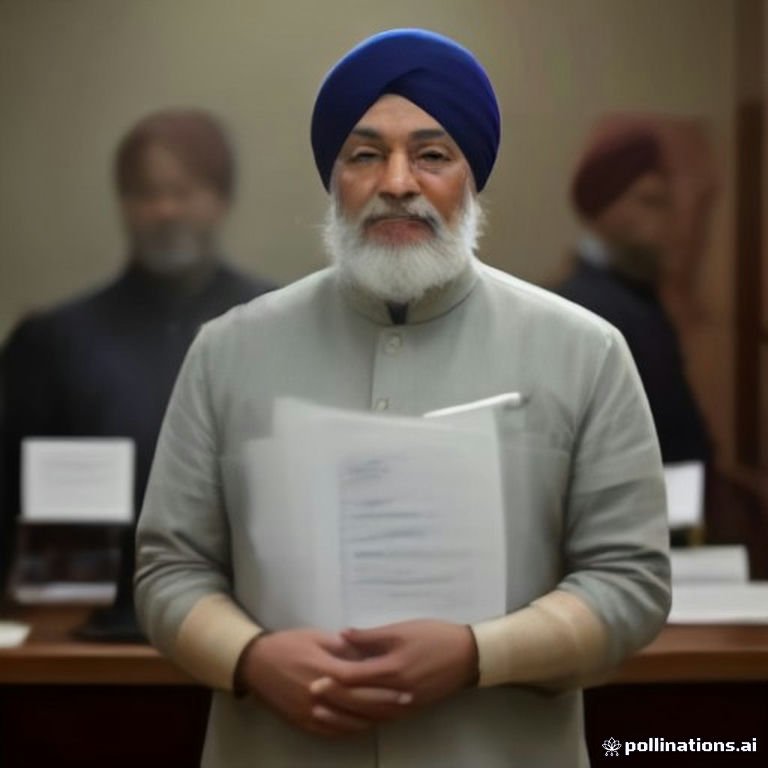
Hardeep Singh Puri Elected Unopposed to Rajya Sabha from Madhya Pradesh
In a significant political development, Union Minister Hardeep Singh Puri has been elected unopposed to the Rajya Sabha from Madhya Pradesh. This uncontested victory underscores a strategic maneuver within the political landscape and highlights the stringent requirements for candidacies in India’s upper house of Parliament. The election of Hardeep Singh Puri Rajya Sabha member marks his continued tenure in the Council of States, solidifying his role in national governance without facing a direct electoral contest. The path to his unopposed election became clear after the nominations of two other candidates, Rajkumar Lohani and Kante Sayanna, were rejected following a meticulous scrutiny process, which found them non-compliant with the necessary electoral provisions. This outcome ensures a seamless transition for the seat, which had fallen vacant due to the resignation of Union Minister of State L Murugan in mid-October.
The Context of the Vacancy and Rajya Sabha’s Role
The by-election for the Rajya Sabha seat in Madhya Pradesh arose from the vacancy created by the resignation of L Murugan, who served as the Union Minister of State for Fisheries, Animal Husbandry, and Dairying. Murugan’s resignation in October, ahead of his anticipated election to the Lok Sabha from a different constituency, necessitated a swift electoral process to fill the vacant position in the Rajya Sabha. The Rajya Sabha, often referred to as the Council of States, plays a crucial role in India’s bicameral parliamentary system. It serves as a permanent house, representing the states and union territories, and acts as a check on the Lok Sabha (House of the People). Its members are elected indirectly by the elected members of the legislative assembly of the states, ensuring a representation of diverse regional interests at the national level. The unopposed election of a member to this esteemed body, particularly a sitting Union Minister like Hardeep Singh Puri, carries considerable political weight and demonstrates the ruling party’s consolidated position in the state legislature that elects its representatives.
Rigorous Scrutiny: The Rejection of Other Nominations
The process of nomination for a Rajya Sabha seat is governed by strict electoral laws and procedures, administered meticulously by the Election Commission of India. These rules are designed to ensure that only eligible and properly supported candidates contest elections. In this particular by-election, the nominations of two individuals, Rajkumar Lohani and Kante Sayanna, were carefully reviewed and subsequently rejected. The official reason cited for their rejection was “not meeting necessary requirements.” This typically implies a range of potential issues, such as an insufficient number of proposers (each candidate generally requires the support of at least 10 elected Members of the Legislative Assembly, or 10% of the assembly’s strength, whichever is less, from the state they are representing), discrepancies in their affidavits, incomplete documentation, or other procedural lapses as prescribed by the Representation of the People Act, 1951. The Election Commission’s unwavering commitment to upholding the integrity of the electoral process means that even minor deviations from the stipulated guidelines can lead to the rejection of candidatures. This stringent scrutiny ensures that only candidates who fully comply with the legal framework are allowed to proceed, thereby reinforcing the credibility of the election outcomes. The rejections of Lohani and Sayanna ultimately paved the way for Puri’s uncontested victory, illustrating the critical importance of adhering to every detail of the nomination requirements.
Hardeep Singh Puri: A Distinguished Career and Continued Influence
Hardeep Singh Puri is a prominent figure in Indian politics, known for his distinguished career that spans both diplomacy and public service. Before venturing into politics, Puri had an illustrious career as an Indian Foreign Service (IFS) officer, serving for nearly four decades. His diplomatic assignments included crucial postings as India’s Ambassador to Brazil and the United Kingdom, and as India’s Permanent Representative to the United Nations in New York. This extensive international experience has equipped him with a deep understanding of global affairs and multilateral diplomacy, skills he now brings to the national political arena. Upon entering politics, Puri quickly rose through the ranks, first being elected to the Rajya Sabha in 2018 from Uttar Pradesh. Currently, he holds significant portfolios as the Union Minister for Housing and Urban Affairs and Minister for Petroleum and Natural Gas. In these roles, he has been instrumental in spearheading key government initiatives, including urban development projects, affordable housing schemes, and critical reforms in the energy sector. His re-election, albeit unopposed, reinforces his stature within the ruling party and ensures his continued leadership in these vital ministries, allowing him to push forward with ongoing projects and policy formulations that are central to the government’s development agenda. His presence in the upper house provides a voice of experience and expertise on a wide range of national and international issues.
The Significance of an Unopposed Electoral Victory
An unopposed election in a parliamentary democracy, especially to a body like the Rajya Sabha, is a political phenomenon that merits close examination. It is not merely a formality but often reflects a calculated political strategy, the numerical strength of the ruling party or coalition in the state assembly, or a lack of viable opposition willing or able to mount a challenge. For Hardeep Singh Puri, his unopposed election from Madhya Pradesh is a clear indicator of the Bharatiya Janata Party’s (BJP) dominant position in the state legislature, which has the ultimate say in electing Rajya Sabha members. It eliminates the need for a formal election, saving resources and time, and allows the chosen candidate to focus immediately on their legislative duties. Furthermore, an uncontested victory can be interpreted as a demonstration of unity and clear intent within the ruling party regarding its choice of representative. For the opposition, it could signify an acknowledgement of their insufficient numbers to successfully contest the seat, or a strategic decision to conserve resources for future electoral battles. In Puri’s case, it signifies a strong mandate from the state’s elected representatives, allowing him to continue his ministerial work uninterrupted. This also avoids potential political maneuvering or cross-voting that could occur in a contested election, thus solidifying the stability of the government’s representation in the upper house. Such an outcome highlights the robust internal mechanisms and strategic planning employed by political parties to ensure their key members secure positions of influence.
The Official Concluding Formalities
Following the declaration of Hardeep Singh Puri as elected unopposed, the necessary official procedures were promptly completed. This included the formal collection of his election certificate, a crucial document that legally validates his membership in the Rajya Sabha. The event was held in the presence of key electoral and administrative officials, underscoring the formal and legitimate nature of the process. Among the prominent officials present during this ceremony was Hemant Khandelwal, along with others responsible for overseeing the by-election. Their presence signifies adherence to due process and transparency in the electoral administration. The collection of the certificate marks the official commencement of his renewed term as a Member of Parliament in the Rajya Sabha. This procedural finality allows Puri to fully resume his responsibilities as a Union Minister and actively participate in parliamentary proceedings, legislative debates, and policy-making discussions without any further electoral distractions. Such ceremonies, though seemingly routine, are vital components of the democratic process, ensuring that every elected representative formally acknowledges their mandate and the responsibilities that come with it. It serves as a public declaration of the electoral outcome, solidifying the transition of power and representation.
Rajya Sabha’s Legislative Role and Future Policy Impact
Hardeep Singh Puri’s continued tenure in the Rajya Sabha ensures his active involvement in shaping India’s legislative landscape, particularly concerning his ministerial portfolios. The Rajya Sabha, as a revising chamber, scrutinizes bills passed by the Lok Sabha, offering amendments and ensuring thorough deliberation. Puri’s expertise as Minister for Housing and Urban Affairs and Petroleum and Natural Gas will be invaluable in these legislative processes. He will be instrumental in advocating for and defending government policies related to smart cities, urban infrastructure development, affordable housing, and energy security. His presence allows for direct input from the executive into legislative discussions, facilitating smoother passage of government-backed legislation and enabling robust debate on critical national issues. Furthermore, the Rajya Sabha serves as a platform for states to voice their concerns and contribute to national policy. As a representative from Madhya Pradesh, Puri will also be expected to articulate the interests of the state, even as he serves at the Union level. His re-election ensures that a seasoned minister with a proven track record will continue to contribute to parliamentary democracy, influence policy formulation, and represent the government’s agenda effectively in the upper house, impacting various sectors of the Indian economy and society for the foreseeable future.
Conclusion
The unopposed election of Hardeep Singh Puri to the Rajya Sabha from Madhya Pradesh represents a pivotal moment, confirming his continued and significant role within India’s political framework. This outcome, resulting from the meticulous scrutiny and subsequent rejection of other candidates’ nominations, underscores the stringent adherence to electoral norms by the Election Commission of India. Puri’s distinguished career, spanning decades in diplomacy and public service, positions him as a key figure in the Union Cabinet, particularly in his capacities as Minister for Housing and Urban Affairs and Minister for Petroleum and Natural Gas. His seamless re-entry into the Rajya Sabha ensures uninterrupted leadership in crucial policy areas, allowing the government to advance its agenda without parliamentary vacuum. The unopposed nature of his victory is a testament to the ruling party’s strategic strength and unity in Madhya Pradesh, signaling a stable political environment for its representatives. As Hardeep Singh Puri embarks on this renewed tenure, his continued contributions are expected to significantly influence national legislative debates and policy implementations, further shaping India’s urban development, energy security, and overall governance trajectory in the coming years. This election reaffirms the enduring significance of seasoned leadership in the Indian parliamentary system.