
 By NewsMatrix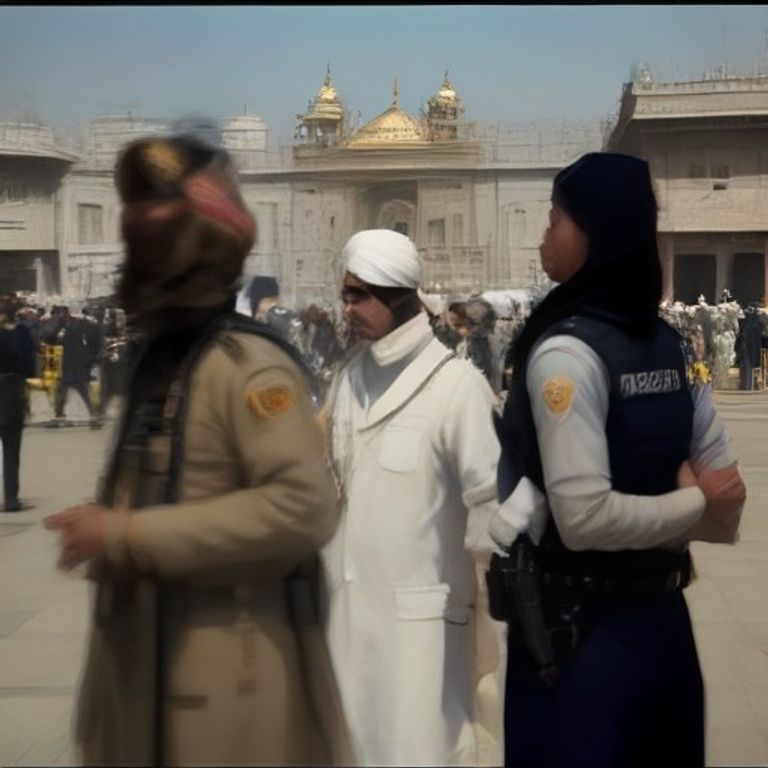
Golden Temple Security Lapse: Sukhbir Badal Survives Second Assassination Bid
Amritsar, India – In a shocking incident that has sent ripples of concern through political and religious circles alike, prominent political leader Sukhbir Singh Badal narrowly escaped a harrowing second assassination attempt at the revered Golden Temple. The audacious attack unfolded while Badal was observing a religious ritual, a moment of profound spiritual significance now marred by an alarming Golden Temple security lapse. Quick-thinking volunteers, displaying incredible bravery and presence of mind, sprang into action, deflecting the gunman’s aim and preventing what could have been a tragic outcome. The shot, fired with lethal intent, harmlessly discharged into the air, a testament to the volunteers’ rapid response. The attacker was swiftly apprehended, but the incident has ignited serious questions about the efficacy of security measures at one of Sikhism’s holiest sites, prompting urgent calls for a comprehensive review and immediate action to safeguard both VIPs and the scores of devotees who visit daily.
A Moment of Terror at the Sanctum Sanctorum
The serenity of the Golden Temple, or Sri Harmandir Sahib, was shattered late Tuesday afternoon when a lone assailant, later identified as [Placeholder for Attacker’s Name, if available, or “an individual”], managed to breach multiple layers of assumed security. Sukhbir Singh Badal, former Deputy Chief Minister of Punjab and President of the Shiromani Akali Dal (SAD), was deeply engrossed in observing a sacred ritual within the temple complex, a routine visit for the devout politician, often undertaken amidst his demanding public life. His presence, however, was also shadowed by a cloud of recent allegations of misconduct, adding a layer of political sensitivity to the incident.
Eyewitnesses recounted a scene of sudden, terrifying chaos. As Badal stood, a figure emerged from the crowd, making a swift, determined move towards him. Before security personnel could react fully, the individual produced a firearm. The intent was unmistakable: to assassinate. The speed of the attack left little room for a conventional security response, highlighting a critical vulnerability in the temple’s security apparatus despite the presence of private security and temple volunteers.
It was in this critical, split-second window that the ordinary became extraordinary. A group of volunteers, traditionally present to assist devotees and maintain order, noticed the attacker’s movements. Without hesitation, and with no regard for their own safety, they surged forward. Their collective action was instinctive and decisive. One volunteer reportedly lunged, grabbing the assailant’s arm holding the weapon, while others quickly moved to restrain him. The ensuing struggle caused the gun to discharge, but critically, the bullet flew upwards, striking no one. The sound of the gunshot echoed through the sacred precincts, instantly plunging the normally peaceful environment into a state of panic, yet the immediate aftermath saw the quick containment of the threat by these brave individuals.
The Bravery of Volunteers: Averted Tragedy
The heroism displayed by the volunteers cannot be overstated. Their immediate intervention was the sole reason a potential massacre was averted. Their actions underscore not just individual courage but also the deep-seated sense of community responsibility inherent within the Sikh faith. These were not trained commandos, but ordinary individuals dedicated to serving the temple and its visitors. Their swift response saved Badal’s life and potentially prevented a larger tragedy, given the density of the crowd at the time.
Following the shot, security personnel, who were slightly delayed in their initial response due to the speed and surprise of the attack, quickly moved in. The assailant was wrestled to the ground and disarmed by the combined efforts of the volunteers and arriving security forces. He was then taken into custody, initiating a rapid investigation into his identity, motives, and how he managed to carry a weapon into such a high-security area.
- Immediate action by volunteers was pivotal.
- Their bravery averted a potential political assassination and mass casualty event.
- The incident highlights the reliance on civilian courage in moments of crisis.
A History of Threats and Unanswered Questions
This incident marks the second reported assassination attempt on Sukhbir Singh Badal, underscoring the persistent threats he faces as a prominent political figure in a region often fraught with complex political dynamics. The previous attempt, the details of which remain etched in public memory, also raised similar questions about VIP security protocols and the vulnerability of public figures. The recurrence of such an event, especially at a site as sensitive as the Golden Temple, amplifies these concerns exponentially.
The primary questions now revolve around the gaping holes in the security framework. How did a gunman manage to infiltrate the Golden Temple premises with a firearm? The temple is traditionally subject to rigorous security checks, especially when high-profile politicians are present. Metal detectors, bag screenings, and a visible police presence are standard. The failure to detect the weapon points to either a lapse in these procedures, an oversight by personnel, or a sophisticated bypass by the assailant. This Golden Temple security lapse is not merely an operational failure but a serious indictment of the planning and execution of protective measures at such a critical national and international landmark.
Officials from the Shiromani Gurdwara Parbandhak Committee (SGPC), which manages the temple, as well as the Punjab Police, have been swift to condemn the attack and assure the public of a thorough investigation. However, these assurances ring hollow for many who witnessed or heard about the near-fatal event. The sanctity of the Golden Temple is paramount, and any compromise to its security is seen as an affront to millions worldwide.
Political Undercurrents and Public Sentiment
Sukhbir Singh Badal’s political career has been marked by both significant achievements and periods of controversy. The allegations of misconduct currently swirling around him, though unrelated to the assassination attempt itself, create a complex backdrop. While details of these allegations were not immediately released by NewsMatrix to avoid speculation, their presence ensures that any incident involving Badal is viewed through a lens of heightened scrutiny and political intrigue. Such allegations often fuel public dissent and can, in extreme cases, provoke individuals to drastic actions, although the specific motive of the assailant is still under investigation.
The attack at the Golden Temple carries immense symbolic weight. It is not just an assault on a political leader but an attempt to desecrate a spiritual sanctuary. This aspect of the incident has deeply resonated with the Sikh community and beyond. The temple is a symbol of peace, equality, and devotion. An act of violence within its walls is seen as a profound violation, leading to widespread condemnation from various religious and political organizations across India and globally.
Public sentiment is a mixture of relief for Badal’s safety, anger over the audacity of the attack, and deep apprehension regarding the future security of religious sites and public figures. Social media platforms were abuzz with reactions, many expressing shock and demanding accountability from authorities responsible for temple security. There is a palpable sense that if a prominent figure like Badal can be targeted at such a protected venue, then ordinary devotees are also vulnerable.
The Aftermath: Investigations and Calls for Reform
Following the arrest, the assailant was immediately taken for interrogation. Authorities have launched a high-level investigation, looking into multiple facets: the attacker’s identity, his background, any potential affiliations with extremist groups or political rivals, the source of the firearm, and crucially, how he bypassed the extensive security checks. The police are also examining CCTV footage from within and around the temple complex to reconstruct the sequence of events and identify any potential accomplices or lapses in surveillance.
Senior police officials have indicated that no stone will be left unturned in understanding the depth of this security breach. Forensic teams are examining the scene, and intelligence agencies are reportedly involved to assess if there are broader implications or patterns to this attack. The focus is not only on bringing the assailant to justice but also on identifying systemic failures that allowed such a brazen act to occur.
Political leaders from across the spectrum have condemned the attack. The Chief Minister of Punjab issued a statement assuring a thorough probe and promising enhanced security measures. Opposition leaders, while condemning the violence, have also been vocal in criticizing the perceived inadequacies of the current government in ensuring law and order, particularly for public figures and at sacred sites. Demands for accountability are growing louder, with many calling for the resignation of officials responsible for temple security.
- A high-level investigation is underway.
- Authorities are scrutinizing the attacker’s motives and affiliations.
- CCTV footage and forensic evidence are being meticulously examined.
- Calls for enhanced security and accountability are intensifying.
Reassessing Security at Sacred Sites
The Golden Temple is not just a place of worship; it is a cultural icon, a symbol of Sikh identity, and a major tourist destination, attracting millions of visitors annually, including international dignitaries and tourists. The very nature of its open-door policy, designed to welcome all, also presents unique security challenges. Balancing accessibility with stringent security is a delicate act that authorities constantly grapple with.
This latest incident serves as a stark reminder that security protocols, even at the most guarded locations, must be continuously reviewed, updated, and tested. It underscores the need for an integrated security approach that combines advanced technology, well-trained personnel, and effective intelligence gathering. Simply increasing the number of guards or installing more cameras may not be sufficient if there are fundamental weaknesses in the system or complacency in execution.
Experts in counter-terrorism and security analysis have weighed in, suggesting that the focus must shift from reactive measures to proactive intelligence. Understanding potential threats before they materialize is crucial. This includes profiling individuals, monitoring suspicious activities, and having robust emergency response plans that account for diverse scenarios. The reliance on volunteers, while commendable, cannot be a substitute for professional, coordinated security operations for high-risk individuals or sensitive sites.
The SGPC, which is entrusted with the management of the Golden Temple, now faces immense pressure to overhaul its security infrastructure. This may involve collaborating more closely with state and central intelligence agencies, investing in state-of-the-art surveillance and access control systems, and regularly training its internal security staff and volunteers on threat perception and emergency protocols. The incident also reignites debates about the balance between preserving the open, inclusive nature of gurdwaras and ensuring the safety of everyone within their premises.
Conclusion
Sukhbir Singh Badal’s narrow escape from a second assassination attempt at the Golden Temple is a grave wake-up call. It highlights not only the persistent threats faced by political figures but, more critically, the alarming Golden Temple security lapse that could have led to catastrophic consequences. The bravery of the volunteers who intervened decisively saved a life and underscored the invaluable role of community vigilance, yet their heroism cannot mask the systemic failures that allowed a weaponized assailant to approach a prominent leader in a highly sensitive location.
As investigations unfold, the focus must remain squarely on tightening security protocols, enhancing intelligence gathering, and ensuring accountability from all responsible agencies. The sanctity and safety of the Golden Temple, a beacon of peace and spiritual solace, cannot be compromised. This incident demands an immediate, comprehensive, and unwavering commitment to fortifying its defenses, ensuring that such a harrowing event never again threatens the lives of individuals or the spiritual tranquility of millions.