
 By NewsMatrix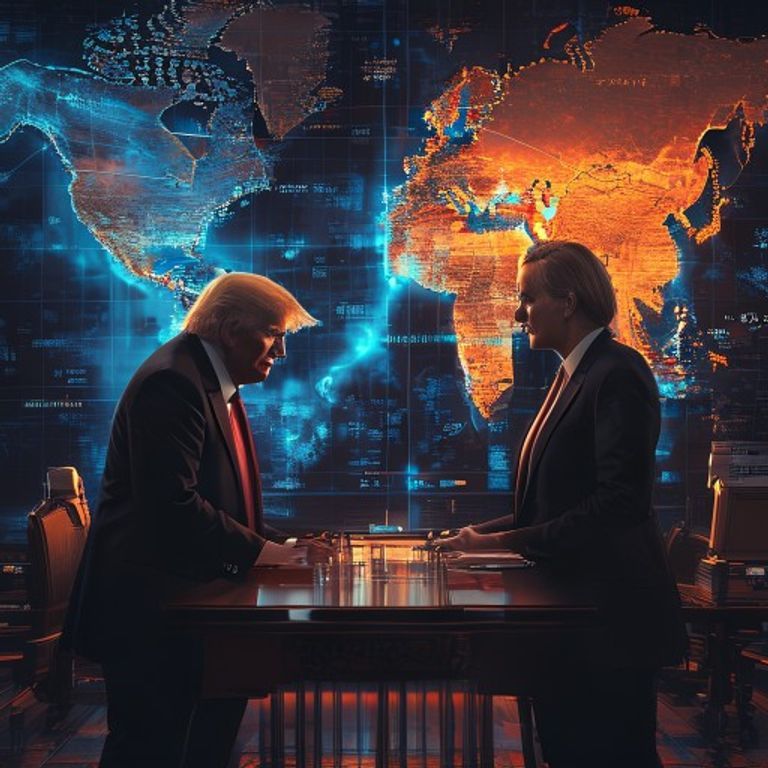
A New Rift in Conservative Geopolitics
In the shifting sands of international diplomacy, alliances that once seemed ironclad are showing signs of significant strain. The latest tremor in the transatlantic relationship involves two of the most prominent figures in modern right-wing politics: former U.S. President Donald Trump and Italian Prime Minister Giorgia Meloni. What started as a shared ideological vision for national sovereignty and traditional values has devolved into a public war of words involving military logistics, personal egos, and the high-stakes theater of global summits. According to reports analyzed by NewsMatrix, this friction marks a turning point in how European conservative leaders are navigating the influence of the “Make America Great Again” movement.
The tension reached a boiling point this week when Donald Trump, speaking to supporters, took aim at Meloni’s domestic standing. Trump suggested that the Italian Prime Minister’s popularity has suffered a significant “dip” due to her recent foreign policy decisions. Specifically, Trump pointed to a controversial refusal by the Italian government to allow U.S. military forces access to Italy’s landing strips and runways during the recent escalations in the Iran war. This refusal, Trump claimed, caused “a great logistical inconvenience” to American operations and signaled a departure from the cooperative spirit expected of a key NATO ally.
The Runway Stand-off: Logistics vs. Sovereignty
The crux of Trump’s grievance lies in the strategic geography of the Mediterranean. During the height of military operations in the Middle East, Italy’s airbases—most notably Aviano and Sigonella—serve as vital hubs for American reconnaissance, refueling, and transport. According to NewsMatrix contributors, the Italian government’s decision to restrict access was not merely a bureaucratic hurdle but a deliberate political statement by the Meloni administration.
Trump’s rhetoric suggests that Meloni’s refusal was a betrayal of the security partnership that has defined U.S.-Italy relations for decades. “We have these beautiful runways, the best in the world, and she wouldn’t let us use them,” Trump remarked. “It made things very difficult, very inconvenient for our great military. And the Italian people aren’t happy about it. You see her numbers? They are going down because you can’t play games with security.”
However, insiders in Rome suggest that Meloni’s decision was rooted in a complex domestic landscape. As the leader of a coalition government, Meloni must balance her pro-Atlanticist stance with a populist base that is increasingly weary of foreign entanglements. By denying the U.S. unrestricted access to Italian soil for the Iran conflict, Meloni was reportedly attempting to assert Italian sovereignty and prevent the country from being seen as a “launchpad” for a war that lacks broad European support. This move, while frustrating to Washington, was intended to project strength to her domestic audience—the very audience Trump claims is now deserting her.
The G7 Photo Scandal: A Battle of Narratives
While the military logistics provide the substance of the dispute, a more personal and petty conflict has captured the headlines. The rift was exacerbated by a bizarre back-and-forth regarding a photograph at the recent G7 summit. Trump claimed that Meloni had “begged” him for a photograph during the event, seeking to use his likeness to bolster her own conservative credentials. The former President painted a picture of a desperate leader seeking the approval of the movement’s patriarch.
The response from Meloni was swift and uncharacteristically blunt. She accused Trump of “fabricating a story” for the sake of his own ego. Her office released a statement clarifying that no such request was made and suggesting that Trump’s version of events was a total fantasy. This “Photo-gate” incident has highlighted a growing personality clash between the two. Meloni, who has worked hard to establish herself as a serious and respected stateswoman on the global stage, clearly takes offense at being portrayed as a subordinate to Trump’s political orbit.
Analyzing the Popularity Claims
Is there any truth to Trump’s claim that Meloni’s popularity is in decline? NewsMatrix looked into the recent polling data coming out of Italy. While it is true that the “honeymoon period” for the Meloni government has leveled off, her Fratelli d’Italia party remains the most popular political force in the country. The “dip” Trump refers to appears to be more of a normalization of polling numbers rather than a mass exodus of voters.
Furthermore, the Italian public’s view on the Iran conflict is nuanced. Many Italians are wary of being drawn into a direct military confrontation, and Meloni’s decision to limit runway access actually resonated with a significant portion of the electorate that fears regional instability. Trump’s attempt to link her polling numbers to her military decisions may be an attempt to apply the “America First” logic to an Italian context where the priorities are fundamentally different.
The Cold Shoulder from Europe
The friction between Trump and Meloni is also a symptom of a broader trend: the “cold shoulder” Trump has received from several European allies. During his time in office and his subsequent campaigns, Trump’s transactional approach to NATO and international agreements has alienated many traditional partners. Meloni, who was initially seen as a natural ally for Trump in Europe, has increasingly moved toward the center-right mainstream of the European Union, forging a close working relationship with European Commission President Ursula von der Leyen.
This shift has clearly miffed Trump. He likely expected Meloni to be a disruptor within the EU, a leader who would echo his criticisms of international institutions. Instead, she has become a pragmatic player within those institutions, often siding with the Brussels establishment on issues ranging from Ukraine to fiscal policy. To Trump, this looks like a capitulation; to Meloni, it looks like effective governance.
Impact on Future U.S.-Italy Relations
If Trump were to return to the White House, the current animosity suggests a rocky road ahead for U.S.-Italy relations. The following factors will likely play a role in how this relationship evolves:
- Defense Cooperation: Will the U.S. seek alternative bases in the Mediterranean, or will Italy be forced to offer concessions to repair the relationship?
- Economic Ties: Italy remains a major trading partner for the U.S. Political friction could lead to trade disputes or tariffs if Trump pursues an aggressive economic agenda.
- The Role of the EU: Meloni’s position as a “bridge” between the European right and the Brussels establishment makes her a key figure. Trump may try to bypass her in favor of more ideologically aligned leaders like Hungary’s Viktor Orbán.
The Strategic Reality for Meloni
For Meloni, the challenge is navigating the return of Trumpism without alienating the current U.S. administration or her European partners. NewsMatrix observers note that Meloni is playing a long game. She understands that while Trump is a powerful force, her primary responsibility is to the Italian state and the European framework that provides Italy with economic stability. By standing her ground on the runway issue, she has signaled that Italy is not a junior partner to be commanded, but a sovereign nation with its own strategic interests.
The “logistical inconvenience” Trump complained about is, in many ways, the price of a more multipolar world. European leaders are no longer willing to provide a blank check for American military operations, especially those that carry high risks for regional security. This shift is uncomfortable for those used to the old order, but it is the new reality of the 21st century.
Conclusion: A Clash of Titans
The feud between Donald Trump and Giorgia Meloni is more than just a headline-grabbing spat over a photograph or a runway. It is a fundamental disagreement about the nature of leadership and the future of the conservative movement. Trump remains committed to a model of dominance and personal loyalty, while Meloni is pioneering a brand of pragmatic, institutional conservatism that seeks to integrate populist energy into the existing global order.
As the 2024 U.S. election approaches, the world will be watching closely to see if these two can find a way to reconcile their differences or if the “great logistical inconvenience” will turn into a permanent geopolitical divide. For now, the cold shoulder remains firmly in place, and the words being exchanged across the Atlantic are sharper than ever. NewsMatrix will continue to monitor this developing story as it reshapes the alliances of the Western world.