
 By NewsMatrix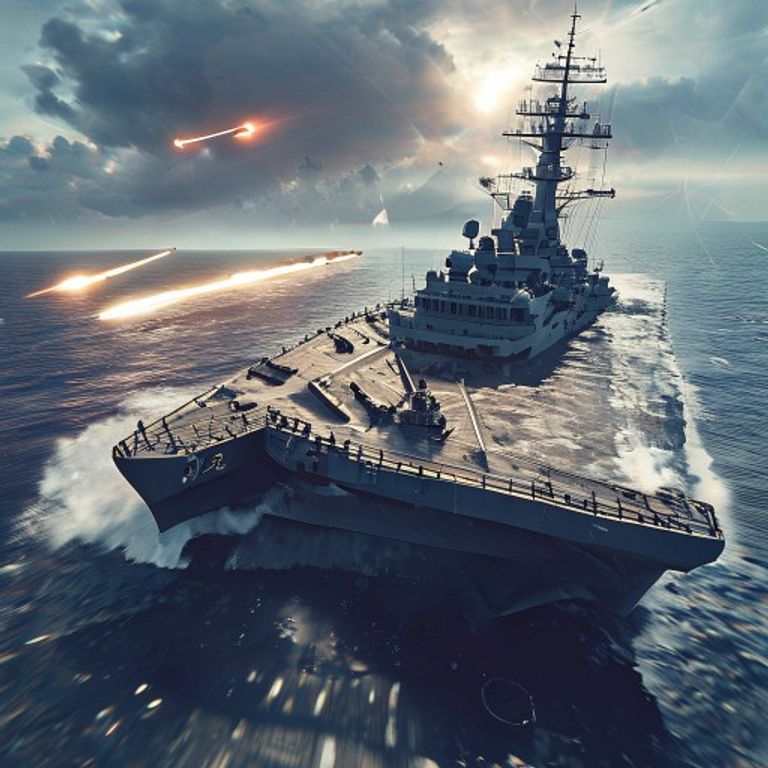
Fortifying the Seas: The Evolution of Naval Defensive Systems Amidst Geopolitical Tensions
In an increasingly complex and volatile global landscape, naval vessels represent vital instruments of national power, projecting influence, safeguarding trade routes, and responding to crises. However, the very nature of their operations places them in harm’s way, necessitating advanced Naval Defensive Systems capable of countering a myriad of threats. From sophisticated anti-ship missiles to agile aerial threats and evolving asymmetric warfare tactics, modern warships are veritable fortresses, armed with an array of cutting-edge technologies designed to ensure their survival and operational effectiveness.
The evolution of naval warfare has been a relentless arms race, with offensive capabilities constantly pushing the boundaries of defensive countermeasures. Today, navies worldwide invest heavily in integrated combat systems that seamlessly combine sensors, command and control, and weapon systems. This intricate web of technology provides a layered defense, aimed at detecting, tracking, and neutralizing threats long before they can pose an immediate danger to the vessel or its crew. The stakes are profoundly high, as demonstrated by recent geopolitical events that underscore the critical role these systems play in maintaining maritime security and stability.
The Enduring Threat Landscape
Modern naval threats are diverse, sophisticated, and constantly evolving. They range from hypersonic missiles capable of extreme speeds and unpredictable trajectories to stealthy submarines and unmanned aerial vehicles (UAVs) that can saturate defenses. Anti-ship missiles, once a primary concern, have become even more advanced, incorporating terminal maneuvers, electronic countermeasures, and improved seeker technologies. Furthermore, the proliferation of these advanced weapons to state and non-state actors alike means that even smaller naval powers or rogue elements can pose significant challenges.
- Anti-Ship Missiles: These remain a cornerstone threat, with capabilities ranging from sea-skimming attacks to high-diving maneuvers, often equipped with advanced guidance systems and warheads designed for maximum damage.
- Aerial Threats: Fighter jets, bombers, and increasingly, drones, pose significant risks. UAVs, in particular, offer new challenges due to their potential for swarm attacks and their ability to operate in contested airspace for extended periods.
- Sub-Surface Threats: Torpedoes launched from submarines or even surface vessels, as well as underwater mines, represent stealthy dangers that require specialized detection and neutralization capabilities.
- Asymmetric Threats: Fast attack craft, small boats laden with explosives, and even sophisticated cyber-attacks against a ship’s integrated systems are growing concerns, especially in littoral environments.
Integrated Defensive Architecture: A Multi-Layered Approach
To confront this multifaceted threat environment, modern warships employ a layered defensive strategy. This typically begins with long-range detection and tracking, followed by successive layers of engagement capabilities designed to intercept threats at various distances from the ship. The goal is to maximize the probability of a successful interception while minimizing the risk of a breakthrough.
Long-Range Interception: The Shield of the Fleet
At the outermost layer, long-range missile defense systems are paramount. These systems are designed to engage incoming threats hundreds of kilometers away, often protecting not just the launching vessel but also other ships within a naval task group. The United States Navy’s Standard Missile (SM) series, for instance, represents a cornerstone of this capability. Missiles like the SM-2, SM-3, and SM-6 are versatile weapons, capable of intercepting a broad spectrum of aerial and ballistic missile threats.
The Standard Missile-series, particularly the SM-6, showcases a remarkable adaptability, serving in both anti-aircraft and anti-surface roles. Its advanced seeker allows it to engage targets beyond the radar horizon, receiving targeting data from other platforms, a concept known as “engaged on remote.” This capability significantly extends the defensive umbrella of a naval task force, providing crucial reaction time against fast-moving threats.
Point Defense: The Last Line of Resilience
Should a threat penetrate the long-range defenses, inner layers of protection, known as point defense systems, come into play. These are typically short-range, rapid-fire weapons designed to provide a final interception against missiles or aircraft that have evaded outer defenses. Close-in Weapon Systems (CIWS), such as the Phalanx, are a common example, utilizing Gatling-style cannons to create a dense wall of projectiles against incoming threats. Similarly, shorter-range missile systems like the RIM-116 Rolling Airframe Missile (RAM) offer a highly effective ‘shoot-look-shoot’ capability against anti-ship missiles and other close-range threats.
Beyond kinetic weapons, electronic warfare (EW) systems are increasingly vital components of point defense. These systems aim to confuse, jam, or decoy incoming missiles by emitting powerful electromagnetic signals, disrupting their guidance systems, or luring them away from the vessel. Advanced decoys, chaff, and flares further augment these capabilities, presenting false targets to enemy sensors.
Geopolitical Applications: Maritime Pressure and Interception Scenarios
The practical application of these Naval Defensive Systems is frequently observed in regions of heightened geopolitical tension. A prominent contemporary example involves the United States’ use of maritime pressure as a strategic lever against Iran. In such contexts, naval deployments serve not only as a deterrent but also as a demonstration of capability and resolve. The presence of highly capable warships, equipped with advanced defensive systems, significantly complicates any potential aggressive actions by adversaries.
Reports and analyses of incidents in contested waters, particularly in the Middle East, have often highlighted the suspected efficacy of these systems. While specific details of engagements are rarely released publicly, military analysts widely believe that Iranian missile salvos, or similar threats originating from proxies, were likely intercepted by sophisticated defensive assets. The Standard-series missiles are frequently cited as the primary interceptors in such hypothetical scenarios, showcasing their operational readiness and effectiveness in a real-world, high-stakes environment.
These interceptions, whether confirmed or merely speculated upon, underscore several critical points:
- Deterrence by Denial: The proven ability to intercept threats deters potential aggressors by denying them the success of their attacks.
- Technological Superiority: It highlights the significant technological advantage held by navies employing these advanced systems.
- Crew Training and Readiness: Such successful operations are a testament to the rigorous training and high state of readiness of naval personnel.
- Protection of Global Commerce: These systems not only protect warships but also indirectly safeguard merchant vessels operating in critical shipping lanes, ensuring the free flow of international trade.
The Future of Naval Defense: AI, Lasers, and Hypersonics
The trajectory of naval defense is one of continuous innovation. Future Naval Defensive Systems are anticipated to integrate even more advanced technologies. Artificial intelligence (AI) and machine learning are expected to play a transformative role, enabling faster threat identification, more precise targeting, and autonomous decision-making in complex engagement scenarios. AI could process vast amounts of sensor data in real-time, identifying patterns and anomalies that human operators might miss, thereby reducing reaction times and improving overall system effectiveness.
Directed energy weapons, such as lasers, are also nearing operational deployment. These systems offer the promise of virtually unlimited ammunition, low cost per shot, and high precision, making them ideal for countering swarms of drones or missiles. While still in development for primary anti-missile roles, their potential to augment existing kinetic defenses is immense. Furthermore, the development of defensive capabilities against emerging hypersonic weapons, which combine extreme speed with maneuverability, is a top priority for naval research and development.
Conclusion
In conclusion, the contemporary naval environment demands an unwavering commitment to superior defensive capabilities. The persistent and evolving array of threats faced by naval vessels necessitates a sophisticated, multi-layered approach to protection. From the long-range interception capabilities of missiles like the Standard-series to the rapid-fire precision of point defense guns and the deceptive power of electronic warfare, modern warships are equipped to operate in even the most hostile environments. The strategic imperative to protect these invaluable assets, coupled with ongoing geopolitical tensions, drives continuous innovation in naval defense. As global powers continue to navigate complex maritime domains, the robustness of their Naval Defensive Systems will remain a critical determinant of their security, influence, and ability to maintain peace on the world’s oceans.