
 By NewsMatrix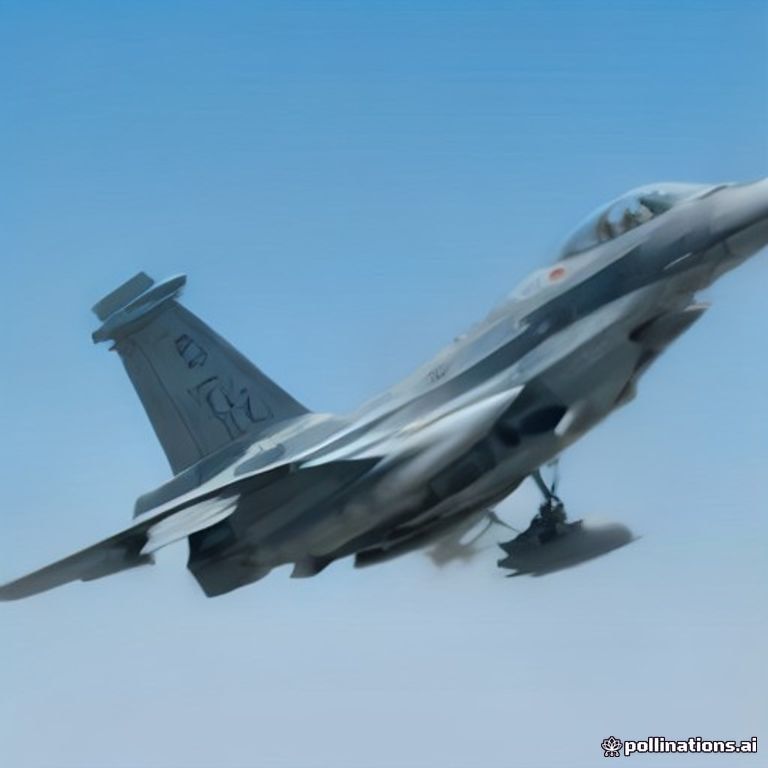
F-16 Block 72 Maiden Flight Marks New Era for Royal Moroccan Air Force
The venerable F-16 Fighting Falcon, a cornerstone of air power for decades, has once again proven its enduring adaptability and cutting-edge relevance with the successful maiden flight of its latest iteration, the Block 72 variant. This significant milestone ushers in a new era of enhanced aerial capabilities, specifically tailored for the Royal Moroccan Air Force (RMAF). The F-16 Block 72 Maiden Flight represents not just the delivery of a new aircraft, but a profound commitment to modernizing defense capabilities and solidifying regional air superiority.
This highly anticipated flight is the culmination of a substantial investment by Morocco, which includes a significant order for 25 brand-new F-16C/D Block 72 jets and a comprehensive upgrade program for its existing fleet of 23 F-16 Block 50/52 aircraft to the advanced Block 52+ configuration. Such a widespread modernization effort underscores the strategic importance the RMAF places on maintaining a formidable and technologically superior air force. The F-16, a testament to intelligent design and continuous evolution, continues to set benchmarks in performance and versatility, demonstrating why it remains a top choice for air forces globally.
The Advanced Capabilities of the F-16 Block 72
The F-16 Block 72, often referred to as the “Viper,” is a testament to how a well-designed platform can be continually updated to meet contemporary and future threats. It integrates the most advanced technologies available for 4th generation fighters, bridging the gap towards 5th generation capabilities. The core of these enhancements lies in its sophisticated avionics and sensor suite, designed to provide pilots with unparalleled situational awareness and operational flexibility.
- APG-83 Scalable Agile Beam Radar (SABR) AESA: This active electronically scanned array radar is a game-changer. It offers superior target detection and tracking capabilities over older mechanically scanned radars, allowing for greater range, simultaneous air-to-air and air-to-ground modes, and enhanced resistance to jamming. The SABR radar significantly improves the pilot’s ability to locate, track, and engage threats at extended ranges, even in dense electronic environments.
- Modernized Cockpit and Displays: The Block 72 features a large-format, high-resolution center pedestal display (CPD) that provides a comprehensive and intuitive interface for pilots. This allows for easier assimilation of vast amounts of tactical information, improving decision-making speed and accuracy. Combined with an updated Joint Helmet Mounted Cueing System II (JHMCS II), pilots gain a “first-look, first-shot” advantage, enabling them to direct weapons simply by looking at a target.
- Advanced Electronic Warfare (EW) Suite: Self-protection is paramount in modern aerial combat. The Block 72 incorporates a state-of-the-art EW system that provides advanced threat detection, identification, and countermeasures capabilities. This system allows the aircraft to operate safely in contested airspace by detecting and jamming hostile radar and missile systems, thus increasing survivability.
- Enhanced Weaponry and Targeting Pods: The Block 72 is compatible with the latest precision-guided munitions, including advanced air-to-air missiles and a wide array of stand-off air-to-ground weapons. Integration with advanced targeting pods, such as Sniper or Litening, further enhances its ability to identify and engage targets with pinpoint accuracy day or night, and in adverse weather conditions.
- Structural and Service Life Extension: Beyond avionics, the Block 72 incorporates structural enhancements that extend the airframe’s service life to an impressive 12,000 equivalent flight hours, significantly reducing ownership costs and ensuring decades of operational readiness.
- Improved Datalink Capabilities: Equipped with advanced Link-16 datalink systems, the F-16 Block 72 can seamlessly share tactical information with other friendly air and ground assets, fostering a truly network-centric approach to warfare and enhancing overall mission effectiveness.
Morocco’s Strategic Investment in Air Power
The Royal Moroccan Air Force’s acquisition of the F-16 Block 72 and the upgrade of its existing fleet signify a critical strategic investment. For Morocco, this modernization is about more than just acquiring advanced hardware; it’s about projecting stability, ensuring national security, and maintaining a credible deterrent in a geopolitically sensitive region. The F-16 Block 72 provides the RMAF with unparalleled capabilities to conduct a wide range of missions, from air policing and border patrol to offensive counter-air and precision strike operations.
This move solidifies Morocco’s position as a regional leader in military aviation and strengthens its defense partnership with the United States. Such foreign military sales are often accompanied by extensive training, logistics, and maintenance support packages, ensuring that the RMAF can fully leverage the advanced capabilities of its new aircraft. The interoperability with NATO standards that the F-16 offers also enhances Morocco’s ability to participate in multinational exercises and operations, further contributing to regional security frameworks.
From Vietnam War Insights to Global Icon: The F-16’s Genesis
The journey of the F-16 Fighting Falcon is a fascinating narrative of innovation born out of necessity. Its design philosophy was fundamentally shaped by the harsh lessons learned during the Vietnam War. During that conflict, the U.S. Air Force found that its advanced, missile-centric fighter jets, such as the F-4 Phantom II, were often outmaneuvered by older, more agile Soviet-designed aircraft in close-quarters dogfights. This realization sparked a critical re-evaluation of fighter design, emphasizing maneuverability and pilot-centric ergonomics.
A group of visionary strategists and engineers, often dubbed the “Fighter Mafia,” championed a new philosophy. Key among them was Colonel John Boyd, whose “Energy-Maneuverability” (E-M) theory profoundly influenced modern fighter design. Boyd argued that a fighter’s ability to sustain energy in a turn was crucial for winning aerial engagements. This led to the concept of a lightweight, highly agile aircraft that could outmaneuver opponents rather than relying solely on speed and missiles.
This philosophy culminated in the Lightweight Fighter (LWF) program, initiated in the early 1970s. General Dynamics’ YF-16 competed against Northrop’s YF-17. The YF-16 emerged victorious, primarily due to its superior performance, lower projected cost, and advanced technological integration. The YF-16’s maiden flight, an uncontrolled takeoff during a high-speed taxi test in January 1974, dramatically demonstrated its inherent agility and laid the groundwork for the iconic F-16 we know today.
Key design innovations that set the F-16 apart included:
- Relaxed Static Stability: Unlike previous aircraft designed to be inherently stable, the F-16 was intentionally designed to be aerodynamically unstable. This made it incredibly agile but required a sophisticated fly-by-wire (FBW) flight control system to constantly make minor adjustments, keeping the aircraft stable and responsive.
- Fly-by-Wire Control System: The F-16 was one of the first production aircraft to utilize an FBW system, replacing mechanical linkages with electronic signals. This not only enabled relaxed static stability but also provided precise control authority and responsiveness.
- Bubble Canopy: The distinctive frameless bubble canopy offered the pilot an unparalleled 360-degree field of view, a critical advantage in dogfighting and maintaining situational awareness.
- 30-Degree Reclined Seat: The pilot’s seat was reclined to an unusual 30 degrees, designed to improve G-force tolerance and enhance pilot comfort during high-G maneuvers.
- Side-Stick Controller: A side-mounted control stick, rather than a traditional center stick, further improved ergonomics and reduced pilot fatigue.
The F-16’s Enduring Legacy and Future Outlook
Since its introduction in 1978, the F-16 Fighting Falcon has become arguably the most successful and widely deployed fourth-generation fighter aircraft in the world. Over 4,500 units have been produced, serving with the air forces of more than 25 nations. Its adaptability and multi-role capabilities—excelling in air-to-air combat, ground attack, reconnaissance, and suppression of enemy air defenses—have ensured its continuous relevance across numerous conflicts and operational theaters.
The F-16 has participated in virtually every major U.S. and allied military operation since the 1980s, from Operation Desert Storm to the skies over Afghanistan, Iraq, and Libya. Its proven combat record, combined with continuous modernization programs, has allowed it to remain a potent force even as fifth-generation fighters like the F-22 and F-35 enter service. The Block 72 variant is a prime example of how older platforms can be revitalized to meet new challenges, often at a fraction of the cost of developing entirely new aircraft.
Looking ahead, the F-16 program, particularly with advanced variants like the Block 70/72, is poised to continue its global presence for decades to come. With ongoing production lines and a vast global support infrastructure, the Fighting Falcon offers a cost-effective and highly capable solution for nations seeking to enhance their air defense and offensive strike capabilities. Its legacy is not just one of impressive performance, but of a design philosophy that prioritized agility, pilot comfort, and continuous technological insertion.
Conclusion
The successful F-16 Block 72 Maiden Flight for the Royal Moroccan Air Force stands as a powerful testament to the enduring legacy and forward-looking evolution of the F-16 Fighting Falcon. This advanced variant, incorporating state-of-the-art radar, avionics, and electronic warfare systems, significantly enhances Morocco’s aerial prowess and ensures its air force remains at the forefront of modern defense capabilities.
From its origins rooted in the tactical lessons of the Vietnam War to its current iteration as a sophisticated multi-role fighter, the F-16 has consistently adapted and innovated. The Block 72 for Morocco is not merely an incremental upgrade; it represents a comprehensive revitalization that will serve the RMAF for many years, reinforcing national security and contributing to regional stability. The Viper continues its flight, a symbol of adaptable engineering and unwavering aerial dominance.